Showing posts with label Eddie Prevost. Show all posts

Saturday, 14 February 2026

AMM/Sachiko M: Testing


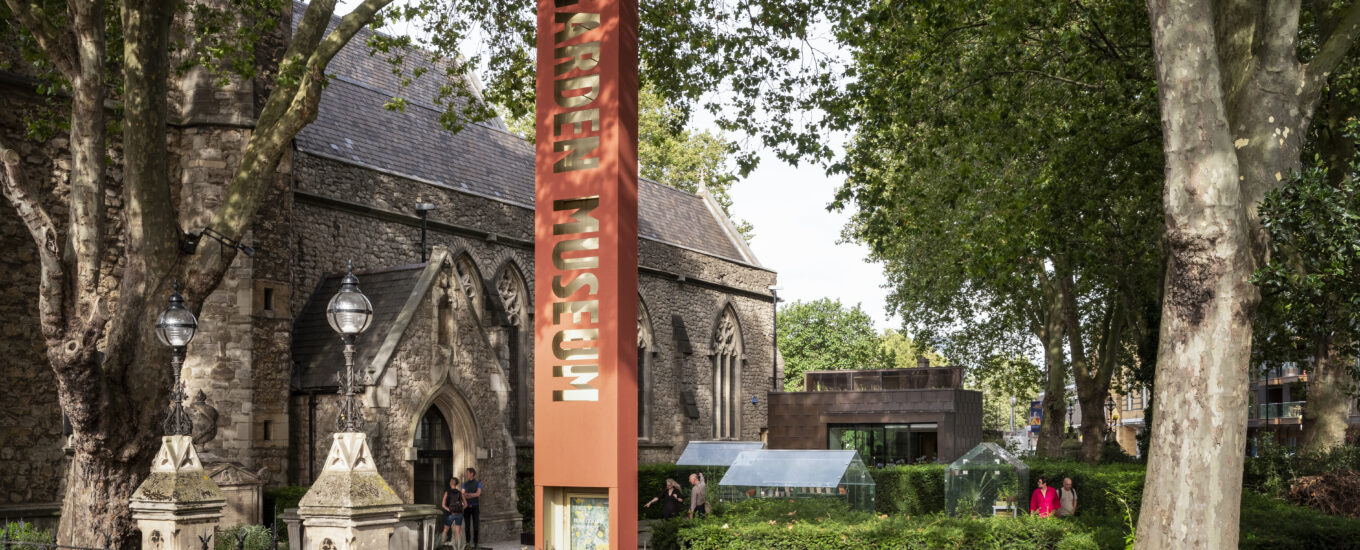
Mid-December 2004. The Museum of Garden History, Lambeth. AMM—Eddie Prévost on percussion and John Tilbury on piano—perform with Sachiko M on empty sampler, a performance a little over an hour long, unearthed from Tilbury’s archive and released in 2025 as Testing. (The album is available from the Matchless Recordings website here.) We begin with a duet for sine wave and the rumble of muffled traffic familiar around old buildings in London, the stone and the earth vibrating with vehicles unknown when they were built. Collisions of time.

Today as I put the CD on, I have floaters in my eyes, and trying to focus them sideways on a point in the distance as you’re meant to, things start to blur and swim in the middle in the field of vision. The start of the music something like that, too. It’s several minutes before we hear a tone from the piano, the overtonal ping of a note with the string dampened by finger or object. Bending, pressing and holding the piano’s inner strings, varieties of pressure and weight can lead to the subtlest shards of resonance intended and unintended. Tilbury has been working this area for decades and each note is inflected with the history of that practice: a practice of instantaneous carefulness, patience and intense listening. Prévost’s cymbals and tam-tam are invariably bowed: percussion reinvented as bowing rather than striking, a sound sustained by an incessant movement of the arms, but not a traditionally rhythmic one. Percussion becomes a stringed instrument and the piano a kind of muffled, tuned percussion played quietly and slowly. Machines are turned against themselves, identities swap and blur.

A sudden and exquisite arpeggiated chord. Broken and rolled, the piano as harp. The snows started to melt yesterday and the temperature today leapt up by around ten degrees. The world outside the window, muffled for a month in the snow, suddenly comes to life again, and sounds from outside mingle with the performance, so I can’t tell if the birds or church bells I’m hearing are coming from the recording or from the newly-brightened daytime outside. There’s a particular quality of hush to this recording, as if the implacable harshness of Sachiko M’s test tones, buoyed on the feather down of bowed or struck piano string and metal were a kind of austere cocoon, a drained lullaby suffused with a mourning attentiveness. The scrape of percussion is like a rusted gate, a door, the piano’s ping a gentle tap. Gaining admission, quietly exiting. At one point a police siren; at another, the choked utterance of what sounds like a sampled voice; at another, a sound as if someone were quietly whistling to the side. Seymour Wright’s liner notes link the music to plant growth, to the plant cultivation in the museum’s history, to dissociative fugue states, where one temporarily loses all sense of who one is or where one is. (As Alessandro Giustiano puts it, Sachiko’s sounds (for the most part) involve “no attack, do not offer mediation or guidance.”) And yet both Sachiko M and AMM have never sounded more like themselves, a practice of identity as dissolution.

Prévost plays a “stringed barrel drum”, a wine barrel he took from an old Italian restaurant on the Strand where AMM used to eat and repurposed into an instrument. With its added strings, it sounds somewhere between a guitar, a koto, and a lute; the upper end of a string bass, and the sound one gets from stringing rubber bands over a box to make a child’s guitar; a delicacy chunky and crude, answered by Sachiko M’s electronic rumble, crackle. Music as salvage: the empty sampler, the empty barrel, the piano, its interior treated, as per Annea Lockwood burning or flowering pianos, as a source of endlessly modified growth, of resonators and resonating devices, string and hammer and key, a finger or an object added and taking away. At once clear and always blurring the edges, the music seeps in like the cold Wright describes on that night, seeping in from the Thames and its tides, sweeping in from the outside, bleeding into skin and stone. Like plants, musicians, too, have to weather the winter: often in freezing venues, wherever can be rented or found, to prepare, to test, to take and transform the place they’re in in the gentlest of ebbs and flows, of incremental growths, of giving and taking.

Stuart Broomer in his review talks of the music’s opening as “a study in the ineffable”. But this is also a study in the palpable. It is about presence, however stretched or suspended. Sounds that die and are succeeded by others. AMM’s second album was, after all, called The Crypt, and in their repurposed industrial sounds they perhaps refract something of the musician’s pasts, already haunted: the echoic clang of the factory, the sounds of metal striking, sparks flying, ships hauling into docks where Prévost’s grandfather worked, the post-war damage in London and other cities. In 2015, AMM performed at the Museu Industrial de Bala do Tejo in Portugal, a performance later released as Indústria. And as AMM’s music continued through the 1980s and out the other side, those characteristic sounds, their boom and swell and crackle, had come to speak all the more of the post-industrial wastelands left in Thatcher’s wake. (On the other side of the ocean, Detroit techno: both creative responses to ongoing conditions of production.) The histories, like those of the Museum of Garden History and other spaces in which AMM have performed, could be traced back even further. You might even go as far back as Prévost’s Huguenot ancestors, fleeing persecution in France. The Huguenot exodus gave the English language its word ‘refugee’, from the French réfugié ‘gone in search of refuge’: the kind of history all too easily forgotten in the current anti-migrant hostility seeded in Britain and across Europe.

The music is not “about” any of these things. Yet they surround it, are the world in which it moves. Presence stretched, suspended; sounds die and are succeeded by others. Yet in that moment of sustain—piano pedal, sampler’s infinite spread, the way a bow stroke maintains a static sound, paradoxically, through movement—and in their recorded after-life, they are never more alive.

Sunday, 2 April 2023

In other news...

On Sunday April 8th (next weekend) we'll be launching the new Materials books by Candace Hill and James Goodwin at Cafe Oto in Dalston at a 2pm matinee reading. James will be reading from his new book Faux Ice and in conversation with Nisha Ramayya, and this will be a rare opportunity for UK audiences to hear from the astonishing Candace Hill--artist, poet, weaver, author of the 200 page epic Short Leash Kept On--who'll be reading and in conversation via video link. Come for the afternoon and stay for the Fred Moten reading at the same venue in the evening! Details and advance tickets here.
 
On Thursday April 13th I'll be playing with a new group, Multiple Melodicas, at waterintobeer in Brockley, South London: myself, Georgina Brett, Steve Beresford, Douglas Benford, and Martin Hackett on melodicas, along with solos sets from Eddie Prévost and N.O. Moore. Unit 2, mantle court, 209-211 mantle road, brockley, se4 2ew. Doors: 6:30pm for a 7pm start. More details and advance tickets at the eventbrite page.


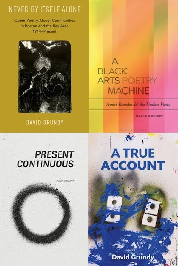
Then at 7:00pm on Wednesday April 19th I'll be reading from Present Continuous for a Pamenar Press spring reading at Thingy Café in Hackney Wick. Details here.

Finally, at 7:00pm on Wednesday April 26th I'll be taking part in a performance by members of the Eddie Prévost workshop at IKLECTIK, Waterloo, as part of the here.here series, for which Eddie will also be in conversation with Emmanuelle Waeckerlé.

---

And from a previous here.here, here's footage of my conversation with Eva-Maria Houben, Emmanuelle Waeckerlé, and Artur Vidal as part of the concert Social Virtuosity with Eva-Maria Houben curated by Emmanuelle at IKLECTIK in March. The video presents the whole concert: Artur's performance of dreaming legends, Artur's and Eva-Maria's performance of loose ties, and the string ensemble piece the green that is almost a yellow, performed by Lara Agar, Angharad Davies, Isidora Edwards, Finn Froome-Lewis, Dominic Lash, and Hannah Marshall, and the post-performance conversation. The performance of the string piece in particular was astonishing, its silence full and shared, its overlapping lines a perpetual making and unmaking of space as shelter; Eva-Maria's and Artur's performance with organist Huw Morgan the previous Friday was equally exceptional: I'm hoping to work up a longer piece on that (via Straub-Huillet's Cézanne) at some point in the not to distant future...


Meanwhile, elsewhere on the internet, the Poetry Center has been digitzing some astonishing readings from the 1970s. Filmed in San Francisco State University's Creative Arts Building, Lorenzo Thomas reading 'Grandpa's Spells' (named for the Jelly Roll Morton piece) is nothing short of breathtaking. Musicked speech indeed...

But, as well as music, this work is also conversation--talking (talking to, talking about, talking with, talking back). "I want to talk about the tears and sorrows of the people", he says in his introduction. And this concept of "the people" is a global one, Thomas reading his poem in memory of Neruda and translations of work by African poets--that internationalist, multi-lingual aspect running through his work: poems by Francisco José Tenreiro, Agostinho Neto, Marcelino Dos Santos, the latter then emerging from the victorious struggles against Portugal in Angola and Mozambique. Thomas' work of the 1970s, as he honed the finely-poised ironies of his earlier work through the lens of his experience in Vietnam and his reading in writers like Christopher Caudwell, is a contribution to a left populist poetry that has been virtually ignored: far too few notices of the Collected Poems edited by Aldon Nielsen and Laura Vrana have made it into print. (I've so far been unable to place my own review.) But being able to watch this video, to hear Thomas' cadences, his sonorous rise and fall, helps to newly bring that work alive: a poetry that charges the space, crackles with fierce energy and moral compulsion.   

Thomas read with David Henderson, fronting the nine-piece band Ghetto Violence--as singer...(in this harking back to his early career with vocal group the Star Steppers, as documented in Henderson's classic early poem 'Boston Road Blues' (for the poem, scroll down to page 41 here.) In the U.S. Bicentennial Spring, Henderson and the band deliver "Hail to the Chief" ("agit-rock...dedicated to the next Presidential election". In the event, Jimmy Carter would replace Gerald Ford, who'd pardoned Richard Nixon for his Watergate crimes, in the recurring cycle of putatively 'democratic' debasement. It continues.

(The full recording of Thomas' and Henderson's reading is here.)

Also from the Poetry Centre's Digital Archives, another gem: Karen Brodine and Meridel LeSueur reading in 1981, two generations of Left feminist writing looking into the jaws of the 1980s with implacable courage. What's particularly valuable is to have this document of Brodine reading the entirety of the sequence Woman Sitting at the Machine, Thinking, written from her experience of workplace organising as a typesetter (and her reading of Engels). I'm working on a chapter on Brodine, Merle Woo and Nellie Wong for a forthcoming book on queer poetry in Boston and San Francisco which hopefully will be fully drafted in the next few months. Last year, I spent a valuable week in Brodine's archives at the James C. Hormel Center on the top floor of the San Francisco Public Library, Tim Wilson and the other librarians patiently bringing me box after box and allowing me to see, in her unpublished notebooks, drafts, teaching preparations, and talks, how, for her, poetry articulated her sense of herself as woman, as lesbian, as worker, as socialist, the clarity of the way she theorizes language, the specific uses she sees poetry as fulfilling: conceptions well beyond the cliche of poetry as a kind of transparent vehicle for messages, on the one hand, or as 'neutral' abstraction on the other. For Brodine, poetry's form is its argument: which is to say that "form" is inseparable from, dialectically related to "content", the distinction between which she skewers in her unpublished pieces on aesthetics. We all know the rhythms of our days, shaped by labour or its absence, in our different ways, some feeling the pinch more than others, and spending time with 'Woman Sitting' in particular, going over it and again, still enables a reckoning with and refiguration with the violence of that time, the violence of Brodine's and our times: this poem which is so much about time, about the work week and the ways workers work within and resist capitalist time.

knowledge this power owned, nor shared
owned and hoarded
to white men [...]
                           wrench it back
knowledge is something we have 

Here's Brodine's reading: 


And from the same reading it would be negligent not to mention Meridel Le Sueur's poems of fierce solidarity, reading the global and gendered division of labour in ways that, once again, are firmly internationalist, are about mapping the general and the particular in precise and specific ways that poetry--specifically--can be used as a tool to pry open, a compass for navigation. And Le Sueur's opening denunciation of Eliot's The Waste Land as nihilistic male modernism remains as hilarious and as provocative as it's meant to be...

Saturday, 25 February 2023

News and Views

In February I was interviewed about A Black Arts Poetry Machine by João Paulo Guimarães (University of Porto) and Elina Siltanen (University of Turku) for the online Poets Talk Politics Series hosted by the University of Porto. Thanks to João and Elina for the questions and discussion, and to João for the invitation. The event was live-streamed and should be uploaded to the Youtube channel of the Instituto de Literatura Comparada Margarida Losa in the next few weeks. For now, it's available on Facebook, as embedded below (no need for an account) or at this link.


Also online is the video of the online launch for Present Continuous back in January, hosted by Malvika Jolly and with responses from Tyrone Williams, Linda Kemp, Ciarán Finlayson, and Ghazal Mosadeq, can be seen on the Pamenar Press Youtube channel here, or in the video embedded below. Many thanks to Malvika for hosting and Ghazal and Hamed for publishing, designing and typesetting the book!

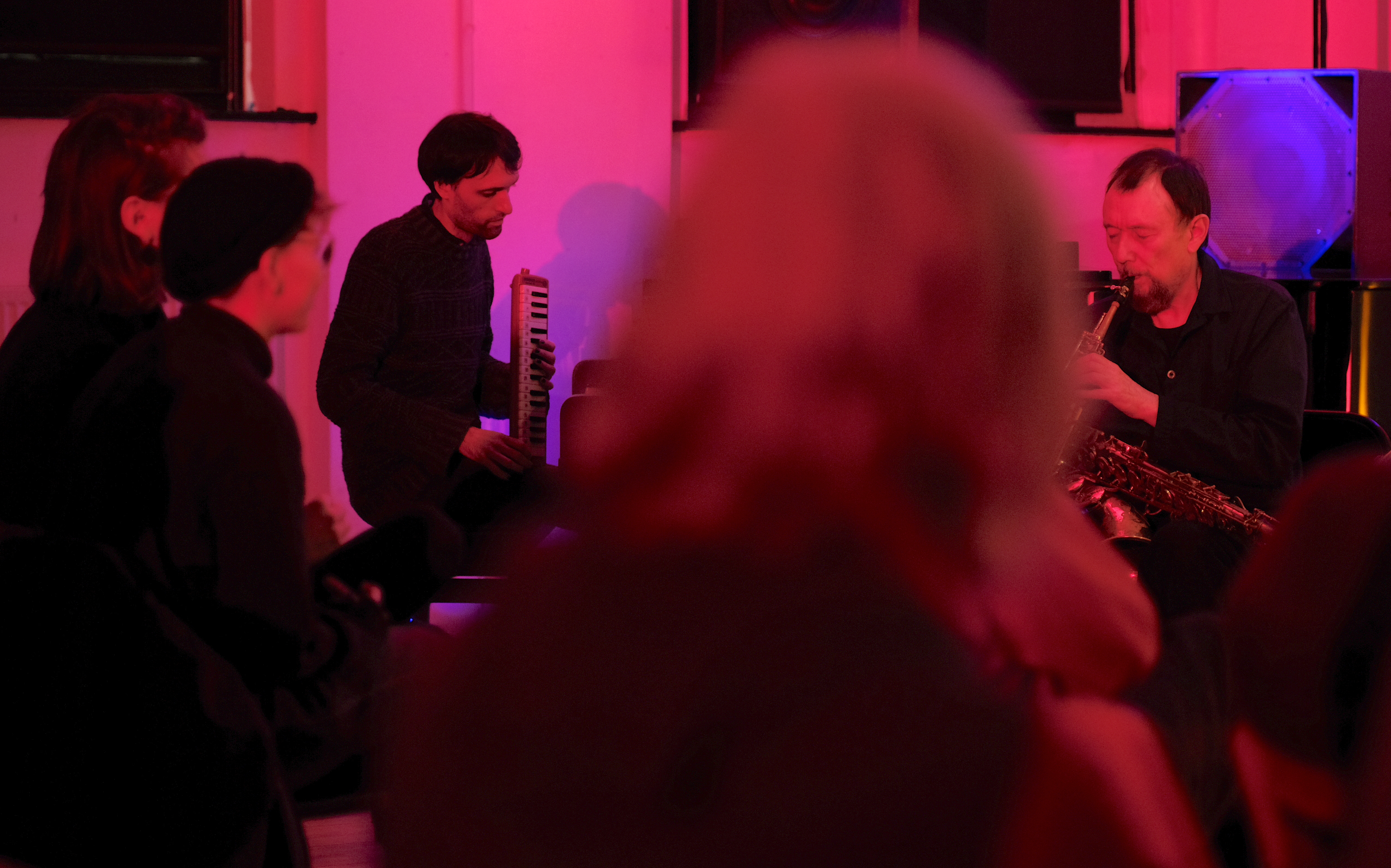
Some photos from the 'Electro-Acoustic Responsiveness' gig at IKLECTIK with Eddie Prévost (percussion), John Butcher (tenor and soprano saxophones), N.O. Moore (guitar), Emmanuelle Waeckerlé (voice, objects), and Tony Hardie-Bick (electronics), courtesy of film-maker Stewart Morgan, whose film on Prévost should soon be nearing completion. 


Photo credit - Stewart Morgan Hajdukiewicz

And some photos from the Materials/Materialien reading at Halle für Kunst Lüneburg, with James Goodwin (launching the new collection Faux Ice), Lütfiye Güzel and Laurel Uziell: thanks to curators Ann-Kathrin Eickohf and Elisa R. Linn. 


James will be doing a UK launch for his book at Café Oto in Dalston on Sunday 9th April; this will also be the launch for Candace Hill's astonishing book-length poem Short Leash Kept On. James will be in conversation with Nisha Ramayya and I'll be in conversation with Candace via Zoom. (Fred Moten will be reading, in his trio with Brandon Lopez and Gerald Cleaver, later in the evening.) Tickets from the Café Oto website.


Finally, in further Materials news, Anne Boyer's Money City Sick as Fuck and Lisa Jeschke's The Athology of Poems by Drunk Women are back in print and can be purchased from the Materials website at the following links: Boyer here and Jeschke here.


Thursday, 26 January 2023

IKLECTIK Gigs


I'll be playing at IKLECTIK, Old Paradise Yard, 20 Carlisle Ln, London SE1 7LG, with members of Eddie Prévost's London Improvisation Workshop (Emmanuelle Waeckerlé, Tony Hardie-Bick and N.O. Moore), Eddie Prévost, and John Butcher, on 14th February. Details here: https://iklectikartlab.com/electro-acoustic-responsiveness-improvised-trajectories/ 

And a couple of weeks later, on Sunday 26 February 2023, I'll be at IKLECTICK again for here.here | Social Virtuosity with Eva-Maria Houben, as part of the here.here series curated by Emmanuelle Waeckerlé and Harry Whalley. Three new works by Eva-Maria Houben, written for Artur Vidal and Dominic Lash, will be performed, and there'll be a discussion with Eva-Maria led by myself and Emmanuelle. More details here: https://iklectikartlab.com/here-here-social-virtuosity-with-eva-maria-houben/ (Artur and Huw Morgan will also be performing more work by Eva-Maria on Friday 24th Feb at 7pm, St James Garlickhythe, Garlick Hill, London EC4V 2AF, UK. See: https://www.eventbrite.com/e/all-good-things-come-in-threes-music-by-eva-maria-houben-tickets-518929260387) 

The performance of Eva-Maria's Together on the Way last year was truly one of the most astonishing things I've seen (I wrote about it on this blog): these works really live and breathe in live performance, and if you can, I'd encourage you to try to make one or other or both of these performances.

Saturday, 10 September 2022

Up-to-date (From Attica to AMM)

(Some pieces of writing recently published in other venues.)

“Attica is in front of me”, an essay on musical responses to the Attica uprising by Archie Shepp, Frederic Rzewski and Charles Mingus, appears online in a special issue of the Blank Forms journal, edited by Ciarán Finlayson, commemorating the uprising fifty years on.

A piece on the Eddie Prévost residency at Café Oto in July is at Point of Departure. There were four concerts in Bright Nowhere, celebrating Prévost’s eightieth birthday: the piece has write-ups of all four--a multi-saxophone concert, the ‘Sounds of Assembly’ group, a Workshop concert, and the last ever gig by AMM. 

And at Artforum, a shorter write-up of the AMM gig from the same residency.


An edit from a much longer interview I did with Eva-Maria Houben last month is up at VAN magazine. (The full interview will be out in the fullness of time--watch this space: I also wrote about the recent performance of Houben’s ‘Together on the Way’ at the Southbank Centre a few months back.) 


Other odds and ends:

A review of Decoy and Joe McPhee’s gig at Café Oto came out back in the July issue of The Wire, of which there’s an image below; there’s also a review of the Explore Ensemble concert of music by Poppe, Dunn, Dillon and Miller in the October issue, of which I’ve just posted a longer version on this blog. 


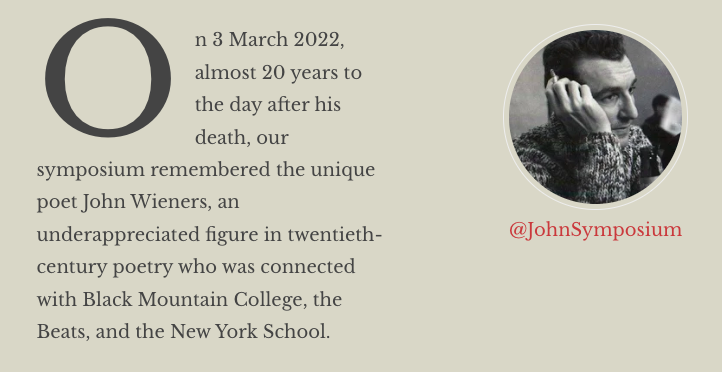
And even further back, in March, organiser Mark O. Chamberlain kindly read out my short paper at the online John Wieners symposium hosted by Durham University: video of that and the other papers can now be viewed online here.


In the near future, among other things, a piece on Igor Levit’s new disc based around Hans Werner Henze’s Tristan, a journal special issue, a poetry pamphlet from Andy Spragg’s and Jimmy Cummins’ RunAmok, new titles from Materials/Materailien, and the Blank Forms reprint of Baraka, Neal and Spellman’s The Cricket, to which I contributed a short introduction. Lauri Scheyer and I are also putting the finishing touches to Calvin Hernton’s Selected Poems with Wesleyan University Press, a project that’s been in the works for a few years and which we’re very excited to see moving to completion...

More on all that in due course!