Showing posts with label Theodor Adorno. Show all posts

Sunday, 9 January 2022

Fanfares from the Abyss: Bill Dixon's Late Style


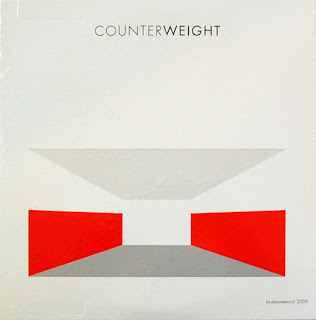
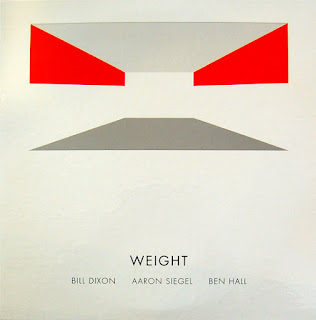
(Bill Dixon/ Aaron Siegel / Ben Hall --Weight/Counterweight (Brokenresearch, 2009))

Last night I dreamed that I had to organize a concert for the late Bill Dixon: but, on the day of the supposed performance, without access to a venue, publicity, or any other means of communication, time was running out. Dixon had sent a message that I was supposed to let Wynton Marsalis and Lincoln Centre know about the gig, via the cryptic means of a packet of kielbasa (I think); I was worried that I'd have to host the whole performance in my living room, and my failure to publicize the concert was in being denounced as elitist in various music magazines even as my laptop refused to function in order to spread the word. Meanwhile, Fascists were attacking buses which had been covered with flowerpots for completely ineffective protection, the wrecked vehicles lurching round the corner, their windows covered in tarpaulin, as enormous grey factories were being built by the side of the road, the fate of these vehicles apparently subject to the unstable whims of Conservative government housing policy. I'd found my way to a building that might have served as a venue, but as a university turned out to be a hospital--with the map outside showing a church--and staircases led to dead ends, elevators to sheer drops, and corridors back to the rooms in which they'd started, the typical low-level anxiety of the dream-maze seemed unlikely to reach any kind of resolution.

The night before, I'd fallen asleep watching a projection of the video below: a Dixon quartet performance, with Alan Silva, Mario Pavone, and Laurence Cook, from 1981. That experience--Dixon's choked flurries, whispers and screams and the deep, double double-bass line-up making their way through the mists of sleep--was made all the stranger by the presence of the announcer who, superimposed in his swivel chair at the bottom of the screen, speaks over several minutes of the performance, or again, live-translating over Dixon's interview (I don't speak Italian). Layers on top of layers, wheels within wheels, weights and counterweights failing to balance; it's all there, as much as it'd be a mistake to mistake whatever the manifest for the latent content within what any dreams does in rearranging the building blocks of the conscious mind. Whatever the case of this particular dream, in the first weeks of the year, I've had late Dixon on as a kind of tolling and turning: that sombre declivity or trough that is the arbitrary turning of one year into the next. Time, then, to get some of it down it writing, to purge my subconscious and to move into the year.


Bill Dixon's is a music which has to be heard, focused and concentrated on, or any sense of its momentum, development, and propulsive stasis is lost. His recorded history as a leader can be divided into several broad areas: the orchestral music of Intents and Purposes, his major recorded statement; the solo and small-to-medium size group work of the 1970s and 1980s documented on the solo box-set Odyssey and on his recordings for the Italian Black Saint/Soul Note label with the likes of Alan Silva, Tony Oxley, Laurence Cook; and a return to orchestral music in the 21st century, most notably 17 Musicians in a Search of a Sound-Darfur (2007), the mesmerising Tapestries for Small Orchestra (2008), with its five-trumpet line-up (about which I wrote a somewhat underdeveloped note of enthusiasm on its release), and his final album, recorded live by the Tapestries ensemble weeks before his death, and aptly-titled Envoi (2010). Dixon's 'late style'--as we might expect from late style in general--digs deeper than ever, marked, not only by the luminosity of music made at the end and the edge (reconciliation, harmonious resolution, etc), but, as Edward Said famously puts it, by "intransigence, difficulty, and unresolved contradiction". 

Indeed, if one were searching for an example of a late style that could be said to have refused incorporation and recuperation, Dixon's would be as good as any. On the music of his final decade, Dixon's music, which had always been profoundly introspective, became a subtle criss-crossing of textures and shades for which the analogies with painting--reflecting his own visual arts practices--are particularly apt: a chiaroscuro type of sound, taking place in a barely-lit interior or an indeterminate nocturnal outside, or the massed forces of blocks of sound made up of intricate and intimate detail that only reveals itself on a second or third listening. The music is invariably slow, even glacial, though there are bursts of energy that develop slowly, like magma or miasma (to mix natural metaphors). Let's mix some more. It's vaporous, rocky, aquatic. It's earthy and it's evanescent. It's almost always spacious, giving the quality of silence even when there's no actual silence. As Taylor Ho Bynum recounts in the 30-minute documentary included with Tapestries for Small Orchestra, Dixon once announced to the participants in a rehearsal: "Listen to the space in the room. If you can't do something more beautiful than that, shut the fuck up.” That belligerent, almost aggressive pursuit of beauty is what characterises all his music, which refuses a programme and insists on abstraction. But, as Dixon tells the players on Tapestries, while "people think of abstract art as mumbo-jumbo", in fact, "anything abstract, anything that is abstracted from something is the essence of that something. It is taking those things that shape and define it, stripping away the filigree. So that's what you're doing--you're going to the centre". And so too in Dixon's music abstraction is only the core or essence of something once everything else has been stripped away: not absence, emptiness, or vapidity, but a centre, a point of focus, a burning flame.
You can stand in one spot and blow a mountain down. You can dance around everything and not move a butterfly. It's the concentration of the energy: singular, and when it's compressed within the confines of the group. And that's when the excitement happens that enables you to create that aura, so when you want to play something delicate, it seems even more fragile. 
(Dixon, in 'Going to the Center') 
The power of Dixon's late works lies as much in his compositions and their realisation by improvising players as in his own playing. Never one to foreground himself as a virtuosic 'soloist'--though he worked perhaps more extensively than any other trumpeter in developing a solo music, as Odyssey attests--Dixon's approach was collaborative, a contribution to the collective texture of the music, and, in his final recordings, it became starker and more stripped down than at any point. Dixon had been working with electronic modifications to his trumpet--principally, reverb and delay effects--for decades, as can be heard on tracks from Odyssey dating back to as early as 1972, but it was around the turn of the millenium that he began to incorporate these as a key part of his (late) style, on recordings like Berlin Abbozzi (2000) and the trio recording Cecil Taylor / Bill Dixon / Tony Oxley (2002)  These effects were not always well understood by free jazz critics or audiences who, as Charles Wilson suggests in a review of the latter disc, might be "as conservative in their tastes and expectations as the audience for, say, the current Rolling Stones tour. Those who complain that Cecil Taylor isn't playing "fast and loud" on this disc are no different than those at a Stones concert who would complain that they didn't play 'Satisfaction'. [They] prefer to approach Free Jazz and Free Improvisation as genres with sharply defined boundaries”. (Eric Lewis' (French-language) discussion of Dixon's contentious press conference at the Victoriaville festival in advance of the performance further unpacks the (often racialized) critical assumptions behind such judgements.) For his part, Dixon stated that year that the electronics helped to bring out hidden resonances and added dimensions of the higher harmonics he favoured, "mak[ing] what is almost audible to the ear, audible". They also worked with a style that had changed as his body aged--he increasingly concentrated, for instance, on his distinctive, pedal register low notes, rather than the higher ones found alongside them in his earlier playing. In the liner notes to TapestriesStephen Haynes notes:
It is worth noting that all of this new work is framed within/arises from the context/effect of age/longevity on physicality coupled with stored experience, sustained study and daily experimentation. Just as one hears a timbral shift in the late work of singers (the past ten years of Abby Lincoln’s work) or wind players (compare/contrast Ben Webster as ‘rabbit’ with twenties Ellington to his ballad work with Art Tatum at the Patio Lounge in 1956: air as tone/note) that simultaneously evidences un-invited/welcome limitation while opening a doorway to new musical pathways, Dixon’s currently decreased employment of upper register multiphonics reflects organic change and the artist’s use of what is available to create new work.

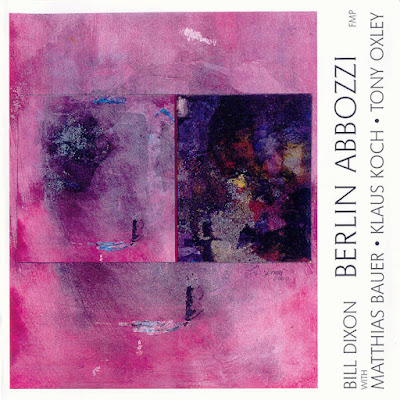
On Berlin Abbozzi, we hear Dixon alternate between electronically-treated work--the basis for much of the lengthy centrepiece, 'Open quiet/the orange bell'--and untreated work for muted trumpet. It’s hard to know which sounds more fragile (a favourite Dixon word): on the final track, ‘Acrolithes’, both the electronically-reinforced delay work, with its emphasis on extended silence and on texture (popping, blasting, gusting, whispering) over melody or even ‘note’ as such, and the more traditionally lyrical muted timbre of the acoustic trumpet, heard ruminating aloud about a third of the way through, seem to bring out different aspects of Dixon’s playing within each other, not so much as mutually reinforcing balance (weight/counterweight) as constantly morphing dialectic. And so, even as Dixon's playing, in his final recordings, moved further and further away from the (acoustic) note/melody approach to that of (electronic) tone/sound/noise, you can hear the ghosts of the former in the latter. 

The work is silent when it is left behind, and turns its emptiness outward.

Showers of breaths, whispers, grunts, sudden blarts and blasts of noise, at once vocalic and machine-like, an aeolian series of gusts, eddies, and other airborne movements and a focused study in extension, decay and the perception of time. As Dixon remarked in a 2002 interview: "There is a feeling tone that has propulsion and the ambience of an enclosure that permits being inside the enclosure or riding the crest of it. It is hard to explain. One has to listen and try to get inside of the sound." The use of the term abbozzi provides one way in, referring as it does to the underpainting whose monochromatic base provides definition for the colour values in layers painted over it. Dixon again:

I like to do multiple layers. If it is done right, I can play three lines simultaneously. There is no trick to it. If I place the delay properly and long enough, I can play something against that, and something against that. That is my interest at this particular point. Reverberation takes the dryness out of the tone. I use three mikes: one for delay, one for reverberation, and a clear mike.
With Dixon's use of reverb and delay, every sound has its double, nothing dies away straight away: the sounds seem to fight off the effects of time and the weight of mortality and, if only temporarily, to win out a kind of floating, suspended space--part purgatory, part paradise--in which a process of reckoning and acceptance can be staged. In his concentration on extended techniques, his compression of the most minute gestures of lip and breath and valve, Dixon--as is commonplace to remark--made the trumpet sound nothing like a trumpet. But of course, this was really more trumpet like than ever, part of the dialectic of instrument and instrumentalist that has characterised Black music in America from the start. Over the ears, Dixon's approach reinvented the idea of the trumpet--the playing of younger musicians like Axel Dörner, Birgit Ulher, and Nate Woolley, or of his Tapestries collaborators Rob Mazurek, Taylor Ho Bynum, Graham Haynes, and his student Stephen Haynes, is perhaps unimaginable without him. 


Weight/Counterweight, recorded in 2008 with two young percussionists--composer Aaron Siegel and Ben Hall, a student of Milford Graves and Jumma Santos--was released in a limited vinyl edition with no liner notes and only the barest of information, and thus received less attention than others in his final batch of recordings. But, of all these, it provides the most extended opportunity to hear Dixon as player from his late work. Working in a freely improvised context--though Dixon eschewed the division between composition and improvisation, insisting that he wanted even completely improvised recordings to sound as if they might have been composed (and vice versa)--Siegel and Hall are heard as much on tuned percussion (gongs, dowels, bowed cymbals, vibraphone, glockenspiel) as on drums, giving the music a floating, meditative quality punctuated by bursts of slowed-down drama, like a quiet, suppressed explosion. Meanwhile, Dixon as the only 'lead' instrument--though any distinction between 'lead' and 'support', 'leader' or 'rhythm section', 'soloist' or 'ensemble', figure or ground, is soon eradicated--can be heard without the dense textural weave of bassoons, saxophones, contrabass clarinets, cellos, and trumpets into which he inserts himself on the orchestral recordings: unadorned, vitally present.

In producing the album without liner notes--in contrast, for instance, to the extended essays by Stephen Haynes and Bynum on Tapestries, and its release alongside Robert O'Haire's 30-minute documentary filmed at the recording sessions--Dixon more than ever seeks to focus attention on the sound alone. Given this, the words above feel so much preamble to an event that they can never hope to capture. It's hard to give the music a chronological summary, given its meditative refusal of narrative, programme, or anything but the quiet intensity of its moment of unfolding. Perhaps it's architectural--the title to the first piece, named for Le Corbusier's studio, suggests so; or perhaps it's painterly--as per the title to the third, 'Contrapposto'. Or perhaps, as Dixon has himself admitted, the titles are a kind of poetic extension that comes after the fact rather than the determining shape of the piece.
There is no special way to view or see or hear. Make up stories if it makes you more comfortable. Find the music programmatic, but know it wasn't done that way. The music and the dance are what they are. There are no stories, no symbols. One day we won't even have titles--or our titles will be poems in their own right. 
(Dixon, quoted in the liner notes to Intents and Purposes)
For me, the album concentrates the most into the twelve minutes of the second track, 'Hirado'. The piece leads off from a typical Dixon melody--three notes, spaced out and cracking round the edges--extended and delivered with such gravity and ferocious single-mindedness of tone that the minimal becomes maximal, a world contained in the progression from tone to tone, semitone to semitone. Feldman's work with the simplest of melodies in pieces like 'For Philip Guston' comes to mind--though their approaches are very different--here amplified by Siegel and Hall's use of resonant, chiming vibraphone like something directly out of late Feldman (and specifically, the Guston piece). Unlike Feldman, however, the concern isn't so much with interlocking series of melodic lines--an interlocking carpet-weave of patterns--but with a more constantly morphing texture. Gently, the three players seem to chase each other, become their own ghosts, echoing and spiralling out and giving the effect of additional players; or the trio concentrate down to seem like one spectral voice; and at any point, they seem conscious that they might as well shut up if they have nothing more beautiful to say than the silence around them. On a series of deep notes that push deeper and deeper, foghorn through the fog, dungchen from the mountaintop, the music transitions into flurries of activity, rolling glockenspiel and rolling drums that have picked up a clattery thing or two from Dixon's long-term collaborator, Tony Oxley. A succession of deep notes and breaths take things suddenly out: the sudden recession of the wind, the stilling of eddies on the waters, a cloud moving out of sight.

 
'Contrapposto' is whispers from the edge of consciousness, rumours from the sky; fanfares from the abyss, ram's horn blasts from beneath the earth. The title, referring, as so often in Dixon's work, to the tradition of Italian visual art he loved so deeply, implies dynamism and relaxation, mathematical proportion: yet this isn't about a flattened field of idealized beauty. Recall that contrapposto, counterpoise, provides a means of artistic balance through temporary dis-balance--the figure with weight on one foot, the other slightly bent. (Or, weight / counterweight, as per the record's overall title.) In this pose, the figure temporarily rests from movement, or prepares to take another step, caught between coming and going, frozen into the stasis of the artwork: movement in stasis, stasis in movement. Music, time-based and immaterial rather than plastic and fixed, refuses this balance--or, couldn't achieve it even if it wanted. And, if we've learned anything from the revolutions in sound ushered in by the New Thing musicians of the 1960s--Dixon not least amongst them--it's that the Greco-European Renaissance conception of harmony is, at worst inadequate, and at times complicit with, the racialized orders that form what, in his often-overlooked The Mask of Art, Clyde Taylor called "the aesthetic contract": what Sean Bonney calls "a hierarchy built on scalar realities that justifies social conditions on earth, where everybody is in their place, and nobody is able to question the beauty and perfection of these relationships."

What kind of a conception of beauty, or balance, inheres in Dixon's late work? Writing of the insistence on talking about Beethoven's late work in terms of death and ageing, "mak[ing] reference to biography and fate", Adorno wrote: "It is as if, confronted by the dignity of human death, the theory of art were to divest itself of its rights and abdicate in favor of reality". According to this account, 'reality breaks through' into art and gives it especial clarity that's supposed to be clear-eyed but ends up becoming, if anything, more mythologized than the artistic screen through which, like the rending of the temple vein after the crucifixion, it's supposed to break. By contrast, as Said summarises Adorno: "Lateness is a kind of self-imposed exile from what is generally acceptable, coming after it, and surviving beyond it". "Episodic, fragmentary, riven with absences and silences", "lateness is the idea of surviving beyond what is acceptable and normal. In addition, lateness includes the idea that one cannot really go beyond lateness at all, cannot transcend or lift oneself out of lateness, but can only deepen the lateness. There is no transcendence or unity".  While "death is imposed only on created beings, not on works of art", the artist--aware of their impending death--places their artwork in ironic or allegorical relation to their death. As Adorno puts it, late works "do not surrender themselves to mere delectation". Dixon's use of electronics, and his years of study in developing a personal vocabulary of extended techniques, amplifies and abstracts the sounds of human breathing and vocalised noise--cries, whispers, sighs, reverberant moans--via the mechanical prosthesis of the trumpet and the ever-present extension and falling away of the delay effect, not as a facile analogy with death and cessation, but nonetheless, as Said puts it, as part of "the predicament of ending without illusory hope or manufactured resignation". 


'The Red and the Black'--does it title refer to Stendhal's novel, with its motif of the titular card game, rouge et noir, and its combination of game-playing, chance, and the individual's negotiation of forms of order?--opens like a funeral march, rolling toms and a vibraphone melody--abstracted--with Dixon blowing spaced-out, single notes. To my ears at least, so much of Dixon's work--and again, it should be stressed, is purely the personal whimsy of one listener--seems to build on Miles Davis' solo on 'Saeta' from Sketches of Spain as the basis for an entire aesthetic--taking that depth, that maximalism of the minimal, that's only hinted at in Davis' performance, and building it into an entire world. And so, here, Dixon alone (with just the fainted bowed cymbal like the sound of the room around him), around six minutes in, like Davis as the solo voice of mourning on 'Saeta'; but whereas Davis, playing a part in Gil Evans' Spanish-oriented drama, declaims to the backdrop of a public procession, a noisy street band, Dixon whispers to himself, to whoever will still themselves enough to hear: what remains after the parade passed by, the stillness at the core of its activity, the abstraction to the centre. Over pitched percussion trills Dixon speaks out two final notes: melody reduced to its essence, "taking those things that shape and define it, stripping away the filigree"; a series of notes rising and falling, the placement of sounds in time and their cessation, moving, pausing, and then gone.


Monday, 24 July 2017

Ryan Dobran – Story One (Self-published, 2014)


Errors, Patterns & Repetitions from Jacqueline Arias on Vimeo.

Ryan Dobran’s Story One exists only in a fugitive, self-produced edition, though there should be copies left if you ask him. (The publication accompanied a gallery collaboration with the artist Jacqueline Arias, of which Arias' portion can be seen above, as part of a show called 'Former Islands'. The show also had wall posters of Dobran's poem "Fantasy Index", published in Cordite Review.) Following on from Dobran’s previous books – Your Guilt is a Miracle (Bad Press, 2008), Ding Ding (Critical Documents, 2009), Confection ((c)_(c) Press, 2011), Shouts from OK Glamour (Barque Press, 2013), and Remote Carbon (Critical Documents, 2014) – it’s gnarly and difficult work, characterized by a particular biting tone which certainly approaches sarcasm, but it offers an explicit and immediate directness distinct from his previous work. As its title indicates, it has a quasi-narrative framing, centred on the domestic preparation for work and the work that is done in the work-place itself. Beginning “at the beginning”, the tone, ventriloquizing as it does various familiar discourses around office work and its frames, is often brutally direct. It’s very quotable – there are killer lines on most every page. But, despite the narrative and the presence of a central first-person speaker who functions as something like a ‘character’, its narrative doesn’t resolve or offer closure – it is a perpetual present characterized by incremental change which doesn’t change anything but merely repeats, an implicitly cyclical and easily-recognisable structure of routine whose exaggerations occur in the telling. Though the numbering of the title suggests that this is the first of many – a start, if not a new one, it also suggests a singularity, both unique and utterly familiar. This is it. Importantly, it’s a story in which not much actually happens. Banal events are stretched out into luxuriantly cynical description – the moment of waking, showering, slicing a fruit, parking a car – while environmental change, globalized warfare and the workings of international capital become larger frames which can’t be afforded the same narrative clarity, appearing to provide an alarming shift of scale which is nonetheless at every turn related to these minutiae, whether explicitly or implicitly.

Dobran writes (in personal communication):
It’s definitely a departure in terms of clause structure at least and I was going for a pseudo-narrative that keeps restarting. I was desperately trying to be funny, and I often think about the link between the desire to laugh and the intractable and putatively ineluctable position that one can feel beleaguered by when locked into a job whose hours one counts. I think it must be some kind of “cruel optimism” that sets the restlessness along with a middle-class upbringing whose creators conspired to make their children think that holding open possibility for what may come--and indeed what should come provided enough hard work--is itself a form of necessity. But on the other side of cruel optimism is beneficent pessimism, whose feeling of immobilization is linked to the same social reality but whose manoeuvring is without any desire at all.
That final sentence references Lauren Berlant’s Cruel Optimism (2011), a book which explores how European and American fantasies of the good life and of a work-ethic based doctrine of achievement (what Berlant calls, "conventional good-life fantasies – say, of enduring reciprocity in couples, families, political systems, institutions, markets, and at work”) are still held to even after it has become clear through periods of crisis that liberal capitalist democracy cannot provide them. Such a relation to the present continues despite being disproved, centred on various intricate modes of adjustment. For Berlant, “a relation of cruel optimism exists when something you desire is actually an obstacle to your flourishing.” The continuing process of survival – staying afloat – involved in sustaining some sort of relation to this object of desire, this fantasy of fulfilment, even when it is clearly unattainable becomes so total that “the loss of what’s not working is more unbearable than the having of it, and vice versa.” These methods of coping (what Berlant calls “norms of self-management”), then, do not remove the initial desire but sustain it.

Dobran’s ‘beneficent pessimism’ instead embraces this immobilisation and removes desire. Both relations involve a certain pose of cynicism, but this doesn’t mean they’re total – as, in Dobran’s poem, the speaker treads a gamut between a kind of numb, almost thoughtless physical functioning and outbursts of sadness in love or brutally comic competitive violence. This is itself a means of adjustment, but one whose mode of survival doesn’t aim at the sustaining of the desire it knows is blocked. The speaker doesn’t expect the kinds of sustaining relations – to work-place, domestic partnership, etc – that still motivate Berlant’s cruel optimists. Instead, lack of belief is what allows the worker in the poem to fulfil their tasks as if they believed in them. Such a lack might, in other context, be the grounds for attempting change – rebellion, rejection, nihilism or politically-transformative collective action, as it might manifest in life-style dropping-out, work-place sabotage, organizing, protest, etc. Perhaps it’s too fanciful to suggest that the book’s red and black cover might jokingly hint at the political tendencies associated with those colours – communism and anarchism – to suggest their near-total absence in the world and mind-set the poem so convincingly and rigorously inhabits. Pessimism of the intellect, pessimism of the will. Now carry on.

The poem occasionally shifts its focus to imagine cosmic scenarios of destruction which are nonetheless almost entirely filtered through limited and limiting perspectives, the modes of mediation they would seek to reach beyond in sublime transformation. At one point, Dobran writes: “I don’t think any of us / has the story we most want / to fulfil the proud suggestions / from EARTH.” The shift from singular to plural here suggests both the supposed ‘universality’ of ‘the story’ that is desired and its miserable limitation to a failed individualism. What none of us have is what each of us want, separately, even if the particular scenario desired seems like the most personal thing. The capitalized “Earth” itself comes up with all sorts of helpful suggestions which cannot be made to fit a narrative frame which would contain and fulfill them. Choose your own adventure. However, as in Berlant’s cruel optimism, even the contained and stereotypical story of effort and success, centred on work, the nuclear family, and a libidinal investment in a particular economic model, cannot be fulfilled.

The ‘adjustment’ to the working day described in the poem sometimes veers to statements of patently false enthusiasm – “the beauty of the globe is real”; “I await / the greatest day” – though it’s worth noting that such instances of beauty occur precisely at the moment of destruction, of negation, the moment when the earth explodes in nuclear holocaust and the light is registered on the “beatific space station”. On the other hand, there is cynical description of continuing routine, void of any connection to the sublime beauty of cosmic destruction within “the stupid days” of the work routine. Adjustment to work routine must negotiate between the modes of forcibly internalised enthusiasm conventionally said to lead to promotion, betterment, and the like, and a relentless cynicism which must nonetheless operate almost entirely within the frame of that which it criticises. What is outside work in the poem is only “wasted free time” and the promise of last night (associated, perhaps, with desire, fantasy, dream), which is itself dismissed – “Everything that last night meant is shit.”

Dobran’s poem, with its ventriloquism of the masculinist logics of patriotic imperialism – “nuke this motherfucking coffee”, “inhabit the dude without lifting the brow” – sees the toxic masculinity that might be found in an office space as inseparable from the logics of violent, patriotic imperialism, as bolstered by an economy churning along on a good life mentality (both ones of simultaneous suppression and release). In this sense, the speaker of the poem may find links along a collective fantasy of violence, national identity, gender identity, class identity (or aspiration), but these are ones which will not allows any real solidarity to emerge, which are defined and perpetrated on violence of various kinds against others, even colleagues. Thus, the joke about beating up someone who “comes round to take my spot / at the sink basin”; or, “I will use your face to destroy / the manager.” This is not worker solidarity, even if it is posed against some manifestation of authority (albeit a localized one). The speaker uses two other people to destroy themselves for his own advantage, perhaps in order to replace the manager. If that is the implication, destroying them is not a destruction of the structural position that the particular person in this case designated as ‘manager’ fills and represents; it redirects to personal antagonism a broader (let’s say, class) analysis. (Though it’s worth noting that such talk of the ‘structural’ might risk a kind of fatalistic purity of investigative method. For a recent work that insistently and even obsessively explores the dynamic between a cartoonish, personally-based antagonism and a structural approach – one which might be said to characterise different trends in contemporary U.K. and U.S. political poetry and theatre in various ways – see Lisa Jeschke and Lucy Beynon’s David Cameron: A Theatre of Knife Songs (Shit Valley, 2015); also Danny Hayward’s review of the same in Hix Eros 6).

In any case, the promise of “us[ing] your face to destroy / the manager” is something of an empty threat. The future-tense injunction has something of the character of an earlier and yet more ridiculous injunction in which the speaker barks out: “Give me pleasure, shower.” This injunction is a rhetorical pose which suggests power even as it knows the mechanized comfort-givers associated with the good life bestow only a limited horizon of actual comfort and power. If the animate holds no promise, the inanimate must substitute. The shower’s pleasure-giving both has the structure of an exploitative demand and acknowledges the speaker’s lack of agency which the statement of command attempts to disguise.

As I’ve suggested above, the poem’s title brings up the relation of story, routine, agency and patterning. In telling their own ‘story’, the poet here merely attests to the crushingly and fatalistically pre-determined narrative which labour forces most everyone to accept, all the way from the shower to the desk. As a fragment from Kafka’s journals which is (twice) set in devastating form in György Kurtág’s 1987 Kafka Fragments has it: “Slept, woke, slept, woke. Miserable life.” There is nothing unique about this narrative content, and neither does it reflect collective or instructive values: it is at once particular, alienated, individualised, a cell, and crushingly familiar, skewed into repetition at both ends of the scale. It is a condition presented as unchangeable and permanent and yet also permanently subject to anxiety, lack of safety, the threat of losing your place even within this crushing process, the motions you will not any longer be allowed to go through. So this story, the first and the last, will be just another template, yet also one which self-destructs, just as work routine is locked in cycles of starting and re-starting that don’t necessarily ‘progress’ – though progress that (in meagre drip-feed fashion) is the aim (the discourses of self-betterment, promotion, and the like; sell yourself more, sell yourself better, devote your whole life to the task, for everyone’s good).

More broadly, this might also relate to periodic financial crisis and recovery, boom and bust, as part of a neo-liberal economic consensus, or a purported, forced and manufactured consensus, which is imagined to have finished with narrative for good (ends of history), but in which the constant recurrence of crisis, collapsing, recovering, re-starting, collapsing, recovering, etc, constantly belies that narrative end-point. The story, from beginning to end, can never end, even as it is said to have already ended: it will always repeat, with its minor fluctuations, crises and supposed resolutions, with everyone playing the role of the characters whose actions, whatever their motivations, must always conform to the same predictable patterns.

Likewise, the notion of effort and self-bettering is no longer manifested in (certain kinds of) physical labour, given that those physical elements of work have reduced in visibility and importance, present only through the distance of time and space. Thus, the shift from blue-collar to white-collar, from assembly line to desk, the shift in ‘the west’ from industrial to tertiary industries as the result of the mass out-sourcing of industry to places abroad where labour is cheap and protective regulations less present. So that there is a kind of indifference or apathy set off by a sense of that global positioning within systems of exploitation, which must also figure with a sense of one’s own exploitation – reckoning with different levels of privilege which the discourses of American Maoism might term ‘labour aristocracy’, working through that global and specific class dynamic in which: “I continue to thrive as a result / of my steadfast commitment to / servicing the petite-bourgeois / home improvement / industry.” (Note here how the job itself, which aims at a balance with the domestic sphere necessary to complete the circle of the well-contained good life, loops back into the domestic whose raison d’etre it is to bolster.) The office workers eat their lunch: “Everyone just sits there in a vat of space / starving the poor. Keep your fucking / text focus, poet-broker.” Being in the vat, it seems like they themselves are being cooked and eaten. The injunction to keep focussed suggests that the dramatic-bathetic statement ‘starving the poor’ is not the proper domain of the enclosed text-object-poem. It is not the deal or contract with the reader, with the demands for action it might make, that has been agreed. Of course, by ventriloquizing that position, the poet goes against it, even as the poem itself consciously sticks within certain limits. Such moments of underplayed extremity manifest a humour which is sometimes as violent as that situation, and sometimes as apathetic, which perhaps amount to the same thing. As Dobran puts it: “Humor is neither / defense nor protection, but stimulant. / The possibility of action is simply too / ridiculous.”

*         *          *

As any good story should, the poem begins “at the beginning”, with reference to a “plastic cradle” which is the flesh. The worker is re-born each day, progressing from the infantilism of waking (“more drool / than ga-ga”) to the ‘maturity’ necessary to accomplish the tasks of work which, perhaps, replaces the mother. Indeed, the text as a whole is notably male in its environs, even if the cast of characters beside the speaker remains something of a backdrop, barely even delineated in terms of physical description, let alone characteristic. Here, people are their role, whether that be in the job or in usurping the speaker’s place at the sink, a moment which leads to a bleakly comic outburst of responsive violence. Only towards the end does some element of what might be the traditional subject of the “lyric” that the poem at one point seems to name itself as – a love relation.

The book’s opening is reminiscent of Creation narratives: “at the beginning, at the left / off light” has something of the Book of Genesis about it, not only in its opening phrase but in the faint echo of God’s generative command, “let there be light”. The light here, however, has been switched off at some point (implying that this is not the first ‘beginning’, but one of many involved in a daily routine). The flesh-cradle is felt as an exterior shell, one that is synthetic rather than fleshly, or at once synthetic and fleshly. You sit in your flesh almost as if you sat the desk; it contains you, as your total environment. Detail is precise, but this leads, not to an attention to the object and its production, but to the entirely unexceptional: the “firm, / but not hard, plastic bottom” of the slippers, the page-long description of cutting a grapefruit in minute detail. “There is nothing less than ordinary / details configured in surprise / arrangements.” The phrasing here is subtly unusual – we might expect “nothing more”. ‘Nothing less’ suggests some sort of achievement, or grandeur, or, indeed, surprise. Expressing it in this way only reinforces how none of these things apply: for the surprise must not be too surprising. It must be predictable, within a certain field of expectation. The speaker goes on to talk about changing the alarm sound on their phone every day, in order not to fall back asleep: “the threat of behaviour / and any remarkable achievement / of habit”. Yet these are not things that can be perfected – or, their perfection is in their acknowledged imperfectness, their highly-functioning inadequacy as coping mechanisms and ways of living and surviving.

Once the alarm has gone off and the speaker is properly awake, they are able (in the second person) to assert the following: “You affirm at 06.34 ante-meridian / that the beauty of the globe is real. / and that your place on its fine. Just / or merely, don’t care.” ‘Fine’ can, of course, be both a term of particularly esteemed quality and the base-line of survival – not especially great, but I get by. It’s the common answer to a common greeting-question – ‘How are you?’ – whose connotations are determined by the inflection of the answer – ‘fine’. Similarly, ‘just’ is not here ‘justice’, but ‘nearly’ or ‘merely’. ‘Don’t care’ could either be an injunction, the speaker speaking to themselves or to the reader, as with the second-person of ‘you affirm’: a kind of negative mantra which nonetheless possesses a kind of self-help function. Beneficent pessimism – because you don’t care, you can get on by. 

On the same page, however, the speaker “begin[s] to care, / because there is plenty of time to care”– a care itself produced by “boredom”, but one which might be different to the “care / that you thought of / that time, at the edge of it” – the deictic reference, which could mean a care thought of at the edge of boredom, or of care itself. Care is both to look after something and to give a fuck – to care for (someone) or to care about (something). It would seem that the care that arises from boredom is the former, the care at the edge perhaps the latter – but the terms are deliberately vague. In a work routine characterized both by uber-specificity and amorphous vagueness – we never find out the exact details of the job; the ritual around it is more important that what exactly is done, what the job is ostensibly ‘for’ – you don’t need to care for anybody else, in some kind of loving relation, though you might need to ‘take care over’ your work, which isn’t exactly the same thing as caring about it.

Care might be taken as a positive which mitigates a negative – you have to take care of someone because they cannot take care of themselves – though, in its noun form, it originates as something profoundly negative in feeling. The affirmation involved in waking is a negative one – “Just / or merely, don’t care” – as is even the care which emerges from boredom or beyond. Likewise, we later read: “the life of lyric is a sad / fucking ministry of vapid / negation”. Lyric poetry – as this poem both is and isn’t a ‘lyric poem’, excluding in the main as it does the subject and address of love and passion – might, in this formulation, thus be construed to affirm, in the face of evidence otherwise, that the world really is beautiful and that ‘you’ fit into it quite comfortably, bolstered and encouraged to carry on as you are but your relative comfortable position of waged precarity. This is not traditionally what lyric does. But what Dobran terms “the crust of deformation” might be both the deformation of an alternative possibility of social life accomplished by the structures of wage-labour and their affective ‘crust’ – a merely ‘vapid’ negation’ – and the deformation of what is by which it is de-formed, destroyed, transformed into something else. This crust “waits upon the magnetic / personae” – waiting upon them like a servant, or waiting for them as the speaker “await[s] / the greatest day” (a phrase I’ll come onto in the next paragraph). The personae are magnetic, perhaps in the sense that they are charismatic, or compelling, or that anything can be stuck to them – they are personae that are waiting to be deformed, blank canvasses or shape shifters, not touched by a fixed particularity. Yet the crust which will stick to them, like a mask covering a volcanic explosion, the crust of the earth, or a dirty remainder, does so within “the infinity / of the singular” – both what is utterly reduced to an endlessly reproduced and common individuality of negation and – as Tom Allen suggests in a review of the poem for Hix Eros 6 – that which negates this negation, in which the singular and the common are neither falsely reconciled nor at odds.

This passage occurs after the following sentence, which again plays between the notions of beauty and the day being just the same as any other – particularity and sameness, newness and repetition: “Ready for beauty, I await / the greatest day.” An eschatological expectation seems to raise its head – the great day which shall surely come and which shall be infinitely stretched beyond the bounds of repetition, routine, sleeping, waking, living and dying, disappointment and loss. This is in itself the good life fantasy which Berlant discusses and which, I would argue, Frank O’Hara partially satirizes in his great ‘Ode to Joy’: “We shall have everything we want and there’ll be no more dying.” That ‘we’, with its “cocktail bars” and “supper clubs”, is one determined by class exclusion. Here I argue for the opposite of Michael Clune’s reading of the ‘Ode’ in his book American Literature and the Free Market (pp.64-6). For Clune, commerce and desire here are consummate: “the desire of the collective blows through the priced objects of everyday life, infusing them with its aura.” Yet, contra to Clune’s notion of entirely fulfilled desire, Hazel Smith notes that “no more dying” could also be read as the end of sexual satisfaction (Hyperscapes in the Poetry of Frank O’Hara, p.78). At first glance, it may appear, through a carefully-judged set of antitheses focussing on love, death and life, which are forcefully combined throughout the poem’s three stanzas, that everything that happens here, happens “that love may live”. Yet the “symbol acknowledge[d]” in this new mode of living privileges “vulgar materialistic laughter / over an insatiable sexual appetite”, and the model of eternity advanced occurs as much through tedium as excitement: “not once but interminably”. Labour itself is removed: “buildings will got up into the dizzy air” as if they simply erect themselves – with the sexual pun intended – yet poverty rears its head through a gruesome image of intravenous feeding: “and the hairs dry out that summon anxious declaration of the organs / as they rise like buildings to the needs of temporary neighbors / pouring hunger through the heart to feed desire in intravenous ways”. Desire here is paradoxically ‘fed’ or sustained through a hunger connected to these “temporary neighbours” – perhaps suggesting the temporary sociality of the city, geographies of cruising, a queer space breaking out the repressive mould of the second stanza’s “heat-hating Puritan.” Yet the flipside of such a sociality, growing as it does out of the city’s contingency, is a class-based precarity potentially resulting in the very death the poem insistently and apparently denies.

The title of O’Hara’s poem is of course borrowed from a totemic ode to the new forms of social life named as humanism, or universalism, in Beethoven’s setting of Schiller’s poem. This ode excludes as much as it includes. As Theodor Adorno wrote:
It is peculiar to the bourgeois Utopia that it is not yet able to conceive an image of perfect joy without that of the person excluded from it: it can take pleasure in that image only in proportion to the unhappiness in the world. In Schiller’s ‘Ode to Joy’, the text of the Ninth Symphony, any person is included in the circle provided he is able to call ‘even a single soul his own in this wide world’: that is, the person who is happy in love. ‘But he who has none, let him steal weeping from our company.’ Inherent in the bad collective is the image of the solitary, and joy desires to see him weep. Moreover, the rhyme word in German, ‘stehle’ [steal], points rightly to the property relationship. We can understand why the ‘problem of the Ninth Symphony’ was insoluble. In the fairytale Utopia, too, the step-mother who must dance in burning shoes or is stuffed into a barrel spiked with nails is an inseparable part of the glorious wedding. The loneliness punished by Schiller, however, is no other than that produced by his revellers’ community itself. In such a company, what is to become of old maids, not to speak of the souls of the dead?
Theodor Adorno (trans. Edmund Jephcott), Beethoven, The Philosophy of Music, pp.32-3
Bearing this in mind, it’s hardly surprising that Schiller’s ode recurs today, in Beethoven’s setting, as the anthem for a political project – the European union – whose battering-down (for example) of Greece exactly captures that logic of inclusion, exclusion, sacrifice. By contrast, in O’Hara’s formulation, there is perhaps still a utopian expectation which isn’t entirely circumscribed by that which it knows it is the ideological manifestation of. The desire it expresses – which isn’t necessarily the one it can seem to express – is consciously bound up in that which inadequately releases or deflects it.

Yet the only way by which infinity (or desire) can manifest itself in Dobran’s poem is through an ouroborotic temporal relation very much connected to that which ‘the greatest day’ would seek to redeem, and without a trace of utopian aspiration, longing, or belief. “Today will be the same as today was.” Today will be – future tense – the same as today was – past tense – though ‘today’ itself is presumably present. In relation to such temporalities, we might consider a number of comparative instances from the poem, some already quoted. “Ready for beauty, I await / the greatest day”: beauty is that which will come, which is ‘awaited’, though it is unclear in what objects this abstract beauty will inhere.“You affirm at 06.34 ante-meridian / that the beauty of the globe is real”: beauty is affirmed in the present tense, as manifest in the globe itself. “We are the beautiful ones. / Everything that last night meant is shit”: beauty is again present, current, and, somewhere between the two previous examples (beauty as abstraction or beauty as the globe), has become the attribute of an unidentified collective subject. In the latter instance, the past is firmly rejected, even as the formula with which this paragraph begun, in which today will be the same as it has been, implies a folded-in encircling by the past. But if ‘last night’ promised some sort of temporal break-out, even one circumscribed by its placement in relation to the day – night as the time of (sexual?) release, or merely sleep, the escape of dream – it must be rejected. Beauty is not here connected to desire; it becomes an empty substitute for something perfected in the presence of manifest imperfection, something which stands in for referentiality, valourizing the (falsely) general over the particular, and coating it with an aesthetic sheen whose distance from the drab realities of office life lends at irony with which Dobran’s precisely plays.

This is “the auto-worship of the present”: a worship which is automatic, or a worship that takes itself as its object of devotion. Depending on how you read the hyphenated formula, this worship is done either by the celebrants who presumably include the poem’s speaker and others like him, or by the present itself which, like beauty, both attaches and refuses to attach to a specific referent. We celebrate the present and we are it, even as it denies us to ourselves. The present at the moment of speech must be the day, the poem’s emphatic temporal location, and day itself comes to seem to be the thing that both “disclose[s] / and exploit[s] the bodies / whose metabolic shifts / comprise” it.

Metabolism, a word deriving from the ancient Greek for ‘changeable’, is that process which allows organisms to grow, reproduce, excrete and in various other ways respond to their environments. In Dobran’s poem, this process of constant adaptation allows something like (the working) day to remain fixed – as in the endless small adjustments required by relations of cruel optimism, here rendered as a natural process. ‘Metabolic shift’ might also pun on shift work (itself another process of adaptation, availability, readiness); or, indeed, on John Bellamy Foster’s coinage ‘metabolic rift’ to describe Marx’s theorisation, in the third volume of Capital, of the means by which capitalist production and the growing division of town and country lead to an “irreparable rift in the interdependent processes of social metabolism, a metabolism prescribed by the natural laws of life itself.” (See Foster, http://monthlyreview.org/2013/12/01/marx-rift-universal-metabolism-nature/)) Capital must use up natural resources to sustain itself, without the balancing of intake and outtake that metabolism itself involves; likewise, it uses up the workers on whom it relies, supplementing their intake only to the extent that it pays them enough to feed and live, or with the good life fantasies that promise something else, however deferred. Cruel optimism partially realizes – ‘disclose[s]’ this – and leaves itself open to be ‘exploit[ed]’ by it, even comes to desire such exploitation. The process is one of simultaneous clarity and concealment, perfectly balanced.

How to get out of this? In his recent review of Dobran’s book for Hix Eros 6, Tom Allen writes “There is no direct moment of rupture that I can locate in Story One.” Yet he goes on to identify in the poem what – though he doesn’t use this term – we might name a mode of Realism that is not simply a report on conditions as they are – though it is nothing if not that – which, in reporting on and inhabiting those conditions and contradictions, is not a settling for less; which, in apparently offering itself as a fait accompli, at the deferred and repeated beginning all over again, forces an implicit protest, however sarcastic and aware of its own limitations. At the conclusion of his review, Allen focuses on a section from roughly the middle of the poem. Dobran’s “The shell of the commute / is not the whole answer” is spoken “to myself / and to my listeners / in the back seat”, and the reason for this (“because”) is given as the fact that “the spirit unfolds in a slimy mass of visionary potential”. Yet this present unfolding occurs only “when I slide into my icy spot / in front of the building / adjacent to my office.”

It’s hard to read the tone of this characterisation of ‘spirit’ and ‘potential’. Spirit is uncapitalized and prefaced by the definite article, which at once particularizes it and refuses to give us a theoretical framework – say, a Hegelian one – into which we can definitely place it. The ‘slimy mass’, meanwhile is like a diseased, malevolent goo or virus, the alien Blob from the 1958 Steve McQueen drive-in classic (one of whose original titles was apparently ‘the mass’). It might also ventriloquize the traditional tone of class-hatred which disdains the greasy proletariat and sub-proletariat – after all, as noted earlier, the class-specific cruel optimism of the worker who “service[s] the petite-bourgeois / home improvement / industry” sustains itself by being, however drably, positioned in a better situation than those who have to perform other forms of labour – or indeed, than those who, being unemployed, are unable to sell their labour power at all.

Certainly, that would be one way of reading Dobran’s line, yet to describe this ‘mass’ as possessing a ‘visionary potential’ – where vision is not only the ability to see what is, but to see something else beyond it – is a direct juxtaposition which leaves some room for manoeuvre. The ‘shell’ recalls the ‘crust’ of deformation on p.10 - a container which is, perhaps, breakable, and out of which an as-yet-undefined magma or mass could emerge. (‘The crust of deformation’ further suggests a pun on ‘crustal deformation’, the changing of the earth’s surface by tectonic shifts within the earth’s crust which cause earthquakes.) Of course, the amorphous shape is exactly what the individuality of the individual worker is converted into in the capitalist structuring of work – the amorphous is not the negation of the closed-off and the singular, but what reduces humans to gallerte. In that sense, ‘potential’ might simply be exploitable labour-power, and one could see such undefined homogeneity as simply created by the apparent particularity of the office routine the poem describes; yet the spirit’s slimy, visionary mass, however much the poem guards itself against an optimism that might simply be cruel, does suggest something else. Yet to say this might seem to go against the way the poem itself actually seems to work, to make the kind of familiar critical manoeuvre or demand by which one is told that something which seems to do one thing actually does something else, usually something with a vaguely-defined political potential. But it is not the poem itself that will tell us what the ‘something else’ might be. Rather, as Allen suggests, looking back on Story One from a different situation – itself not a thought it is necessarily possible to properly think – might reveal to us the unanticipated kernel within its workings that it does desire.
Wednesday, 20 November 2013

LONG.LIVE.A$AP.


This is music with a pose aware of its own status as pose, but one posed for an audience different to that working-class or lumpen-proletarian audience one which hip-hop might, in the past and even in some cases in the present, at least pretend to speak for and to. This is music for hipsters, the Pitchfork crowd, posing as music for the people, but which everyone knows is music for hipsters; to be listened to by trendy white kids ‘slumming’ it through their headphones, but with the requisite amount of ‘artiness’ to prevent them from feeling that they’re actually accessing a true lumpen-proletarian vision. Thus, the mix of lyrics with pretensions to the hard-edge macho-misogynistic boasting of a gangsta lienage with ‘cloud rap’ quasi-melancholy, the woozily doomy ambience of post DJ-Screw aesthetics. A$AP Rocky doesn’t rap much, compared to, say, MF Doom’s hyper-virtuosity: the words merge into the background, the track standing on its production rather than by its words (a trend perhaps initiated by the Lil B/ Clams Casino collaborations). Indeed, this is what characterizes the increasing blurring of the lines between style and content, where the emptiness of the gangsta boasts is indeed treated as empty, as almost a secondary texture to the production, dextrousness of flow more than content. Lil B is the extreme example of this, perhaps, veering wildly between the most banal of self-help positivity mantras and aggressive rape-threats to the more interesting parodies of the ideas of persona whereby Whitman’s “I contain multitudes” becomes ‘I’m Bill Clinton’, ‘I’m God’, ‘I’m Gay’, etc, all reduced to the same incompetently slurred and slow, seemingly semi-improvised quasi-rapping.

Still, I think the first song ‘Long.Live.A$AP’, which shares the name of the album, is doing something more interesting, structurally, something which both underlines and goes against the suggestions of its title, with its suggestions of royalty, the urgent non-spaced full-stop between the words breaking up the length or eternity it claims to claim, the urgency of the ASAP acronym turned into ‘get money’, as if that eternity could be accomplished by the money that accumulates the exploitations of an obscured history as its never-ending transcendental legacy for getting everything you want right now, forever. What, for example, to make of the poignancy of its high-pitched sung chorus, asserting that, “Of course, I’m living forever I’ll / Forever, I’ll live long”, with its odd rhythmic landing on the first word (‘I’ll’) of the next sentence, here included as the concluding cadence of the previous line; the grammatical weirdness whereby a verb is elided in order to allow that rhythmic extension of the “I’ll”, so that Rocky claims he’ll “forever”, in which ‘forever’ becomes a verb one could perform, even as the future-projection in the claim to be able to live forever is insistently reduced to a present tense “I’m living forever,” ending with an insistent “I’ll LIVE” that nonetheless never connects up with the “I’ll / forever” which precedes it and which it should complete, so that the futurity of living forever can never be said directly. Not only because of this grammatical weirdness, but because of the odd ethereality of the voice itself – which one might even depict as having the vague associations a kind of soul-ascended-from-the-body spectrality, particularly after Rocky, his “soul […] feel[ing] empty” challenges “the reaper [to] come get me” at the end of the first verse – or the fact that Rocky, despite his claims to invincibility and immortality, to being “on the road to riches” and “tot[ing] that 9,” equally depicts himself as running scared, somewhere between Malcolm X (perhaps via Krs-One), holding his gun in readiness at the window, and a middle-class weakling (“Strangers make me nervous, who’s that peekin’ in my window with a pistol to the curtains?”).

This is all, it seems to me, a making-fragile of the usual gangsta boasting (a boast, to live forever through one’s music or one’s poetry, that of course has existed well before hip-hop) as it appears in the verses, whose juxtaposition with this dreamy chorus is highlighted with almost clunky transitional tenacity in the production, highlighting the status of that chorus as both dream interlude before the reality of life sets back in and as that aspired to by the rest of the song, but only ever briefly reached. The notion of eternal life is here abstracted from the very material subject matter of the rapping – money, women and drugs – so that the material ‘keeping it real’ boasts of hip-hop (which have been, to varying degrees, of course a dramatic facade, a wish fulfilment fantasy, in large or in part) are given a kind of metaphysical tinge (which is, one might argue, entirely apposite given the sacralization of money and/or its gains that hip-hop capitalism has fully, though perhaps parodically and from a complex class position, embraced). As such, this is perhaps the opposite of that process Theodor Adorno believed to be traced in the music of Gustav Mahler, in which “the underworld of music is mobilized against the disappearing world of the starry heavens in order for the latter to be moved and to be a corporeal presence among humankind”; here, corporeal presences and ambitions (which might lead, indeed, to becoming a corpse, through drug addiction, gun crime, and the like, as the lyrics acknowledge) re-ascend into a set of starry heavens which are no longer believed, mystified in the here and now. The stars have already been moved down to earth, and have taken up residence, as hip-hop celebrity replacing the class solidarity that the genre had, and still does, at least in part promise, as the vague intimations of metaphysical belief that circle around Christianity and Islam in hip-hop’s mythic universe.

We might compare here Kanye West’s figure of Yeezus; West still with enough belief invested in some vaguely-theorized ‘Most High’ to take precautionary measures to defend himself against accusations of blasphemy, yet elevating material ambitions, getting, enjoying and maintaining the trappings of wealth as an almost divine goal in itself. But whereas Kanye’s Yeezus is relentlessly harsh, even in its self-pity, the ugliness of the Nina Simone sampling on ‘Blood on the Leaves’ only the most egregious example of this, A$AP’s far less skilful and interesting play with persona – as much a factor of the (multi-personed) production as of the actual rap – nonetheless haunts in its manipulative poignancy in a manner that might also indicate where hip-hop might think it’s come in 2013; or where the afore-mentioned Pitchfork-esque white hipster audience that seems to me to increasingly be shaping this kind of work, thinks it’s come. The wistful whimsicality of the ‘live forever’ chorus is not equivalent to that gesture by which, for Adorno, Mahler’s ironic undercutting of the utopian urge is precisely where he is at his most utopian; instead, it denies that very possibility, and would even seem happy with that state of denial, fetishizing that sense of melancholia and loss in order to amp up its boasts, while dressing them all up in a gauze of a simply aestheticized beauty.

Of course, that sentimentality – think UGK’s “One day you’re here, baby, the next day you’re gone,” as turned into epic vocalized sorrow on the elongated, stretched-out DJ Screw remix – is a hip-hop staple that allows the tough-guy to think himself a feeling man at heart (or, at the least, the production, the use of a jazz or a soul sample, might allow that). A$AP’s female / child-like alter-ego (note the child’s voice that comes in in the final reprise of that chorus), his dreaming high voice – whether or not it is his, treated, or a guest appearance – is thus both separated from and fused with his more ‘gangsta’ image, having it both ways, removing the dreams of ‘living forever’ which might be a call for a collective justice and redemption rather than merely the individual desire for invincibility they would more easily, obviously or even accurately seem to be, while also suggesting that they are central to the verses they surround or interrupt.

Or again, the trope of a boast which undermines itself is hardly a new one – and it’s also present on Kanye’s ‘I am a God’, however much this kind of 1950’s movie-psychologising response is anticipated and satirized within the form of the song itself, a relentless refusal of a particular kind of confessionalism, even as much of the album also falls into an ugly and self-regarding self-pity. On ‘God’, the production, rather than suggesting an ethereal other register as it does in ‘Long.Live.A$AP’, only serves to heighten the relentless crudity of the lyrics, the way they constantly put their foot in their mouth and celebrate the fact of doing just that. So that (to repeat myself), the melodrama Kanye makes of the song’s relentless self-inflation (the repeated sampled screams and the stutters in the music, placed just so as to unsettle the flow at the ‘wrong’ moment) is not so much a cutting-down, a staged vulnerability, but part of the whole performative mask which anticipates an imagined defeat or fear or hubris as, maybe, just another boast. (As well as being part of the whole persecution complex that goes with that exaggerated vanity). But to say that there’s, oh, I don’t know, some ‘real despair’ behind it all is exactly the move that the music anticipates and disallows by occasionally staging moments of apparent self-doubt (which are anyway often ‘resolved’: the singing of “ain’t no way I’m giving up. I am a God” after the final four screams).

Yet, by contrast, I can’t help feeling that there is something more to Rocky’s eeriness than either this anticipatory denial of a separate ‘true inner core’ – jarringly enacted by the high-pitched male screams which ‘punctuate’, or, more accurately, interrupt the lyrics – or a kind of evasively sentimental quasi-metaphysical gesture, hinting at the true material core, the potential collective demand behind the relentless individualized drive of its gangsta-materialisation of the spiritual and spiritualisation of the gangsta-material. This, if only for the way it’s insistently been embedded in my head now all day and all night, despite itself, despite its own anticipations or manipulations of this for indie-cred.

But perhaps I am simply wrong.

Saturday, 20 July 2013

Stockhausen - GESANGE DER JUNLINGE / WELT-PARLAMENT (from MITTWOCH AUS LICHT) – BBC PROMS, Royal Albert Hall, 19.07.2013


Performed by Ex Cathedra / cond. Jeffrey Skidmore. Sound projection by Kathinka Pasveer. (Also referenced: Helmut Lachenmann, 'Tanzsuite mit Deutschlandlied' / Gustav Mahler, 'Symphony No.5', performed by the Bamberg Symphony Orchestra / cond. Jonathan Nott / with the Arditti Quartet.  BBC Proms, Royal Albert Hall, 15.07.2013.)

Perhaps it’s too easy, or too obvious to say this, but the Visions of Karlheinz Stockhausen would seem to emerge from an egomania based on a particularly old-fashioned, though still prevalent notion of genius, albeit not often these days presented in such nakedly pompous terms – the great artist from Sirius in touch with cosmic vibrations, which he translates into music; apparently with far less of a twinkle in his eye or tongue in his cheek than Sun Ra in his claims to be from Saturn, far less of a play with the traditions of 50s sci-fi, big-band jazz, the history of African-American music as a signifying resistance to oppression; more the vaguely cultural imperialist mystical windbagged ramblings of a rich old white man. The combinations of this egomania with a kind of hippie ‘world-music’ mish-mash of various forms of mysticism and religion passing off for the concern with collectivity with which the music of composers such as Luigi Nono or even the more open-ended scores of post-Cageian associates of the Wandelweiser group much more actively and specifically engages, mean that any encounter with his later music in particular increasingly have to be taken with a pinch of salt. The same could be said, I suppose, of the religious framing of the near-entirety of Messiaen’s output, equally grandiose in its marshalling of large orchestral resources or long spans of time; but I can’t help finding that there is something to do with Messiaen’s continued engagement with the presentation of time’s progression, or non-progression, the structural blockiness of his music, the pleasure of its textural surface in musical terms that don’t need to be related to any of its various scenarios, borrowed from fairly traditional scriptural sources, that makes it easier to listen to on its own terms than Stockhausen’s. ‘Welt-Parlament’, the a-capella choral work which took up the majority of tonight’s programme, is the second scene from ‘Mittwoch aus Licht’, the ‘Wednesday’ section of the enormous operatic cycle which occupied him for nigh on thirty years, and which is by turns self-consciously excessive, wacky and grandiose. In almost all the reviews of the piece (staged as part of the complete ‘Mittwoch’ in Birmingham last year), some minor discomfort or uncertainty is expressed about how to place the tone of this congress (the Welt-Parlament are holding a session in which they debate the meaning of Love); after concluding that the scenario and the dialogue that takes place within it is a hippie continuation of pieces such as ‘Stimmung’ or ‘Hymnen’, it is praised for its scope, for the staging, &c., &c, as if we were thankful for its very existence, rather than attempting to get under the skin of some actual problems that might exist for and with it.

I mean, for sure, it can be hard to know how to take the piece: it seems impossible, for example, that lines like “Love is cosmic glue” or injunctions to “find love” in your inner voice, which is the voice of God, or some-such, could have been written with a straight face. “Love is forgiveness” sings one of the parliamentary soloists; “Not always” replies the President, to which the choir respond with elongated “Ach-So”s. The historical and moral stakes of Love itself, in political or theological terms, are nowhere present in such utterances; nor, it would seem, are they intended to be. Regardless of the rather baffling tone of the libretto, though – which seems somehow to sit too comfortably for satire, and, if satirical, remain uncertain of its target -- the fact that much of the music is sung in invented future languages at least removes some of the dramatic absurdity: taken on its own terms, the choral writing is often beautiful, in a post-Ligeti, post-Stimmung way, with ripples of sound travelling down the rows of singers. For Stockhausen’s sense of spatial dynamics, largely due to his pioneering work with electronic music, is always in play, as it was in the initial diffusion of ‘Gesange der Junlinge’ from speakers around the Royal Albert Hall, its watery electronic bloops and bass booms and phased or pitch-shifted shards of the solo choirboy recording which is its source emerging unpredictably from different points of origin. If that piece could be criticised by the use of that rather amorphous, but frequently-deployed pejorative term ‘dated’ – impressive for its logistical achievement at the time, though many of the sounds could be easily recreated using simpler electronic means, now – one might also add that its structure doesn’t seem as sharp or as tense or as thought-through as it might; there is none of the wrenchingly tense silences present in the music of Helmut Lachenmann, none of the drama of Nono’s late-60s tape pieces, but rather, a kind of meandering quality, excited with the possibilities for creation that the technology and basic concept have created, but not always quite sure how to progress through and with them.

Returning to the notion of space, we might also witness also the entrance and exit of the choir at the beginning and end of ‘Welt-Parlament’, mumbled mass voices gradually fading in and out to the discrete accompaniment of the electronic metronomes each singer carries; some strange versioning of Haydn’s ‘Farewell’, perhaps, though without engaging that work’s teasingly questioning relation to patronage and the labour of its performers. (Stockhausen’s relation to the massive riches heaped upon his music would seem to have been that these were perfectly in line with the cosmic excesses his vision demanded, the most extreme of which is perhaps the entirely tedious ‘Helikopter String-Quartet’ which also forms a part of ‘Mittwoch’).

In terms of the ‘Welt-Parlament’ scenario – this debate on love by a variety of international representatives, taking place, I believe, somewhere literally above the clouds – there’s scope, one would have thought, for a music of debate, even of dialectical confrontation – though as the theme of ‘Mittwoch’ is reconciliation, or, as Stuart Manconie puts it in his book on Stockhausen, a kind of middling, or middle-ground, following the wars of ‘Dienstag’, that’s less the focus here. What happens in the end is that the so-called ‘debate’ on love leads to the airing of certain platitudes over a general hum of assent, sometimes with theatricalised gestures of indignation or disagreement on the part of the performers – which, however never really present themselves in the music; this hum sometimes focuses around droned centres, syllables stretched and thrown around the choir, invented languages or magic names intoned somewhat in the manner of ‘Stimmung’ (‘licht’ gets repeated a lot, seemingly associated with a particular hand gesture that looks a bit like a poorly-done gang symbol; Stockhausen goes bloods-and-crips), and sometimes allows space for coloratura exercises, little solo interventions. Perhaps this is intentional: speeches / arias as demonstrations of a flaunted technical skill that masks the lack of any significant message or contribution, epitomized by the temporary election of a female president (as the manifestation of the cycle’s Eve) when the male president runs off to prevent his car from being towed away; this election celebrated with a self-congratulatory delight in the mere mechanism of election itself, the appearance of correct process without any real consequence outside the self-enclosed ritual of the government chamber. Given this, and given Manconie’s potentially useful notion of a kind of banal middling, we might posit that Stockhausen is, however gently, humorously sceptical of his own quasi-internationalist visions, which it’s also easy (and probably correct) to see as extended hippie hang-overs; the vision of the galaxy-president as a camel-version of the cycle’s Lucifer, shitting out planets, in a later scene, or the announcement-‘interruption’ that the world-president’s car is being towed away in ‘Welt-Parlament’ would seem to mix in a kind of child-like poking of fun at authority figures – even as Stockhausen himself, it might be argued, remains, to a certain extent, the most absurd authority-figure of all, a child playing with his toys in the supposed interests of humanity as a whole, to whom, he, as the supreme artist Lucifer, has come to bring Licht. [*]

Yet there is never really any sense that Stockhausen is aware of what is at stake in the questions of government, community, internationalism or even universalism that his scenario breezily touches on. The alternation between soloist and choir might, of instance, have a long history in relation to, say, Greek dramatic art or to Bach’s Passions, for instance – or to its instrumental manifestation in the concerto form – but that’s never really exploited or dealt with apart from in the potential satire of the solo-as-display I’ve suggested above might be present. Similarly, the gender segregation of the choir (apart from two male singers (counter-tenors?) among the women’s side) would suggest a rather un-reconstructed notion of Love, or, indeed of parliamentary governance. Debate as un-dialectical self-congratulation; the appearance of an attempt at collective governance as precluding any actual necessary engagement with its practical implications. This might be seen as a send up of the impotent fake internationalism of the U.N., but I don’t think Stockhausen’s ‘politics’ traveled that far. Certainly, there’s no sense of that critique being made with the notion of the struggle for an actual internationalism behind it: Stockhausen was no communist. If ‘Hymnen’, for instance, wanted to be the twentieth-century version of the ‘Ode to Joy’, its internationalism was equally fake, and, as Adorno puts it of Beethoven’s work, partial, non-universal: see here Konrad Boehmer’s critique of the political-leanings of the anthems selected by Stockhausen, and his utopian vision of an “irrational petty-bourgeois supra-nationality." By contrast, Helmut Lachenmann's 'Tanzsuite mit Deutschlandlied' - performed at Monday's prom in a choice pairing with Mahler's Fifth Symphony - provides an engagement with the history of German national identity in music, through the transformation of Haydn’s Emperor Quartet into an anthem associated with bombastic chauvinism, an ethical fragmentation and consideration of the appropriation and complicity of a ‘pure’ music with repellent nationalist ideologies, which might provide us with a better vision of how one might address such issues.

It would be possible to argue, of course, that the climaxes of Lachenmann’s piece occasionally reached a fairly traditional kind of modernist angst-bombast. A few years ago, indeed, the composer-improviser Radu Malfatti expressed discomfort with this aspect of Lachenmann’s music in an interview for Dan Warburton’s now-defunct Paris Transatlantic magazine: “for me, his pieces are still hopelessly old-fashioned, the structures and the forms tumble around in 19th century-idiomatics: with all his beautiful sounds [by ‘beautiful’ Malfatti here means Lachenmann’s use of extended techniques in order to further the range of instrumental material available, rather than in what he would call a ‘regressive’ sense], I still hear rondos, climaxes, anti-climaxes, and so on.” Yet, against Malfatti, I would argue that, like Mahler’s, Lachenmann’s climaxes highlight their own status as moments of ‘power’ or force or angst as the weak and ineffective moment that, as clichés, they are. The issues surrounding connections between nation, music and mass murder that ‘Tanzsuite’ attempts to address, through its scrupulous re-working and stripping away to a last ghost gesture of German song material, might be said to express itself in two forms: first, an almost-nothing, in which, say, the entire texture is reduced to the whisper or scrape of a violin bow being drawn across the body of the instrument, barely audible in the extended space of the concert auditorium. This almost-nothing, however, always implies climax, a layering of additional instrumental over smaller groups or soli (as implied by the concerto grosso form) – thus, rather than any ‘still, small voice’, it is invariably fraught with the tension of an anticipated return, of an extension that never settles comfort, always liable to interruption or discontinuation but too extended to remain an easily-assimilated interlude. Second, a full-blown climax, which, however, implies its own dissolution back to fracture, to that ‘almost-nothing’, and thus seems to contain something hollow within it. The fairly large orchestra on-stage, then, always seems reduced, impotent, those climaxes sounding out an attempt at bombast that comes across as over-compensation, and through such a move – the inhabitation of fullness and large-scale exaggeration by extreme forms of reduction, and vice-versa – Lachenmman’s piece becomes a dialectical engagement with the orchestra as a particular ensemble category. One could, if one were being crude, apply some crude fascism metaphor to the orchestra , its members swaying to the charismatic will of conductor and composer, everyone with their particular role and their right place; more specifically, though, ‘Tanzsuite’ is an engagement with the presentation of a ‘national music’ that becomes associated with particular orchestral sounds (see, for instance, Adorno on the use of brass within the ‘New German manner’ of the Wagner / Bruckner school), as forms of false collectivity which, in its splintered re-fashioning of how such an ensemble might sound out, is fully engaged with questions of musical form choked with layers of corrupted historical sedimentation.

If, initially, then, Lachenmann’s use of climax and of the resources of the orchestra might at times seem to slip into what Malfatti calls a ‘regression’, it is precisely those moments which ensure a critical and dialectical relation to musical history and to regression itself. The fact, meanwhile, that Stockhausen avoids climaxes of that kind – the feeling of ‘Welt-Parlament’ is somehow oddly serene – suggests, not a ‘progressiveness’ or an escape from the tired clichés of 19th-century German Romantic music, but that less is at stake. For Lachemann, exaggeration is always musical, accomplished through gestures and textures of amplification or reduction, and their mutual exacerbation of each other, while for Stockhausen, exaggeration occurs mainly through pin-pointed theatrical gestures – the amplified blowing of kisses, the cartoonish car-towing interruption, the setting off of multiple electronic metronomes, the stammered announcement of the next scene by the fat singer left on stage after everyone else has accomplished their beautiful exit. Too often, these moments (primarily comic) feel like spectacular gimmicks, little moments of frisson designed to play against the expectations of a stuffy and stagnated opera house; yet this is all they remain, little moments, talking points for reviews, rather than immanent engagements with musical tradition and its attendant social rituals. It’s not too dissimilar from Werner Herzog’s descent into an essentially empty collection of self-consciously ‘wacky’ gestures in ‘Bad Lieutenant: Port of Call New Orleans’: moments designed for crazy Nick Cage / crazy Werner you-tube clips in a manner little different from the compilations of the most absurd moments from the crappy Cage-starring remake of ‘The Wicker Man.’ Stockhausen can at least be presented as a charming curiosity, a mad scientist, a crazy inventor, a quasi-celebrity who makes extreme statements about 9/11 and writes music to be performed in helicopters; fun to think of as existing, even if one would never listen to it in any depth. Lachenmann’s sustained engagement with musical history and with form, even if it might not seem to challenge the bourgeois formal boundaries and parameters of its concert hall setting, is a more sustained and serious questioning of that setting and with that which is heard in the setting, and one that is primarily concerned with listening, rather than with egomaniacal ornamentation, with the frisson of bourgeois frippery. While the outraged reactions of cultural conservatives whenever a piece of contemporary music is somehow slipped into the Proms programme are hardly a reliable gauge, and while Stockhausen, as a far more famous public figure and a frequent target of bile, is also frequently attacked, the twitter outrage over Lachenmann’s piece suggests something of the way in which, outside any consideration of its structuring principles – merely, that is, on a ‘surface level’ – it remains fundamentally more challenging and troubling in its affect.

Up on cloud nine or on Sirius B, with stars in his eyes, I suppose Stockhausen was never going to be connected enough to music’s historical stakes to attempt anything like this. Still, to return to 'Welt-Parlament', I kept wanting, even as the spectacle and the music itself were impressive enough (though the choral language felt, oddly, rather too comfortably conventional in its beauty, too safe in its affect), a music that could take the potential for debate within that form and really delve into formally; some version of the extended debating scene from Ken Loach’s ‘Land and Freedom’, or the debates in Peter Weiss’ ‘Aesthetics of Resistance’; or Plato’s Symposium; or some sense of what Love might mean in theological or political terms, as in J.H. Prynne’s extended, word-by-word close-reading of George Herbert’s ‘Love III’. What love might mean in terms of hunger and consumption and individual and community, negotiation and gift, the economics of personal relation, and so on. But mainly what I got, in the end – and though I’m certainly glad there have been two Proms performances of contemporary music in one week, before the onslaught of Britten and the queasy-banal propaganda celebration of Royal-Baby-coinciding ‘Britishness’ – was feet heavy with cosmic glue.

[*] [A further note on Stockhausen and humour]

For Adorno’s Mahler, moments of parody and the grotesque are often entwined with those which should be – and on the surface might superficially appear to be – tinged with grandeur or power or force, the undercut bombast of brass climax as revealing the pain at “unappeased suffering” rather than a distanced laughter at the naturalized, never-changing perpetual motion of that taken to be the world’s unchangeable course: the omnipotence and omnipresence of capital and the exploitation of labour. Stockhausen’s humour has no such moral basis - that essential component, also, of real, engaged and effective satire. Rather, his is the playing around of precisely that bourgeois subject who imagines a distance and a freedom from "the world's course" that alienated labourers are not allowed to have. Charming as it might be, it is of the same impulse as his egomaniacal view of himself as conduit for humanity’s advancement and best interest: Marx’s bourgeoisie, in ‘The German Ideology’, mistaking the interests of a particular economic and social group, a particular class, for the interests of the whole.