Showing posts with label J.H. Prynne. Show all posts

Sunday, 10 May 2026

J.H. Prynne (1936-2026)

Reposting here a piece which just appeared on the excellent online journal Little Mirror alongside Luke Roberts’ collection of Prynne memories. Many thanks to the editors. A longer and more detailed piece on J.H. Prynne will follow elsewhere in due course.

The poet J.H. Prynne died last Wednesday morning.

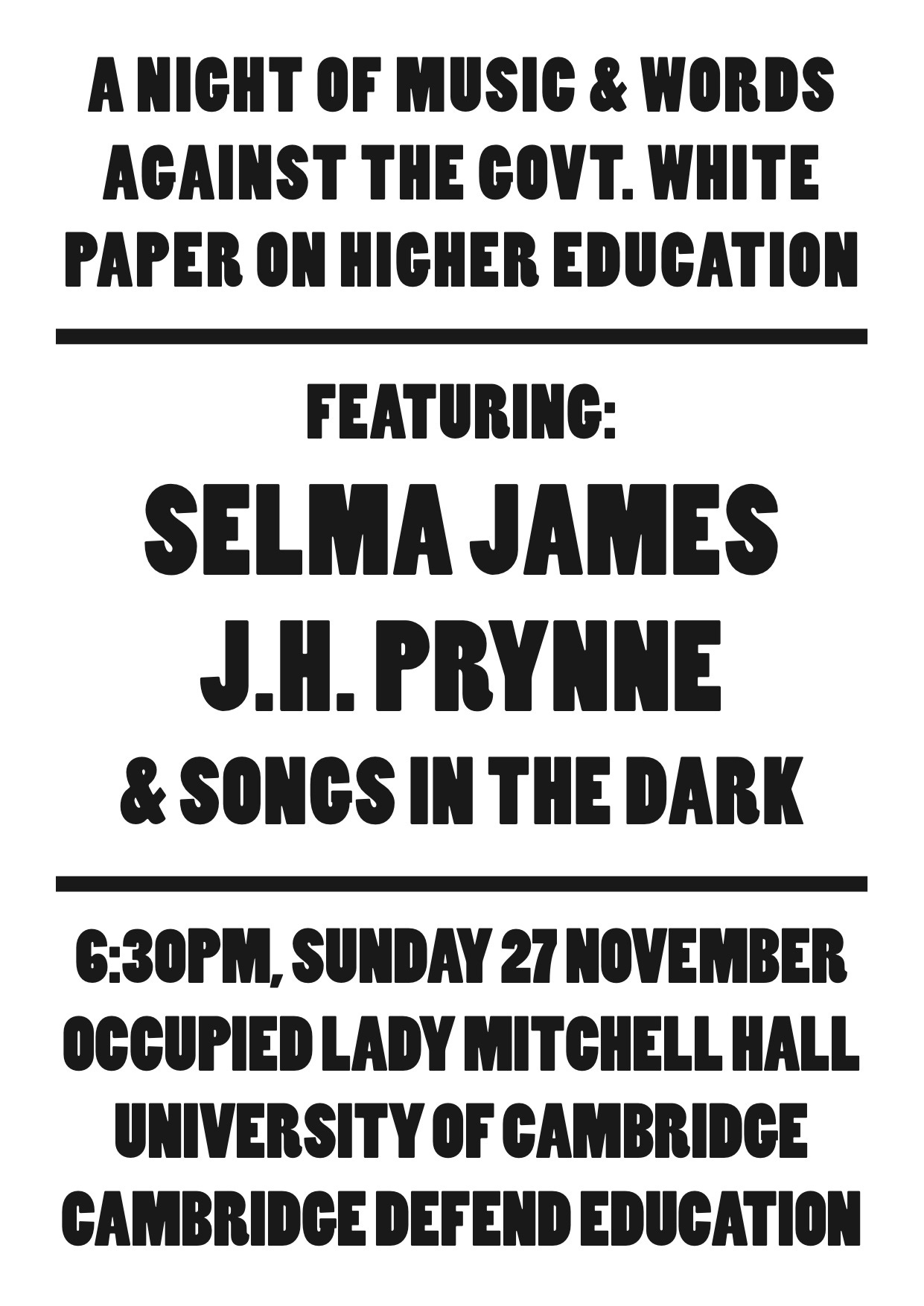
Jeremy was important to a whole host of us down the generations, for a whole host of reasons: politically, personally, and above all, poetically. For his avant-gardism; for his careful, critical, ethical attention to the specifities of poetic language; for his unorthodox Maoism, however that was understood; for his personal kindness and encouragement; for the kinds of permission his work opened up. Of the poems written during the period I knew him, the most important to me remains the life-work summary of Kazoo Dreamboats, written during the era of the financial crisis through the lens of Piers Plowman’s societal vision, via modern scientific textbooks, ancient funeral rites, and Maoist dialectics. A particularly treasured memory is Jeremy’s reading of a substantial portion of this poem to the student occupation of Lady Mitchell Hall, Cambridge in November 2011, alongside the veteran feminist campaigner and author Selma James. Insisting on making this a poem which could speak to the occasion and the political struggle, without compromising the fierce difficulty of the work itself, the reading was forceful and moving. When he read out the line “Rule One: people with top pay are rubbish”, the room was electrically charged, a charge that seemed to come both from the poem and to enter into the poem from outside. What I learned from this moment was that the poem itself does not change its context, nor does the context change the poem: but that their dialectical relation adds something to both.

Poster for the event hosted by Cambridge Defend Education at which J.H. Prynne read from Kazoo Dreamboats, 27 November 2011

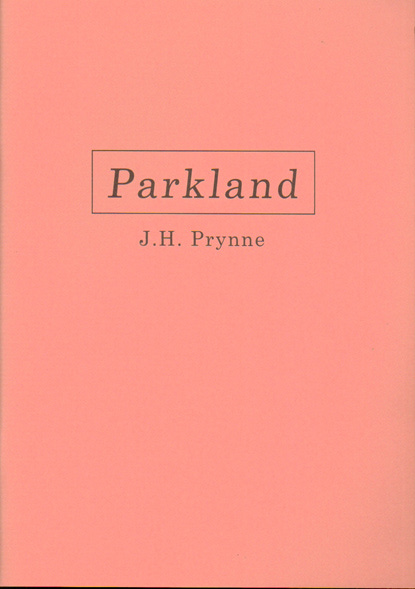
Other works from these years that I treasure: the “bruised compassionate dismay” of Of . the . Abyss, a pamphlet I had the honour of publishing, which overlays Victorian child cruelty and the present migrant crisis; and the enquiry into the entanglement of British imperialism with poetic song in Parkland: a complex, insistent and direct enquiry into how the poet can sing when empire starves those other “fair field full of folk” elsewhere; a poem which movingly and deeply wants to believe in the possibility of poetry as lyric joy, but is totally lacking illusion about poetry as salvation; a poem that ask how the poet can go on singing their song when that song gets conscripted as the national anthem; that treats poetry with a near-devotional cast, yet radically questions whether poetry is morally complicit with corrupt orderings, if not actively harmful, then at least insufficiently attentive to or able to frame harm; a poem concerned with a national verse tradition, that ruthlessly interrogates the bases behind that tradition in the interests of a fervent, anti-imperialist internationalism; a poem rigorously dialectical, as dialectic is a practice of dialogue and question in origin, but as it is also the ruthless criticism of all that exists, and the very conditions for that questioning.

Cover to J.H. Prynne, Parkland (Critical Documents, March 2020)

Language is no innocent playground, yet the ludic is important to Jeremy’s late work (much of it published by Ian Heames’s Face Press), with its insistence that contemplation, play, and purposive activity be not separated. I love, too, the playful and unsettling rhyming poems of Snooty Tipoffs, the dense compaction of Al Dente, the fables and orchards and tales and streams of language that are the river all those late books swim. But maybe most of all I love the text ‘No Universal Plan for a Good Life’, a didactic summary in clear prose of the ethical position Jeremy believes poetry to hold, written for the context of people’s struggle in Nepal. I treasure both the text itself and the act of imaginative extension and solidarity it performs. And this is what I want to hold onto, about J as a person and about his work, this act of imaginative solidarity, this absolute belief in the power of poetry, this ethical rigour, this thinking through of the question of spirit and matter, this permission and this belief that poetry matters. I think I’ll carry that with me throughout my life. I hope I do so.

At play and at work there in language, into which he has now gone—at play and at work and now and then at rest—a life.

Wednesday 22 April 2026

Monday, 15 May 2017

New from MATERIALS: Prynne & Kruk

A sequence of ten poems by J.H. Prynne.


“Oh strike the light, float the boat, for
sake of common peril they are fallen away
as gathered up in sight of lamentable in-
difference and will go down against us”. 


16 pp, card covers (blue), saddle-stapled.

Also announcing the opening of the German wing of MATERIALS, MATERIALIEN, run from Munich by Lisa Jeschke. First publication, Stecknadel, a German-language translation of Frances Kruk's Pin by Koshka Duff.


More info on both here.

Friday, 15 March 2013

Starcrusher Night: Cambridge, 09.03.13


This was again at the Judith E. Wilson Drama Studio in the Faculty of English in the University of Cambridge, ok, so, an 'institutional' or 'academic' space, but thru its temporary inhabitants granted some extended drunken spirit. After an endless projection of a lo-fi(lm) the less of which said the better (save that J. Hardingham’s Klaus Kinski is a fine Klaus Kinski_), interval spillage spilled over into wine-table chatter sprinkling the edges of the opening drones of one O. Evans, down with the flu but freshly haircut & armed w/didgeridoo, kaoss pad & assorted other implements electronic & acoustic. His 20 minute set, billed as 'noise', began proper with a reading of the night's wall-tacked schedule, announcements of multiple intervals drawing an incredulous 'oh my god' from a certain attendant Poet of High Repute; preceding between the advertised noise and the more luxuriant melancholia of pre-recorded loops, Evans' set went on to incorporate treated blarts from a (non-indigenous) patterned didgeridoo and an in-progress set of homophonic translations of the work of Henri Michaux, said by their translator to concern the relation between drugs and the state. No hippie nostalgia here, then, that refusal carried

over (after one of the aforementioned intervals) by the decidedly anti-hippie Sean Bonney, for whom, as his 'Letter on Harmony and Crisis' makes clear, any indulgence in a past history of supposed radical art must be questioned as recuperated nostalgia (“Old films, old music: abstractions, commodities[...]Old songs made an integral part of the phrase velocity of the entire culture”) even as such past history must be simultaneously clung to for the possibility it offers of continuing resistance in this here ("the circulation of these songs does contain within itself the possibility of interruptions"). For the past couple of years now, Bonney's writing has taken a turn towards prose - as he said of the series of 'letters' from which he read, of which that concerning Harmony and Crisis is one, “these are not poems” (tho' at the time he had first started writing them, caught off-guard by this unanticipated formal turn, he was describing them as ‘prose poems’). Instead, one might read them as something like communiqués, bulletins, reports from some kind of front-line in which the speaker - described by Bonney as a 'fictional character' but in many ways obviously identified with the poet himself - hangs around in his East London flat or wanders the supermarket meditating on, among things, the riots of August 2012, the growing rhetoric stacked up by the U.K. gov't against the unemployed, and the history of oppression woven into Cecil Taylor's 'Unit Structures', in which each note is said to form part of a "a kind of chain gang, a kind of musical analysis of bourgeois history as a network of cultural and economic unfreedom." This would seem of a piece with the bulletin-type quality of Bonney’s poetry over the past few years, a quality exacerbated or perhaps in some way produced by their first appearances at his blog, abandoned buildings. "like getting a telephone call from the barricades, the Paris Commune.” Yet it seems that the move from poetry to prose is not a simple transition to ‘the bulletin’ or somesuch: indeed, one might, it seems, say things with more directness in a poem, which indicates something both about how little poetry is taken to matter nowadays (hence the fact that censorship controversies occur over hip-hop records or rock lyrics rather than ‘poems’ per se: a case such as the prosecution’s use of Amiri Baraka’s poem ‘Black People!’ in court is pretty much unthinkable now), and about relative levels of censorship with regard to differing forms. This is what Josef Kaplan is getting at, in however deliberately controversy-courting and politically bull-headed a manner (verging on some kind of anarchistic nihilism), when he makes a statement like this: “Poetry itself doesn’t do shit. Which is why you can have things happen in poetry that would be horrifying or terrible if conceived of in spheres outside of poetry. Which is honestly the best part about poetry.” And OK, without having to entirely agree or disagree with that (it seems to verge on the sort of justifications used by repellent neo-Fascists like Peter Sotos), you can see how lines of Bonney’s like “slaughter the Fascist BNP” or “if you meet a Tory in the street, cut his throat”, would mean something entirely different in one of the Letters than they do in the poems. I think. I may be wrong. But there’s no easy trajectory here, whereby both poetry and prose can be taken as allowing a political discourse that it is more direct than the other; and Bonney seems to have felt the change in registers or formal structures as something of a crisis in itself, at one stage wondering in public if he was even a poet anymore.

The acuteness of this privileging of poetry over prose as knowledge-repository, for the kind of thinking in form that it allows might seem to those perhaps not as (emotionally, intellectually) invested as Bonney in the world of poetry as an over-reaction – why should working in prose be a betrayal, or an incapacitation of certain strains of thought? And yet it is a dilemma that we might see enacted in the work of the writer on whom Bonney has recently finished writing his Ph.D, Amiri Baraka: the sense that, to write a political poem, one must nearly destroy the qualities that make the poem a ‘poem’, that the content of that poem moves beyond the form(s) in which it originally appeared so that the poet suddenly finds themselves spinning out lines of what are, essentially, lineated prose. In Baraka’s case, this takes an extreme in his first collection of Marxist-Leninist poetry, ‘Hard Facts’, tho’ at the same time there is an increased emphasis on the poem as ‘score’ for reading, as oral repository rather than as object fixed by eye-reading – even as this rhetorical register might just as well be said to echo the political speech as the ‘poem’ itself (“Malcolm the artist. Touré the artist. Nyerere the artist. Karenga the artist” writes Baraka in an earlier, Black Nationalist essay in which he ends up claiming, Situationist-style, that “THE LARGEST WORK OF ART IS THE WORLD ITSELF”). In Baraka’s more recent work, which has barely received any critical discussion, something of a rapprochement is enacted between a self-consciously ‘poetic’ form and an attempt at dialectical thought, often centred around puns in a manner more than a little reminiscent of the esoteric-playful signifying practices of Sun Ra or Rammellzee’s coded alphabets. Indeed, an essay such as ‘The Blues Aesthetic and the Black Aesthetic’, collected in the recent book of essays on music, ‘Digging’, shares very similar territory to the poem ‘The Book of Life’, excerpts of which are included in Aldon Nielsen and Lauri Ramey’s anthology of African-American poetry, ‘Every Goodbye Aint’ Gone’: the same puns occurring in both works, the notion that rhythm and the entirety of life itself is a dialectical process being one that is presented, accessed or reached as much through the afore-mentioned puns as it is through logical argumentation. One might argue that this process is itself anti-historical, given that the suggestive connections Baraka draws are based on double-meanings that only work when one considers, for example, an ancient Egyptian word as an English one ('Isis' becoming 'Is/Is') – it is hardly a philological or etymologically-sound approach, a tracing of the actual history embedded in language. Yet perhaps this is not the point – the work exists half-way between actual, fully-thought theory and a scattering of suggestive and playful notes, hinting at lines of thought without quite pinning them down with exactitude. Certainly, to posit that the rhythms of African-American music embody the materialist dialectic, as opposed to the stale old Adornian dismissal of jazz or the Left’s continued miring in Bragg-Seeger folksong-sterilisations/ aspic-encasements, is a step forward, even if it risks over-generalisation and a reliance on a-priori concepts; and the re-writing of Islam, within the poem ‘Allah Mean Everything,’ as an assault on capitalism, the suppression of women, and the monetary system, assumes political relevance within current Islamophobic trends.

But further discussion of this really does get us way off point, and the details of Baraka’s poetry/prose dialectic(?) perhaps don’t apply so much to Bonney, whose poetic style, as much as it is fed by the same African-American musics that Baraka champions, cannot operate out of that same cultural or racial community, emerges from a different situation and a different tradition, originally (just as, in the 1960s and 70s, European Free Improvisation emerges from Free Jazz but takes it in a different direction). And Bonney’s prose, if we’re calling it that, is very different from the sloganeering aspects of Baraka’s most dogmatically MLM poetry: rather than preaching from a pulpit and attempting to create a black-working class revolutionary alliance through sheer rhetorical force, Bonney’s speaker, the letter-writer caught between requests for money and patronage from his relatively well-off, employed friend, and contempt for that friend’s bourgeois conformity, is acutely aware of the poet’s own implication within a recuperation of discourses and, above all, the peculiar economic status of the poet, the scholar, or the artist in general within capitalism, both critiquing and feeding off the system. Certainly, the poems of ‘The Commons’ in particular are acutely aware of the problematic status of what Bonney elsewhere calls “legitimate ruins like the letter I”, i.e. the fabled lyric I, rescued from Language Poetry’s complicit dismissal-disguise and re-asserted as a kind of collective I/eye borrowing from folk song, thieving its sources like the cuckoo bird – but, in assuming a seemingly much more stable subject-position, within the prose letters or, as Bonney suggests, ‘short fictions’, of the recent works, different conventions are played with. {{One might draw parallels with the return of an almost joyfully-over-emphasized ‘I’ as the seeing subject of J.H. Prynne’s most recent poem, ‘Kazoo Dreamboats’ – the visionary seer of medieval dream poetry periodically asserting “I saw” – yet, in Prynne’s case, this very return of what had been, according to many ‘critical’ accounts of his late work, in any case, banished and removed, may in fact be an attempted means of extinguishing subjectivity once and for all.}} If Bonney’s letters play with conventions of, I don’t know, the epistolary novel, collections of letters from Benjamin, Olson, Rosa Luxembourg, whomever, they are also a means of heightening the relation between addressor and addressee that the poems, in their spasmodic creation of enraged community, particular in performance, are less explicitly concerned with, assuming a shared register, for ‘us’ and against ‘them’. That rhetoric certainly continues through here (the description of bourgeois ‘understanding’ as the bullet in the brain that ends the life of the Headmaster in Lindsay Anderson’s ‘If’), but with an acute sense of complication, of the urge to lunge forward in rhetorical-overstatement but of the gap that this lunge raises between theory and practice; of the dependence of the letter-writer on the very system his entire writing project is predicated on destroying; or the containment into commodity from not only of human lives and labour but of the artistic ‘products’ often simplistically supposed removed from that cycle. (Bonney’s comments on the recuperation of Cecil Taylor’s ‘Unit Structures’ into (shelf-)units(albums) or over-priced Royal Festival Hall tickets echo the dilemma described acutely in Iain Anderson’s article ‘Jazz Outside the Marketplace’, whereby the attempted economic self-organisation and resistant dissonances of 1960s free jazz were steadily incorporated into university professorships, Guggenheim grants, support from the Rockerfeller foundation, removed from the black communities for which they claimed to speak and, in many cases, reduced to another ‘high art’ commodity.)

This simultaneous turn to a foregrounded subjectivity, however loosely identified with the author’s own person (parallels with Baraka again, his semi-autobiographical practices in ‘The System of Dante’s Hell’, ‘Tales’ or ‘Six Persons’ through to ‘Tales of the Out & Gone’), and the self-critical positioning of that subject as distinctly non-heroic, trapped within the obscure mathematical or scientific systems that Bonney outlines as the workings of capital (“the intense surges of radio emissions we’re trapped inside. Cyclones and anticyclones” // “the base astrological geometry of th[e] supermarket […] revealed as simplistic, fanatic and rectilinear”) might be characterised as part of the ‘turn’ from poetry to prose, even as this narrative is complicated by the fact that Bonney still occasionally writes lineated poems and that such discourses of the trapped are present both in ‘working notes’ and poems that have appeared on his blog. Perhaps, then, the letters are a synthesis of these working notes and poems, filtered through the foregrounded subject-character as new stylistic amalgam that is more than ever concerned with “the problem [of] how to make whatever it is that is trapped in aesthetics, idealism and in history learn to speak,” but that has decided to do so through an examination of methods, life-minutiae and habits rather than some more ‘elevated’ form of exhortatory utterance. "It's difficult to talk about poems in these circumstances."

That summation, tho', still implies a chronologically over-simplistic description of the move 'away' from poetry towards a more discursive style as a reaction to a particular political situation, a growing dissatisfaction with the constant gap between the purported heroic potential of king-killing poetic utterance and the actual indifference various fugitive publications and scenes might provoke in the actual sphere of political action. True, there have been discussions of a return to the distribution of oppositional poetry thru, say, handing out broadsides on street corners, printing multiple leaflets of poems to hand out on marches as displacement of the usual SWP factional-evangelical pamphleteering; there have been readings at occupations. And these various measures have never seemed to go quite far enough, or to fulfill their objectives even when 'implemented'. Bonney:
"Yeh, I turned up and did readings in the student occupations and, frankly, I’d have been better off just drinking. It felt stupid to stand up, after someone had been doing a talk on what to do if you got nicked, or whatever, to stand up and read poetry. I can’t kid myself otherwise. I can’t delude myself that my poetry had somehow been “tested” because they kinda liked it."
Similarly, Kent Johnson's suggestion to the UKPoetry List run from Miami University that the supposed thriving underground of British radical poets should all join the SWP also falls flat, (particularly given the rape-apology scandal now engulfing the party), even as its provocation towards political organisation remains pertinent. But while this might all have to do with poetic or prosaic form, it might equally not. Still, it's worth considering here the use of prose sections in Keston Sutherland’s recent work, forthcoming in the ‘Odes to TL61P’ - in particular ‘The Clearance of Trafalgar Square’ - even if Sutherland describes these as simply (or not simply!) an extra-long verse line; or, similarly, Justin Katko / Jow Lindsay’s ‘Trigger Warning’ -- both examples written as reactions to specific political events which seem to invoke a particular stylistic register that, while full of exclamation, invective, invocation, lends itself to the prose line rather than to shorter ‘poetic’ lineations (even as both Katko and Sutherland have also been recently and simultaneously working with much more ‘old-fashioned’ forms of poetic affect that strike an equally surprising register). Perhaps J.H. Prynne’s ‘Kazoo Dreamboats’ also (in sharp contrast to the monosyllabic clippings of ‘Streak ~ Willing ~ Entourage ~ Artesian’).

In any case, whether or not the Letters’ generic indeterminacy (maybe not the right word) occurs as a specific formal reaction to political crisis, said indeterminacy (wrong word, Cageian), does indeed render them hard to pin down in a manner very much congruent with certain strands of politically-aware ‘artistic’ writing. As much of Bonney's work over the past 10 years has done, they include appropriated slogans, quotations and phrases from a wide variety of communist writers and African-American politicians and artists, Marx on surplus value jostling up alongside Eldridge Cleaver ("all else is suffering and madness at the hands of the pigs") in a style certainly departing from (as in beginning, but also diverging or being suspicious of) certain Situationist tenets -- re-appropriation, the use of arcane vocabularies as a kind of underground cell of resistant language - the alternative tradition Bonney earlier identified in Blake, Bob Cobbing and Abiezer Coppe, and which increasingly comes manifested in an African-American tradition of Amiri Baraka, Cleaver and Cecil Taylor, or the radical kernel at the heart of the work of Arthur Rimbaud, 'translations' of whose work draw parallels between its engagement with the Paris Commune and various protest movements in the UK. This appropriative practice was figured primarily through music in Bonney's major sequence 'The Commons', which he has described as a 'modern folk song', taking its cue from the re-ordering of collective folk fragments described, for instance, in Greil Marcus' treatment of 'The Cuckoo Bird' in his book 'Invisible Republic': here, the sonnet form ("this thing has fourteen lines / as in picket lines" Bonney writes in a later poem) collided with black American music of (roughly) the 1930s to 1970s, Adorno, B-movie zombie register of a kind found more obliquely in the work of Bonney's partner Frances Kruk, current political discourse, and a debate on the nature of the lyric 'I', in a highly wired, jerky, spasmodic series of short lines characterised by a jammed-up connectivity that terms borrowed from other disciplines like 'montage' or 'collage' would not do well to define, a sense of simultaneous foregrounded breakage and forced elision, where the song of the cuckoo becomes the song of Betty Davis (‘he was a big freak’) or the sound of a gun-shot ("the cuckoo is a / BANG"), the disruption of pastoral idyll by urban energy and the suppressed underclass that allows the aristocratic fantasy of the healing power of the countryside its arcadian shadiness (shades as in spectres, of course). And while the Letters are often about music (and specifically the notion of harmony as cover for a system of social order(ing) that covers and masks injustice – see here in particular the discussion of the Pythagoreian antichthon in an article called ‘Non-Cognitive Aspects of the City’ that can be found here), in contrast to 'The Commons' their affect is of a different kind that can’t really be called ‘musical’ (as even ‘The Commons’ itself wasn’t, really, so much, given that the term is so often banded around in vague broad-brushing of a general area that might be better identified as ‘has strong emotional/rhythmic qualities in performance that produce similar convulsions as listening to certain kinds of music’).

But, OK, here’s what I’m getting at – with the change in the style of writing, so a change in the style of reading, of the style of reading that the style of writing demands (because, after all, poets don’t necessarily write what they write as a guide to how they might read it; they might write it and then have to find ways to read it – this is something you hear people say a lot, e.g. “I haven’t really found a way to read this poem yet,” and so on.) So, Bonney’s reading itself, in Cambridge, began quietly – as he notes, the Letters are not really meant to be read out loud, in a way that it was immediately obvious the poems of ‘The Commons’ were, as he launched into them with foot-jerking intensity. But, and not to valourize the following as some sort of sense of (the appearance of) suffering-artist-intensity as lending a particular kind of privileged vatic ‘truth’ to utterance (somewhat akin to what Anthony Braxton calls “the sweating-brow syndrome,” in which the more sweat a jazz musician dispenses, the more ‘authentic’ they are deemed to be, with all the problematic racial stereotypes that implies), that sense that the poem or the thing you are reading, because recent, because wrestling with formal dilemma and thus all cracked and imperfect and wrong, is wrenchingly awkward and painful to read, almost embarrassing, is something that has resulted in some of the most powerful readings I’ve seen in recent years. Say, for example, Justin Katko’s rendition of his own afore-mentioned poem about the 2011 riots, ‘Trigger Warning’, at about this point last year: in which Katko sat in a chair and appeared distrustful of the very rhetorical vehemence and shouting intensity that his reading eventually moved into and that the poem itself fully and completely inhabits and provokes. Certainly, or partially, anyhow, in Bonney's reading, that quality of nervousness mixed with the occasional vehemence of the work read out went some way towards approximating or paralleling the mixed stylistic and theoretical register of those works themselves, the desire and necessity to strongly speak undercut and yet somehow reinforced by the self-questioning webs of implication that that poet’s voice implied. I’m not saying that this frisson of difficulty and strain should be applauded as an end in itself, but that its evidence that poetry might still be thought (as in, it might still be a form for thinking) gives some sort of hope, even as there are not ever easy answers here.

Lisa Jeschke’s reading style is almost the opposite of this, avoiding emotive effect for something that is certainly not ‘neutral’ but that comes to a very different place than, say, Bonney or Katko. The recently-written piece she read on the night emerged from a dissatisfaction with the form of her own recent work – almost an opposite trajectory to that of Bonney, in fact, in that her own previous pieces (collected in ‘Materials 1’) often consist of large undifferentiated blocks of prose which she would have described as ‘poems’, but which she has come to view, following recent discussions & symposia, as, in terms of, formal categorisation, something of a cop-out, an inattention to poetic form as poetic form. Hence this new piece, each line exactly seven syllables in length, often relying on deliberately clanging and obvious rhyme, as a kind of parodic return to rhyme that questions its own affect but that cannot quite be described as simple ‘irony’ or ‘parody’ (interesting parallels here, again to Katko: the first poem of his ‘Songs for One Occasion’, with its “ocean grave”s and waves). Also some play on English-German translation, reversed verb forms: references here less (as in previous works) to (a) personal ‘life experiences’ (meeting a drunk man in a park; burying a childhood friend under a pile of earth; &c.) or (b) critico-theoretical-theatrical debate-terminologies, more to - what? A change in voice, anyhow, “neutral chide,” some sort of unplaceable bite.

Ian Heames following, reciting the second half of ‘Array One’, of which I’ve written at length here, and a new poem, 'Orca Plaintiffs', which seems to continue that poem’s mix of computer-game and poetic register (“my opponent believes that the universe is made of fire”) shot through with the discourses of techno-capitalism. And Tomas Weber, whose ‘Another Word From Me Out of Uniform’ has just appeared from Tipped Press, and whose running-on of different register-phrases is, again, very different from all of the above: if Heames’ poetry is clipped aphorism, sequential thought, cross-referencing, Jeschke’s concerned with (various) form(s) as restriction, Bonney’s again with form and voice and the political, Weber’s seems in some way unforced, even distinctly pleasurable: Biggie Smalls meets F.R. Leavis but not in any music-journo Metaphyiscal Poets mash up bastardisation (this from 'Ausculation': “and I will never rhyme / like party and bullshit” […] “it wasn’t really / Leavis who said the way / the British do war is still true / to English mannerism and so I love you forever / & always or was it”). Yet in the recent long(ish) poem, ‘Performing for the Troops’, the run-on joins that make much of his work so pleasurable are deliberately not soldered, the links not fashioned, so that there is something brutal to it, even as it gets a hearty audience laugh (“Who’s that fuck? / Shut up, fuck”). It's hard to write about because it resists the more broadly theoretical frameworks into which one might place the other poets, and that might make it seem more ‘insubstantial’ or something; certainly, earlier work had a strain of lyricism to it that still perhaps functions a little (traces of American pastoralism tho’ by no means unconscious of imperial complicity) - the poet actually wanting their heart to be a plane, I can’t remember the exact reference – but here lyric most often moves into exchanges of selves as collections of clothes or children or radio stations or youtube videos that aren’t so much lang-po playful or even, in the vein of O’Hara’s ‘In Memory of My Feelings’, self-critically-camp-playful (partly because Weber isn’t American and so the register is different, even if American culture as filtered over to the UK and in summer travels is very much present), but poised more obliquely between laughter and something more sinister, even disturbing, as in those lines quoted above, the subject not allowed voice, mocked in authority-figure mimicry -- shut "that fuck" up, “wants to be / some speaking thing.”

That combination of poets constituting quite a long reading, intense continuance, so interval spills over, again: music set-up, second noise set, O. Evans again kaoss padd’d, this time w/added Minton/Patton-esque screaming and even at one point a trace of school melodica; Gregor Forbes’ industrially-reverb’d Pure Data factorials, some other PA’d laptop & pickup-to-practice-amp feedback’d human, but I think it all merged into one blart of sound in which individual contribution was less important than general sonic mass (though perhaps a little more ‘improvy’ than Japanoisy?). It had started to fucking snow outside & bits of it had melted and were dropping off people’s hair. I think Nas replaced Bad Brains as interval music @ this point, then in fact the longest section of the evening, Nat Raha and Verity Spott the final poets of the night. Raha read, among other things, poems for Sonic Youth to the accompaniment of vintage cassette recorder as lo-fi voice-multitracking, youth against fascism – “it’s the song I hate” – the words themselves not really decipherable, the effect more akin maybe to something that might have come out of the choral-voice experiments of 1970s NYC (Hannah Weiner, Jackson MacLow &c.) and the more unexpected for that. The poems without tape that started things off were from Raha's new collection, ‘mute exterior intimate’ - where exterior might be buildings, might be faces, bodies in spatial negotiation, indie or shoegaze leakings thru with seagulls into critiques of neo-liberalism, memorials for victims of transphobia, the spectral presences of Mayakovsky and love, the “doctrine of bliss and suffocation.” Spott’s was the longest reading of the night at maybe over half-an-hour, certainly the most intense, and not only in terms of sheer length, veering between grotesque-choke sound poetry, @ one point even throwing the pamphlet read from down on the floor and repeatedly punching it. The audience laughed a lot, and this seemed right, but, like a lot of the laughter that punctuates readings like this, it came back rebounding on itself because the work itself is hardly comfortable, is scatological, grotesque and highly sexual - infant sexuality too, a long joke about fucking poets turning into a dialogue between two children centering around the many implications of the activity implied in the familiar insult ‘motherfucker.’ Kind of traumatizing, really, but (and) for sure visceral in a way that, say, the noise set before even really wasn’t, and hard to process in that way because less precise than, say, Heames or Jeschke, throwing itself all over the place with words and words and words in often uncomfortable excess. Spott herself describes it as “digusting and ungainly”, which it is in parts, deliberately and distinctly so.

And that kind of intensity necessitates another interval, and then Business Lunch make their debut with a three-song set, absent singers and last-minute rehearsals shaping, at this stage into the evening, into something fitting right in place, some noise keyboard too over the bass & guitar riffs in the more extended last piece. Shudder and jump // "got the swing" // more rock music at readings, yes? Jeremy Hardingham closes the evening with a-cappella songs and some karaoke to Die Toten Hosen which is hardly karaoke as ‘we’ know it. He reads a poem about the killing of a bird with an oar and then sings it, closes with a tender ‘goodnight’. There’s again a lot of laughter here, but I think that to laugh in this way would be to take the songs @ a face value that does a disservice to their non-naïve non-irony: many parts were, you know, moving. Tho’ the “fist full of piss / apostrophic bliss” barnstormer, well, yeh. It's been in my head for days. At one point Hardingham sang literally with a silver spoon in his mouth, but again, that was hardly boringly symbolic even as the joke-resonances of it being symbolic were of course not discounted. The room heaved. It was still snowing outside. (The equivalent event last year was called ‘Spring Decoys’. There are daffodils outside the English Faculty. The area around Grange Road in which the faculty and the University Library are situated is ghost-empty at night, darkness on the edge of town. 'Cambridge', as much as this university-sphere-cocoon constitutes it, is so far from the real world, whatever world might be made inside black boxes. Why not throw an egg out of a moving white van outside one of the gated colleges, built to be thus gated, enclosed? But these big one-off events might be made to move into something else even if no one from the ‘town’ was ever going to come down to the university bowels, the City of Dis. By which I mean, maybe there will be some sense of a series extending somewhere (viz. http://starcrushernites.tumblr.com/.) Onward christian soldiers.

Thursday, 11 October 2012

"A Form That's Already Replaced You": Against Kenny Goldsmith


This short piece will argue against Kenny Goldsmith’s post-‘death of the author’, post-Warhol celebration of unoriginality, of banality, in which the statement of the individual artist is fed through and spat out by the images and discourses of advertising, celebrity, spectacle; it will argue that Goldsmith’s position is, at best, politically naïve, and at worst, grotesquely complicit with the exploitative modes of techno-capitalism. Goldsmith’s most recent theoretical statement is entitled ‘Uncreative Writing: Managing Language in the Digital Age’ (Columbia University Press, 2011) – note that telling ‘managing’ in the title, as if poetry had been delivered entirely into the hands of institutional apparatus, of some management consultancy model; and note the final chapter, with its call for writers to be secretary-pirates, appropriating that whole digital piracy thang from Hakim Bey (a usage which was fairly empty in the first place) and incorporating it into some ghastly bland celebration of office space as neutral or even as some good. Goldsmith, in both his theoretical work and those texts in which he puts these ideas into practice, would seem to celebrate the swamping of the human by technological processes bigger, better, brighter than the human – all this trendy talk of ‘the cloud’, digital networks, cyborgs – and thus, ultimately, to fetishize the endless proliferation of modes of digital technology in a manner which overlooks the very real, physical, and non-digital modes of labour exploitation and oppression (the outsourcing of the proletariat) on which these modes depend. For example, how’d you like them apples™? We await Kenny G’s text based on transcripts from the foxconn factory, but that’s not gonna happen (in terms of using sources that take the text from out of the author’s sole domain, a more interesting, and more politically-engaged model might be that of Mark Nowak).

((Well OK, no doubt the same applies to the laptop on which I’m typing this, to the institution in which I’m permitted the time to write this, right down to the clothes I eat and the food I wear, but what I’m arguing is not that I can escape the tacit hypocrisy of which Goldmsith is tactically unaware, but that an awareness of this hypocrisy and complicity is at least some grounds towards a mobilisation that would begin to desire to resist and change that situation. And I’m not going for some Luddism either, some anarcho-primitivism, some model of little tribal farming communities close to the earth yada yada yada – technology mobilised against power structures is also a necessary part of resistance, even if the role of social media in recent revolutionary movements (Arab Spring et al) too easily translates, at least over here in the relative comfort of where I am, as mere slacktivism, constructing a persona of righteous outrage on that facebook screen through which we mediate and create our selves in any case – a digital ‘signature’ as the agglomeration of photos, wall posts, statuses, links, identity parade, self sold through spectacle spectacles and even back to ourselves, so that we don’t realise this construction as anything other than what we ‘really are.’))

Goldsmith’s model of feeding texts through html coding processes, regurgitating traffic reports, or re-typing Jack Kerouac’s ‘On the Road’ on a blog – or, for that matter, the ‘flarf’ poets’ re-combinations of internet spam texts as ironic parody / celebration of a kind of virtual spectacle in which all discourses are equivalent – might appear similar to the collapse of specialisation and separation into a collage of discourse in much modernist poetry – from Pound’s or Olson’s mytho-historical projects to the ‘rubbish theory’ of J.H. Prynne, in which the language of high finance comes up against the other languages it conceals: discourses of pain, hurt, environmental despoilage, wounds and damage. But these poetries involve criteria of judgement and thought very different from Goldsmith’s jocular / boring ease. William Burroughs believed that, by cutting up the discourses of power (political speeches, manuals, etc), these discourses would reveal their true messages, their true nonsense and inanity (cf. Sean Bonney’s ‘Tony Blair Speech’ for a more recent example of this). Goldsmith, by contrast, finds found material, or material that has already been cut-up by bots (the endless linguistic detritus of spam emails and web pages) fun and kooky. Pound, Olson, and the early Prynne aim for a philological project that seeks alternative and revitalising histories in language as a measure of where we now are and where we have come from, while the later Prynne sees a radical lack of innocence within language, a lack of innocence that must be reproduced, questioned, distorted, exaggerated and dialectically worked through. Goldsmith, in his post-modern celebration of the failure of such grand historical projects, and his happy-go-lucky lack of concern for issues of innocence or guilt or moral responsibility, could give a (virtual) shit. In ‘Uncreative Writing’, he excitedly proclaims that, though he’s come late to the techno-party, he thinks it’s, gee, just great–sort of,‘I’m older than y’all, y’know, but goddamm it I dig this stuff as much as you do.’

Essentially, what he wants to celebrate is that info-panopticon decried in Kevin Davies’ ‘Lateral Argument’ – “a young-adult global / civilization, a meta-literate culture with time on its / prosthetic tentacles, at this point slightly more silicon / than carbon, blinking vulnerably in the light of its own / radiant connectedness”. This is a panopticon that maintains the notion of the self and its signature just so that we still feel that little bit in control – there is “a special area, a little rectangle, for you to add your own comments.” I can see everyone on the google-ized globe and they can see me, and they can see me being my ‘own’ self, which is near-exactly the same as all the other selves constructed through advertising and all the other forms of propaganda all the more insidious because they pose so often as ‘non-ideological’; which is exactly the same as all the other selves because it is constructed by and through the gaze of the others. Thus mediated, melded, shaped, surrounded by surveillance even in sleep, they can go and make their point on twitter, their raised middle finger, make their point at the base of the news article, at the base of the youtube video, spewing hate at whichever racial or gendered or national group, and this is how to express ‘individuality’, this is a signature, imagine if all the books you wrote were the conglomeration of all those comments and posts, digital ether, information-propagation, self-duplication, endlessly patterned out, the presence of very real hate speech and keyboard-spat bile, hardly innocent, hardly democratic digital wonderland.

As Davies again puts it, it’s “easier to fill out a form that's already replaced you. Information / wants to be me. O / K.” And here the ‘information’ that wanted to be ‘free’ – that slogan of the post-hippie S. Jobs generation which was against totalitarianism in its obvious apparatus, against the visible violence force of oppression and for a deterritorialisation which ended up simply concealing those same, essentially unchanged means and ends of oppression and exploitation – has become so free (like that ‘freest’ of things, the free market) that it possesses me in my continuing and actual unfreedom. Freedom for markets, for info. Free for the price of a cable, a battery, an LED light, a screen. Motherboard confection. Sign on the dotted line: type it, because it doesn’t have to be your hand now, physical registration of yr presence, disembodied virtually yr identity / it cd be assumed by anyone. (Identity theft is merely the most obvious manifestation of this manipulation). And so Davies’ gesture at the end of these lines is tiny but crucial – the line-break that splits the ‘O’ and the ‘K’ re-invests that banalized word, ‘ok’, with a measure of emotion, however conventionalized and poeticised, through the ‘O’ that slips out of the human mouth of the de-humanised subject – that cry, at once de-personalized because ‘universal’ (the cry of pain or sorrow or anguish) and felt at the deepest core of my feeling being. It’s not as if this cry is being posited as something that will succeed against or even be heard through the white noise of free-running info, the ‘form’ that forms you, that fills you out, that uses you up – but to register that cry, that human note is still some recognition at least against total blind indifference. Douglas Kahn, in ‘Noise Water Meat’ (p.345): “Screams demand urgent or empathetic responses and thereby create a concentrated social space bounded by their audibility[…]They are resolutely communicative and meant for others…”

Of course this cry, as it occurs in Davies’ poem, could in turn be (is already?) fetishized, the scream reduced to a sound and fury that does signify nothing, standing in, in its inarticulacy, for a meaning it does not have but pretends to (‘O’ as mark of ‘profundity’). Indeed, cries / screams already do signify nothing, or nothing precisely, in that they are not language as such: their meaning is generalized signal more than fully-developed idea (though arguably this is little different to much of language per se, at least as it exists in the actual exchange of words between humans, w/ all the attendant paralinguistic edges to that field). Yet that signification of nothing registers as a refusal of ventriloquising ‘meaningful’ banalities and as a revealing of the inarticulate rage and pain and non-compatiblity at the hurt heart of the alienated subject – not John Cage’s ‘nothing to say and saying it’, but wanting (desiring) to say something and not being able to say it, communicating the failure to communicate as a means to (inarticulate) communication.

((I should state here that I’m always a little suspicious of the surely limited and ultimately defeatist stress on ‘inarticulacy’, stammering, etc, as some kind of resistant strategy, that we find, for example, in a recent article by Judith Butler – “at that point it may well be that we are silenced by existing authorities, but we have also become, paradoxically, subjects whose muteness and political stammering come to define a mode of being." (Butler, ‘Critique, Dissent, Disciplinarity’ (Critical Inquiry / Summer 2009)) Perhaps what I mean is that inarticulacy, the scream, stammering etc are all fine as critical tropes in relation to the kind of art that explicitly explores those kind of areas – the screams of Yoko Ono, Diamanda Galas, Patty Waters, and Ami Yoshida, for example – but that when they’re transferred to a sphere half-way between the political and the academy-critical (as in Butler’s article), their limits start to show. So I’d stress the limits of this approach – but in the context of Davies’ poem, I’ll let the point stand.))

At the back of all this seems to lie the notion that conventionalized forms of utterance, such as ‘O’, cannot be personally meaningful, cannot be imbued with signature – yet the most ‘personal’ moments of music in particular are very often those which use tropes for the expression of the personal – imperfection, slippage, true, the cracks in Billie Holiday’s voice, Charlie Parker playing ‘Lover Man’ with less than technical perfection but with a feted emotional honesty.

“The popular singer adopts many levels of conventional utterance-structures in order to communicate with an audience. It is usually assumed, however[…]that at some level the singer is not ‘acting’, that the conventionalisation stops and that the singer is presenting his or her personal utterance. […]Often such personal utterances will be expressed through widely-known popular and often totemic song-structures. This is taken to an extreme in the case of the blues, where an almost claustrophobically rigid structure of music and text is used as a vehicle for sophisticated gestural expression. This is akin to the highly articulate gestural articulation of ‘stock phrases’ in vernacular speech where the linguistic content can be the least significant communicative element.”

(Trevor Wishart, ‘Utterance’, from ‘On Sonic Art’, p.259)

And OK, so Davies’ ‘O’ does not function in the same way as a slurred or bent note from Miles Davis or a pitch slide from a blues singer might function – as personal expression / signature through at least partially conventionalized formal trope. (Perhaps there is more scope in music than in poetic language for this kind of manoeuvre.) Indeed, its use would seem essentially pessimistic: by anticipatorily ironizing that ‘O’, as merely half of the banal ‘OK’, and essentially turning it into a joke, Davies recognizes its conventionalized usefulness (used-up-ness) – recuperated into a discourse which mutes it, as merely another particle of a language that will not register the realness of hurt. Yet one might also argue that, precisely through the mimetic reproduction of this recuperation, Davies enables us to move beyond that recuperation, into a discourse where that scream could be attended to, not mediated by the distance of the screen, the TV’s mute button, the acceptance of trauma as mere background noise. Indeed, the wrongness (to use Keston Sutherland’s term) of the ‘O/K’ joke is precisely what might restore that ‘O’ as something with agency, with an urgent desire towards meaning or the registration, at least, of the presence of the other through the ‘signature’ of voice (see Adriana Cavarero’s ‘For More than One Voice’ on this).

Back, then, again, to Goldsmith, and KG’s attempt to escape the notion of ‘signature’ is, like John Cage’s, a false and a de-politicising escape from the responsibility that comes with the notion of self, and of self’s translation into image, sound, text. (This apparently insubstantial attack on Cage is developed at greater length in a forthcoming essay, so I won’t reproduce the arguments here.) But if Cage’s attempt to transcend self is informed by queered cultural climates and by a certain anarchistic model of community that is increasingly posited in political terms, Goldsmith’s a-political abdication is an overexcited and uncritical facebook/ twitter/ myspace/ youtube/ linkedin mashup-celebration of technologies which are humanly and historically harmful – both in terms of the exploitation that enables us to believe that ‘we’ve never had it so good’ (& fuck everyone else), the mysticised concealment of means of production, and in terms of the environmental damage that, whatever its consequences for some romanticised ‘mother nature’ is, let’s face it, of human impact also. To remove and diffuse the self into the ‘electronic arms’ of Laurie Anderson’s ‘O Superman’, all watched over by Richard Brautigan’s ‘machines of loving grace’ is to ignore the way in that self still acts within systems which are, OK, intimidatingly large, institutionally-bulked, capital-soaked, backed by guns and cops and private ‘security’ forces – but this kind of religious trust in a system bigger than one is not predicated on any real idea of solidarity or of communities of justice and reciprocal relation. I get my laptop and my dinky html-coded-poetry-play or the found sources I can make a decent dollar off (‘hey! so humble, I lost my ego!’), thus bulking up my institutional / critical cred as a famous author while simultaneously and supposedly celebrating the death of the author, the fact that we’re all creators, man. It is the choric participation of bodies and minds (which aren’t separate, ok) in consensus and dissensus and collective action that changes things and that enables us to get out of situations of systematic injustice – and that choric participation is the collective signature of all our individual signatures, all our individual selves – as Benjamin puts it, “the collective is a body too.” [“Only when […] all revolutionary tension becomes bodily collective innervation, and all the bodily innervations of the collective become revolutionary discharge has reality transcended itself to the extent demanded by the Communist Manifesto.” (Benjamin, ‘Surrealism: The Last Snapshot of the European Intellegentsia’)] The de-personalized machine-self or diffusion into realms of neutralized ‘text’, suspension of judgement, endless allowed and luxurious play (turning out, it must be said, texts that are singularly non-joyful, dull, repetitive, blank banalities) shudders us into no sense of the inadequacy of our present mode of existence, the desire for self-(and thus collective-)realisation that is entirely necessary if we are to do more than celebrate what we have as we hurtle towards the real end of what we have. Wake up and smell the meltdown.

Monday, 7 May 2012

How Long Is This? [The Theatre of Will Stuart] -- Judith E Wilson Drama Studio, Cambridge :: Friday 27th April 2012


Though he is ostensibly the Judith E Wilson dramatist in residence for the duration of the academic year, this day of works by, and responding to the theatre of Will Stuart, marked his first public appearance in Cambridge during that year: perhaps, after the reported extravaganza of pieces presented at the 2011 Miscellaneous Festival, he needed a breather. The day opened at 11AM with his greatest hit – premiered, I believe, at the 2009 Misc. Fest., on which occasion the lead role was memorably ‘played’ by Justin Katko (tho’ the notion of playing roles is of course very much complicated in and by Stuart’s practice). Said ‘hit’ is the half-hour or so theatre piece ‘Transfigurations’ – and while the elements out of whose fabric it is woven (this probably not being the best metaphor) are fairly easy to describe, their ramifications and dynamics take a lot longer to fully grapple with (I’m still doing it; since I first saw it, three years ago, it will occasionally pop into my head as an unsolved conundrum, a source of thought usefully generated from the frictive frustration and strangeness inherent in any engagement with its deceptively ‘clear’ surface). The play’s contents then, in brief: one participant (I’m not sure the word ‘actor’ is really appropriate here – by which I don’t mean to denigrate those who actually performed, but to highlight the ways in which Stuart’s is a very different proposition from the usual theatrical models) runs at full-tilt, back and forth across the breadth of the performance space, yelling ‘THE FOUR HORSEMEN OF THE APOCALYPSE ARE COMING’; another stands at the back of that space, mute and unmoving (apart from the inevitable suppressed laughter, which almost seems to be an anticipated, tho’ unwritten part of the role), holding a placard adorned with the single word ‘AROUSED’; a third, the main focus, sits centre stage, beginning by reciting a portion of Harold Pinter’s Nobel Prize acceptance speech, complete with knee-rug, before switching into a portion of Aileen Wuornos’ court testimony, in which she describes killing the man who has been torturing and raping her; the performer (on this occasion, female, tho’ the role appears to be gender-neutral) then stands to recite the lyrics to JLS’ ‘One Shot’ in some sort of sync with the sound of the song itself, blaring out in its fully glory, or otherwise. All fall silent as the Intermezzo from Mascagni’s ‘Cavalleria Rusticana’ is p(l)ayed in full; the apocalyptic messenger steps to the front and recites the words to an advert for Lindt chocolate, and the play ends.

That artifice plays a role here should not be in doubt; this being further highlighted by Stuart’s presence at the back of the stage, handing out props and giving cues, and by the fact that many lines were recited from visible scripts. This is not necessarily a ‘bad’ artifice, an artifice that draws critical attention to its own insincerity (tho’, in the case of the Lindt advert, of course, it might be): for instance, the afore-mentioned interchangeability of gender, both in terms of the Pinter / Wuornos / JLS figure and the silently aroused guard (both male in the 2009 production; both female in the 2012 afternoon performance (and I believe, male and female in the evening rendition)), would seem to be at once a move away from gendered stereotyping and a critical engagement with such stereotyping, with questions of vulnerability and victimhood and of what it means to voice the testimony of another, to appropriate another’s language of pain for ostensible purposes of parodic de-contextualisation. (Consider further: what difference does it make that it’s a solo female performer who rehearses the arm pain of ‘In Despite?’)

These questions of artifice and de- or re-contextualisation were central to Ian Heames’ paper on ‘Transfigurations’, originally presented at a conference on literature and pop music, and focussing specifically on Stuart’s use of JLS, understood adamantly not as parody of capitalist pop or those equally ‘stupid’ recipients who uncritically swallow it whole. Such a position would be a quasi-Adornian critique that risks sliding over into mere class contempt: while the ignorant masses lap up X-Factor or Britain’s Got Talent or the barely-now-remembered Pop Idol, we can dig our Boulez, and ironically laugh at their poor taste (tho’ of course to attribute X-Factor love to the entire working class is equally contemptuous – much of the most vital avant-popular music of the previous century emerges precisely from a working class base – and to criticise the banalization of emotion and the smoothing over of difficulty or struggle or contradiction into the shinily-packaged, the quick-burst affirmation or melancholic pleading of yet another identikit chart single, is a perhaps necessary, though difficult task (and, furthermore, one that’s not often attempted beyond more than a simple affirmation of what we’re all supposed instinctively to know: that this type of pop is bad and nefarious and contemptible and all the rest of it)). For Heames, then, Stuart’s deployment of ‘One Shot’ is a means of asking what ‘sympathy’ we could actually muster for the feelings the song, and other songs like it, rouse so differently in different individuals, notwithstanding the criticism that pop songs of a certain type homogenize felt response into predictable pattern(ing), aspirations within the capitalist frame of allowed leisure or love, or their attendant impossible celebrity aspiration syndrome (the kind of dream that is, indeed, encouraged by precisely those sorts of talent shows which propelled JLS to their moment of spotlit fame and influence: a notion of a kind of heaven on earth that you could have now, without radical social transformation – capitalism’s utopic cod-promise, forever deferred into pop’s exhortation or yearning to take what you want, because, even if “you’ve only got one shot,” you can have it, whether thru lottery luck or meritocratic striving). This point would seem similar to Marx’s take on religion in ‘The German Ideology’: the aim is to liberate society so that the needs to which religion gives expression are met without the need for their subsumption into a comforting and compensatory religious framework. Neither religion’s nor pop songs’ expressed urges are exactly falsely expressed within the frame of religion or pop, then, but are part of both forms’ very structure, their formal structures of desire and ‘feeling’, and in this light, Stuart’s work seems far more than the initial cheap joke it could seem, far more a serious engagement with, again, that ‘sympathy’ we could have for or with those urges.

Tho’ the advertised ‘discussions’ at the end of each section most often turned into breaks for food or coffee or intermission chat, J.H. Prynne (in a day-long attendance that is a mark of the interest and serious intent locally generated by Stuart’s work) did start a mini-debate as he queried Heames’ use of the phrase ‘deeper logic’ w/r/t pop music, Heames agreeing that this might suggest a false separation between surface and ‘depth’, or sincerity: pop, as it is used in Stuart’s play, is more of a feedback loop, where in is also out, where sincerity and depth cannot be easily entangled from each other, if at all. There is no detached, elevated authorial ‘deployment’ of the material; though the audience’s laughter contains ironic recognition, that recognition second-guesses an intended irony on the part of Stuart that is not present in his own usage. Evi Heinz’ earnest or faux-earnest spoken-karaoke delivery of ‘One Shot’s’ lyrics, with its slight stumbles and halts and missed-timings (at least, in the afternoon performance of the play which I witnessed), was not so much the appearance of real, felt spontaneity; rather, it added imperfection to JLS’ auto-tuned sheen: the imperfection, perhaps, that the listener brings to the perfect product, which imperfection is precisely where any of the ‘sympathy’ that Heames identified might lie – though to describe this as attributable ‘sincerity’ on the part of Stuart or Heinz would, of course be stupid. Maybe the feedback loop is dependent on room-mood and audience biography – the complex interweaving, perhaps clashing network of expectation and social background and felt engagement that they might bring to the performance: and here, alongside Transfiguration’s use of JLS, we might place the time-trial task set in Heinz’ CorresponDANCES, in which performer and audience attempt to blow-up a giant inflatable dinosaur before an extended recording of the Jurassic Park theme tune, and variations thereof, came to its close. Is this actually participation as a kind of communality? The elation and party game panic that the dinosaur challenge infectiously rouse(d) in those participating was in some sense real (witness Heames’ face reddening with effort, or James MacNamara causing his own lip to bleed), even as the piece satirized any ‘togetherness’, that ironization perhaps the condition for this togetherness to be real, to be glimpsed without the cloying cover of a false hippy all-in-this-togetherness, man…And it is laughter that draws one in, a kind of glee mixed with anxiety at the accomplishment of what is accepted as a ridiculous task, but whose accomplishment suddenly comes, in that moment, to seem almost desperately important, the laughter arising from a recognition of the sheer delirious and somehow utterly joyful absurdity of that emotional charge: well, maybe this is no more than what happens in the party games you might play with your friends (certainly before you reach your teens, and sporadically after, tho’ drinking games don’t engender the same kind of innocent, or ‘innocent’ solidarity). But how often does that kind of emotional register ever even enter theatre? Perhaps it could only happen here because the audience at that stage was so small, the interaction occurring on a manageable level, that separation between the elect few on stage and the select or willy-nilly audience mass less apparent than it might otherwise have been: there might then be a readiness to participate less tinged by feelings of embarrassment or the risk of public foolishness (leave that to the actors) – because, after all, the audience always performs itself, to a certain extent (like the clubber checking themselves out in the mirror; cast a quick glance over your fellow theatre attendees to see if they’re laughing as much as you, to see how the cool kids are reacting), and the kind of performance or participation that Heinz asked of it, by placing that performance on the surface, and by transforming it into something joyful and open, rather than furtive, unconscious, or closed, was a liberation of this desire, as well as a questioning of how far it might really be taken. Well, in any case, watching J.H. Prynne blow up almost an entire four-foot inflatable dinosaur was a nigh-on unsurpassed public event.

Interval. Films, by Heames (the script a monologue by Stuart, delivered by poet Peter Gizzi) and by Stuart (sock-puppet unemployment more-than-whimsicalities), unfortunately projected from a laptop with live spoken subtitles, rather than in full-screen glory, due to technical issues. I somehow neglected to take notes on these during the train journey in which I took notes on everything else; so, apologies, no more here will be said.

The notes resume. There follows another Interval. Kat Griffiths then performs a ‘Performed Love Poem’, a monologue of a very different sort to Heinz’ ‘CorresponDANCES’: in a variety of accents, some sort of story would seem to emerge about love failure, in a staged drunken haze which involves dancing that ranged from the wildly enthusiastic to the despairing, eating coffee granules washed down with wine, breaking an egg, telling an absurd-desperate anecdote about masturbating against a lamp-post on the way home from a party after yr love interest gets a boyfriend, and a final reading of the love poem in question; all this an intense, even performance-art-tinged ‘baring all’ coming up against artifice in aware, maybe even dialectical, interplay – as in Stuart, those elements of real or imagined or apparent ‘sincerity’ both lending the work its power and being satirized, ironized. (Those words don’t, of course, really fit; this theatre wants a new vocabulary for its negotiations which for the moment I’m not quite sure how to construct.)

Now Ollie Evans’ first performance, a variant on a short piece I’d first seen him deliver a couple of weeks ago at the ‘Now, Microtheatres’ evening in London’s Five Years Gallery. Evans lies down on the stage, covered by a rug, and with a copy of Finnegans Wake as a pillow, while a tape plays his voice meta-speculating on the live situation, the potential dynamics of the then-future performance, the ethics of this enterprise, &c., while considering art as work, or not work (‘how to scab your own strike’). (Given that F.W. is the subject of Evans’ Ph.D thesis, its unobtrusive pillow-deployment allows a further element to creep in, relevant, no doubt, to all us academy-encrusted students and teachers of ‘radical’ literature, our safety note, the status of our work as work or as isolated, cocooned play.) The apparent spontaneity (I apologize for constantly having banal resource to these tired and inadequate deskriptors: I’ll try to do better next time) of the tape here negated by its deployment as an almost automatically de-humanized pre-recording to which the audience are held in thrall; so, again, that push and pull with and between expectation and frustration and meta-anticipation that is so central to Stuart’s work.

‘In Despite’, the second Stuart piece, playing on pain and boredom with meticulously stringent manipulativeness. Evi Heinz clutches her arm and complains about the pain or ache shooting up it which she just can’t get ride of; for nigh-on fifteen minutes, with the word ‘ow’ punctuating every other sentence, and sometimes, it seems, every other phrase. Irritation, cod-sincerity, restriction, taken to a real extreme of challenging apparent banality. And the entry of quasi-theology at the end, probably not entirely as parody (meditations on infinity, what it would mean, after the end of the universe as we know, for things or people or selves to still be in existence; and the singing of ‘Silent Night’). Pain here is not the one tragic event, but the extended (non-)event of continued and non-ignorable suffering: now here a whole discourse of Levinasian attentiveness, even anti-Imperialist in dimension, opens itself up, but I’m not sure that to extrapolate further would further the play’s cause or really do more than smooth over its jagged irritations (which, in their own way, are perhaps more of a challenge than Transfiguration’s).

So onto Ollie Evans’ third performance (to skip the chronologic for a moment). Preparation and starting, or not starting. A completely improvised, blank-state beginning (this of course a misnomer, as Evans wd realize, for it itself is a concept subject to some sort of pre-cognition): Evans moving around, as if enacting last-minute set- and check-up details, before the performance proper can begin. Which of course it both does and doesn’t; these are already the constitutive elements of the performance. Evans finally asking Stuart, from performer to audience, about his practice. Stuart’s reply: that he is aiming towards a Keston Sutherland-esque obsession (w/r/t to three essays in which K.S. (re)works (around) the same idea consecutively, consumingly). (This section might, I suppose, have been construed as the advertised ‘discussion’ sections of the day in the end making it onto the stage.) Here I get to thinking (again) about the Drama Studio as a space, prompted by Evans’ movement in and out of doors with various paraphernalia (chairs, a microphone and stand, coats and props), the back-stage both back- and on-stage, as tends to happen, In The Studio. This performative non-performance also perhaps a parody of Evans’ familiarity, With The Studio. I ask: to what extent is the power I feel in much of this work (both on Will Stuart Day and in previous Days and Events in the studio) to do with having cultivated a space where the questions the work addresses can be allowed to build and develop, performance to performance, not as an accumulated ‘body of works’, or the diverse bodies of work of the various performers who perform there (& tho’ these bodies of work, whether enacted there or elsewhere, are no doubt enabled or influenced by the space itself), but as questions you feel you can ask, that the audience or the space give you permission to ask, and that they have been, or might be, thinking about? Which is also perhaps constriction; at some point don’t you have to break out of what has become the cocoon of a safe-(lab-experiment)-space, to inform your interaction in the outer and upper world with it? Or do you always need that separate space for experimental testings, like the performer’s magic circle (derived from originally-medieval, now Lecoquian French buffon practice) that Stewart Lee describes in his (essential) book ‘How I Escaped My Certain Fate’? Except here the whole play is about the lack of that kind of delineated safe cut-off, even if it is always circumscribed within a particular room: what does it mean, then, to talk of ‘risk’ here? How far can risk go before it turns merely into a strategy-board-game in which the pieces are moved around in familiar frisson? How many more questions? But yet, the Drama Studio’s programme is diverse: not just theatre-makers, but poets, musicians, film-makers. This isn’t a trendy inter-disciplinarity, but emerges out of particular work (or play; or plays), not from arts-council-funding schematics, plots, diagramm’d pre-anatomies draining out the live blood of living encounter. So Cage or Adorno of Keston Sutherland or Prynne can all be brought within the frame of reference, that frame expanded out to include them, and to include JLS and hymns and toy helicopters (see below): again, not as a trendy or uncritical togetherness, but because these things are all in the performers’ and the audiences’ lives and minds, of which this work is one textural element (and even vice versa).

The notes dribble and drabble out (I’m not here working to a conclusion, I can’t muster the required energy at the moment). Alors, finalement: The Remains of the Day. Evans’ second performance, the repeated variation of a line from Finnegans Wake (“I can do as I like with what’s me own”), turned into Minton- or MacCaffrey-esque sound poetry, stretched and multiplied and humorously twisted. ‘Iphigenia’, which finds Stuart reading a letter from JH Prynne to John Wilkinson, regarding Wilkinson’s poem of the same name: the figure of the helicopter recurring as trope in that letter, Stuart’s reading ‘accompanied’ by Heames’ flying of remote-controlled toy helicopters around the space and at the reader. Some sort of dizzying height-reach when the helicopter (literally) hits the roof of the Drama Studio arousing temporary mild vertiginous feelings, tho’ this effect may have been localized to no one else in the audience. Heames’ poem ‘For Will Stuart’, the last thing I caught before I had to leave, written after receiving the news of Osama Bin Laden’s death thru Stuart’s poem on that topic: what it might mean for poetry to be the news, with full affect and difficulty built in beyond bland fronting and evasion. “After the United States the United States.”

And after Will Stuart?


[Check this write-up for clear-sighted summary trimmed of the above's excessive verbiage]