Wednesday, 6 September 2023
News of News of News of News
Thursday, 27 April 2023
Selected Poems of Calvin C. Hernton: Preview
Friday, 10 March 2023
Gaia: Two Orchestral Works by Wayne Shorter
Two luminous orchestral works by the late, great Wayne Shorter: first, Dramatis Personae, a Lincoln Centre Commission from 1998 with Shorter on soprano, Jim Beard on piano, Christian McBride, bass, and Herlin Riley drums alongside orchestra conducted and arranged by Robert Sadin--the bridge between the monumental, and underrated, High Life (1995) and the orchestral collaborations of the Danilo Pérez/ John Patitucci/ Brian Blade acoustic quartet to come.
A decade-and-a-half on, the massive LA Philharmonic commission Gaia (2013), described by Richard S. Ginell in Variety as a “murky, thick-set monster of a piece [...] massive, slow-moving, opaque textures, sometimes tracking Wayne’s distinctive long, snaking melodic lines on soprano; treating the sections of the orchestra as blocs”. Varying in performance from 25 to 30 minutes, this version from Gdansk in 2014 veers toward the latter, with Shorter on soprano forming part of a quartet with Leo Genovese (piano) and Terri Lynn Carrington (drums); the solo vocal part and libretto are by Esperanza Spalding, who also doubles on bass as part of the quartet.
Shorter first began work as a teenage student at NYU, and it’s to be hoped that Shorter’s Kennedy Center collaboration with Spalding on the opera Iphigenia--his final piece after he retired from performing in 2019--might appear in the future. For now, the serene drama of these orchestral works represent the majestic, achieved late blossoming of the compositional impulse Shorter had been building throughout his entire life, from his early work on that teenage opera through to the unreleased orchestral pieces Universe, Legend and Twin Dragon he wrote for Miles Davis in the 1960s and ’80s (later realised by Wallace Roney) and the misunderstood trilogy of post-Weather Report Afro-futurist epics Atlantis (1985), Phantom Navigator (1986), and Joy Ryder (1989), along with the aforementioned High Life.
I have a longer piece on Shorter in The Wire, with thanks to Meg Woof.
(Edited down from a 30,000 word draft--with plenty more to say on Shorter’s orchestral work, his status as composer, and the framing of ‘jazz’; more of that may see the light of day elsewhere.)
///
In other news:
My interview with composer Hannah Kendall is online at Bachtrack: Kendall is Composer-in-Residence at the Royal Academy of Music this March, and a couple of concerts are forthcoming the following week. Highly recommended if you’ve not heard her music in performance before.
Monday, 3 January 2022
To Start the Year
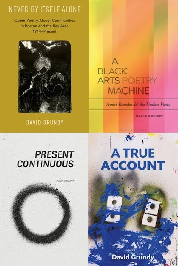
- To finish drafts of two in-progress manuscripts: one, called Never By Itself Alone, on queer poetry in Boston and San Francisco / the Bay Area (under contract from OUP), the other, which I'm calling Survival Music, on free jazz. This work was supposed to involve research trips to the US since 2019--I'm more than glad that I was able to make it over for a week in fall that year to attend the Cecil Taylor conference, and to hang out with Ammiel Alcalay, Billy Joe Harris, etc--and the longer trip will hopefully manifest providing things remain relatively 'stable' travel-wise and in terms of the general pandemic situation. I'm particularly excited about the possibility of looking at archival material relating to Steve Abbott and Karen Brodine, and--perhaps--of consulting the series of recorded interviews Frank Kofsky gave with many of the first/second wave New Thing musicians in the mid-late sixties, and which have never been published.
- Time permitting, to work on another manuscript, (I'm calling it Working Notes because that's what it is), collecting various miscellaneous writings on contemporary poetry from the past ten years or so and telling some disjointed story about some of the currents therein. Which also means a story about friendship and 'community' and the adequacy of terms like community, how politics gets lived through lives and words, what poetry has done and continue to do in the specific and the general. This isn't a story the book can possibly hope to tell properly or with adequate measure, but it will at least--provided I actually force myself to work on it--be an opportunity to force myself to sit down and properly articulate my thoughts on writers whose work I've wanted to for a while now. Currently top of the list are Tim Thornton, Lisa Jeschke, J.H. Prynne (especially Parkland and the array of thought around Kazoo Dreamboats), and Linda Kemp (the excellently rigorous Lease Prise Redux, which I think about almost every time I pass the gigantic thanatotic skyscrapers currently rising high above Lewisham DLR station).
- To put finishing touches on a book of pandemic prose called Present Continuous, written over the last two years in and around the shadows of those skyscrapers and coming out from Pamenar Press; to work on a couple more 'creative' manuscripts swirling around in more or less tangible and intangible drafts and states.
- With Materials / Materialien, to bring out new books from James Goodwin (whose reading for the 87 Press at the only in-person reading I went to last year was more than excellent), Nat Raha, and Janani Ambikapathy, plus English-language translations of an anti-fascist novel by Gunther Anders (a major author whose importance is belied by the unavailability of his most of his work in English) and of work by Ronald M. Schernikau (who should be a radical gay icon but whose work is similarly scarce), and a potentially enormous anthology of out-of-print work to mark ten years since Lisa Jeschke and I started the press from a photocopier and a series of laid and mislaid plans...
- To see the printing of the Selected Poems of Calvin C. Hernton, the manuscript of which Lauri Scheyer and I submitted to the press a few months ago; to continue working with Tonya Foster and Jean-Philippe Marcoux on Umbra-related adventures (our Zoom discussions over the past couple of years have been enlivening in the best way, even as Covid has ensure the three of us haven't yet met in person...); no doubt to get sidetracked along the way, to swim (reasonably) regularly, to accidentally cause the death of several house plants, to see if I can make it to the performance of Morton Feldman's six-hour string quartet, to listen to the entirety of the Bill Dixon Black Saint/Soul Note box set, to hope that the latest round of diminishing returns on the academic job market might resolve into something with a little more long-term security (i.e. to be able to pay the rent)...
Monday, 1 June 2020
Calvin Hernton in 1966

Calvin Hernton, in the article pictured above, was writing about the insurrections in Watts, Los Angeles in 1966 (here published in British socialist newspaper Peace News during his time in London). He also wrote, brilliantly, about the wider wave of urban insurrections, from the Harlem Rebellion of 1964 through Newark, Watts, Detroit (and Atlanta, Baltimore, Birmingham, Boston, Buffalo, Chicago, Cincinnati, Milwaukee, Minneapolis, New Britain, Rochester, Plainfield, Tampa, Toledo, Washington D.C.) in his 1968 essay 'Dynamite Growing out of their Skulls', which is one of the most important essays of that period about the long hot summers, and which has much to teach about what's changed and not changed since then. And here we are again in June 2020 as anti-blackness is -- once again! -- revealed as the structuring order of a society simultaneously decimated by mass unemployment, by a virus whose effects -- of course! -- are disproportionate, and social, not 'natural', in their effect on those who are not 'the people who think themselves white' or thinks themselves comfortable, safe, middle or upper class, male, who wear that identity like a magic cloak. And a President who encourages neo-Fascist militia to declare open season on 'leftists' and people of colour, who describes resistance as terrorism, and who hides in a bunker when the smell of the smoke reaches his nostrils through the White House walls. (And as, here in the UK, the government here refuses to set a date for the enquiry into disproportionate BAME deaths from COVID due to concerns that this would be a 'bad combination' with the Floyd protests in the US.)
Hernton grew up in the South under American racial apartheid; he lived through the era of McCarthyism, was watched by the FBI, harassed by cops in New York, was in London when Stokely Carmichael was refused re-entry into Britain after the speeches he'd given at the Dialectics of Liberation conference, the same year that Carmichael had his passport confiscated in the States for visiting Cuba. His work in prose and poetry speaks with righteous anger and realistic despair about this situation--in his poems about the Harlem Rebellion or the Birmingham church bombing, in the late poem he wrote for the murdered graffiti artist Michael Stewart. He knew as well as anyone that it was never just about 1966, or 1964, 1965, 1967, 1968. History doesn't move in a straight line from past to present, but, in his words, the past "haunts", "traps" us. Has its own sparks, the fire next time. The 1960s, or LA in 1992, might seem the obvious historical parallel (if parallel is really the right word for the way history moves). But take it further back. Robert Greene II's concise and on-the-money article at Jacobin draws parallels between the Red Summer and what he dubs the current 'Red Spring'. Pandemic, global conflict, racial terror in which the victims and those who resist are labelled 'terrorists', liberals wring their hands over violence against property. How much have the co-ordinates changed since the selection of poems that Claude McKay published in The Liberator in 1919?
And so the sparks of June 2020. As Hernton puts it: "Not even a child should have been surprised".
Thursday, 7 February 2019
A Black Arts Poetry Machine
My book, A Black Arts Poetry Machine: Amiri Baraka and the Umbra Poets is out today from Bloomsbury today -- with many thanks to series editor Daniel Katz, and to the readers and peer reviewers who helped shape it into being. Here's the blurb:
“A vital hub of poetry readings, performance, publications and radical politics in 1960s New York, the Umbra Workshop was a cornerstone of the African American avant-garde. Bringing together new archival research and detailed close readings of poetry, A Black Arts Poetry Machine is a groundbreaking study of this important but neglected group of poets. David Grundy explores the work of such poets as Amiri Baraka, Lorenzo Thomas and Calvin Hernton and how their innovative poetic forms engaged with radical political responses to state violence and urban insurrection. Through this examination, the book highlights the continuing relevance of the work of the Umbra Workshop today and is essential reading for anyone interested in 20th-century American poetry.”I guess that needs some background...The Umbra Poets Workshop was formed in the early 1960s in the atmosphere of artistic and political radicalism that saw African-American protestors disrupt the business-as-usual order of the UN building in New York in protest at the murder of Patrice Lumumba. One of the participating groups, the On Guard Committee for Freedom -- a political organisation -- essentially then coalesced into a more artistically-focused group, the Umbra Workshop. The group held regular meetings at Tom Dent's flat, in which they would get together to discuss each other's in-progress work, and were an active presence in the New York poetry scene of the time. Consisting of a fluctuating, but always large, membership, they aimed to form a publication, workshop and reading environment at a time when the poetry scenes around them were almost exclusively white. The group also started a magazine, of which two issues were produced during its most active period, with further issues appearing at periodic intervals later on, after the group had officially disbanded.
Of course, the Black Arts Movement challenged easy divisions between the political and the aesthetic, and politics was also key to Umbra. The book's first chapter discusses the 1961 UN protest and the emergence of Umbra, along the way offering readings of poems that emerged from the protest and its environment by Ishmael Reed, Raymond R. Patterson, Askia Toure, Ray Durem and Lorenzo Thomas. Here's one of them:
I use this chapter to argue that, at this point in time, tradition of African-American internationalism was already in existence -- involving Baraka, to be sure, but alongside many other now-forgotten figures, not least the Umbra poets. Umbra itself was short-lived, but it set in motion a number of hugely important careers -- to list them partially, beginning with perhaps the most famous, that of Ishmael Reed, but also of Lorenzo Thomas -- later on, a Black Arts scholar, and throughout, for my money, one of the most unjustifiably-neglected poets in America of the second-half of the Twentieth Century (though thankfully a collected poems is forthcoming -- this is a bit of a boom-time for Umbra, it seems!); and of Tom Dent, 'New Orleans Griot' (likewise, an invaluable Dent Reader came out last year -- edited by Dent's friend and comrade Kalamu ya Salaam, you can get it here); of David Henderson, maybe best known as the first biographer of Jimi Hendrix, collaborator with Sun Ra, Ornette Coleman and others, poet of what he calls the 'third eye/world' of diasporic culture in America; of Calvin C. Hernton, author of the controversial Sex and Racism in America, attendee of R.D. Laing's Kingsley Hall and meetings of the Caribbean Artists Movement, novelist and poet; of N.H. Pritchard, whose experimental concrete poetry has recently been addressed by Fred Moten and in Anthony Reed's Freedom Time; Lloyd Addison, perhaps the most experimental of the Umbra poets, author of prodiguous, often self-published output, allusive, punning and singular; Askia Toure (then Rolland Snellings), today one of the eminent grises of the Black Arts Movement; Rashidah Ismaili, whose Autobiography of the Lower East Side has been getting some recent praise, and who should (as is the case with all these writers) be far better-known; Steve Cannon, still an active figure in New York artistic scenes; did I mention that Archie Shepp and Cecil Taylor were also involved?! -- and all that's just the half of it...
Within a single book, I wasn't able to write on every member of the workshop, so, after the ensemble first chapter on the Lumumba Protest, each subsequent chapter focuses on one principal writer. Though Amiri Baraka was never a member of the workshop, he knew a number of the Umbra poets and invited them to perform in the Black Arts Repertory Theatre / School. (Here's Clayton Riley's review of the event for Liberator, alongside some images from the feature on 'five young afro-american poets' in French left magazine Revolution, which sets Baraka alongside Umbra poets Lorenzo Thomas and Joe Johnson, as well as A.B. Spellman and a very young Sonia Sanchez.)
While Baraka's Black Arts work is too often taken in isolation, as if suddenly it emerged in an explosion of provocative militancy, setting it against the backdrop of Umbra helps us -- I hope! -- read it anew. So the book's second chapter turns to Baraka's response to urban insurrection and stereotypes of African-American militancy in the iconic mid-60s poems 'Black Dada Nihilismus', 'Black Art' and 'Black People!'.
The third chapter concentrates on David Henderson's poetry, charting the complexities of New York racial politics at the time -- as he writes, 'Harlem to Lower East Side, space of a nation' -- and in particular the 1964 Harlem Rebellion, from which emerged his poem 'Keep on Pushing'. We then get Calvin C. Hernton's writings on riots, in poetry and in an incendiary essay 'Dynamite Growing Out of their Skulls!', published in Baraka's and Larry Neal's anthology Black Fire; and another Hernton chapter, on his poem 'Medicine Man', read for its complex and tortured address to the American South.
Next up, a chapter on Tom Dent, which touches on his work with The Free Southern Theatre, who courageously toured the South, eventually settling in New Orleans, and thence his own poetry emerging from the city -- notably, the long poem 'Return to English Turn'. Finally, there's a chapter on Lorenzo Thomas's poem 'The Bathers', one of the great poems of the Black Arts Movement, and its (re)writing of the 1963 protests in Birmingham, Alabama. (I also touch here on Ishmael Reed's amazing early prose-poem 'The Ghost in Birmingham' -- subsequently the first item in his collected poems, it appeared in the magazine Liberator in the early 60s and is as good an indication as any of just how the good the writing coming out of Umbra could be.)
Anyhow...There's still so much more to be done on Umbra, and on this moment in African-American writing: let's hope that this is just the tip of the iceberg!