On Substack, an essay on György Ligeti’s opera Le Grand Macabre and its (semi-)staging at this year’s Musikfest Berlin. The link is here.
Also in the essay (among others), an operatic cast of: Boulez, Berio, Ghelderode, Henze, Schönberg, Oliveros, Nono, Monk, Pousseur, Zimmermann.
Subscribers of all kinds—but especially paying!—are welcomed. Here’s a quick preview:
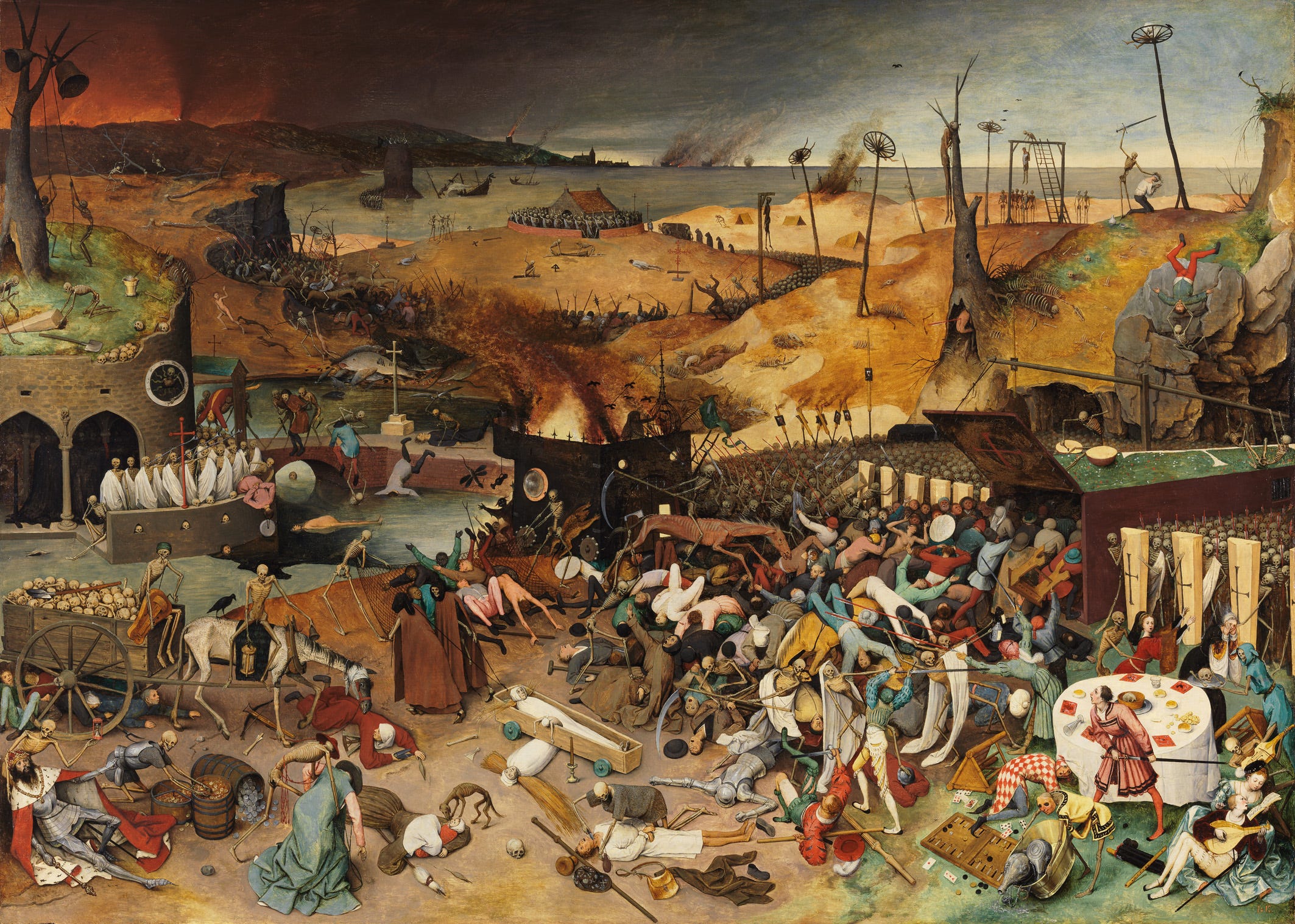
If love, even in its triumph, is sad rather than happy, what of the laughter that—far more than love—characterises this opera? Does it express joy, relief, release, or in itself a reaction to and of fear? Laughter, this escape valve and this trap, escapes easy definition. A reviewer at a website named ‘Wagner, Heavy Metal’ writes: “People laugh, but are not happy. People tell a joke, but are not funny. Here, irony strips satire of its various layers”. The opera’s absurdity is, Ligeti suggested, “more demonic than humorous”. Such humour celebrates misfortune and death, the satisfaction of individual appetite, the destruction of weaker others. It’s an affect familiar today. And yet Ligeti’s music itself has something generous about it. It inhabits these forces of the negative but is not subsumed by them. And while it refuses to counterweight them with a sincere hope or sentimentality, its laughter is not only that of the cynic or the sadist. In this, it leaves something open, something that cannot quite be pinned down: a laughter neither full nor empty, a laughter that echoes enigmatically; not—quite—the last laugh.



No comments:
Post a Comment