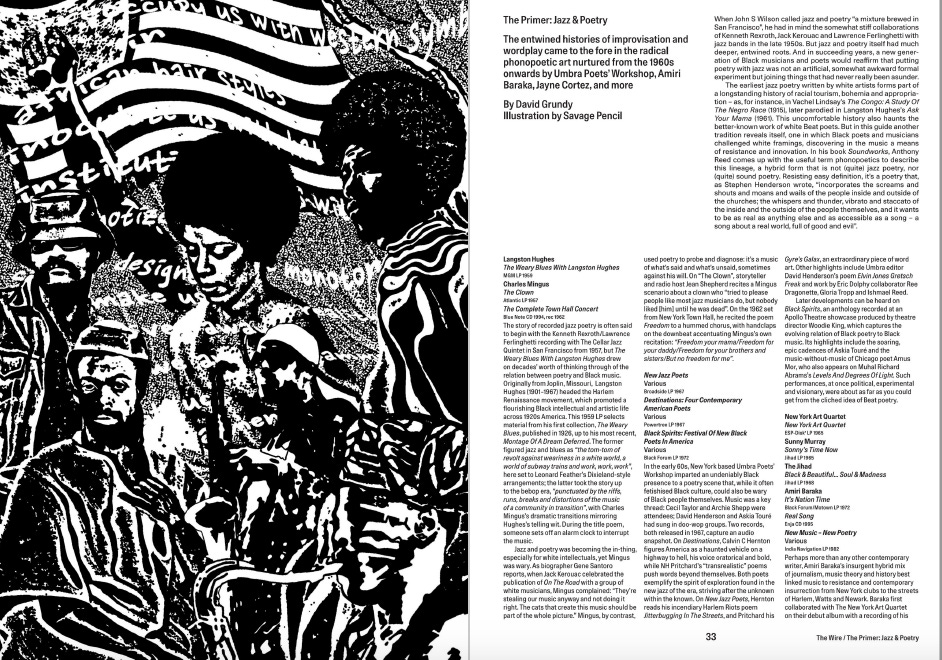
Preview of a two-part Substack post on jazz and hip hop poetics.
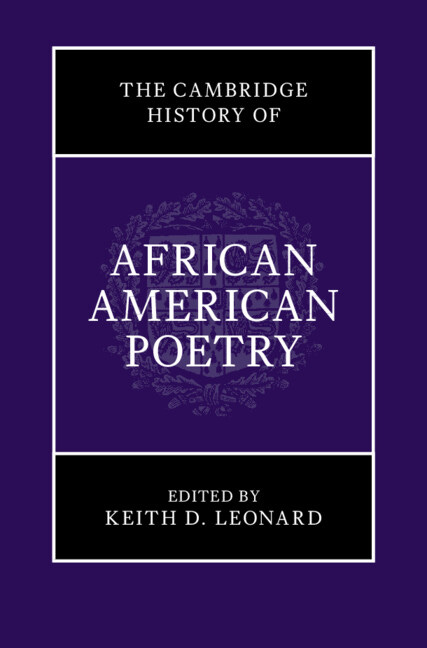
The next two posts here will explore some background to two book chapters I worked on in the past few years, both just published in edited collections. In the next post, I’ll write more about “A Question of Form: Jazz in Joans, Kaufman, and Cortez”, a chapter in The Cambridge History of African American Poetry, a monumental volume edited by Keith Leonard. This first post, though, focuses on “Nation Time(s): Jazz and Hip-Hop’s Changing Same”, published in Hip Hop and American Culture, also from Cambridge University Press, and edited by academic and Wire magazine columnist Rob Turner. The book chapters themselves will also be available to subscribers behind the paywall.
It is—or should be—uncontroversial to say that the criminalized treatment of contemporary hip hop artists is hardly different in content to that of the blues and jazz artists of the past—in itself a continuity, though hardly of a desired or desirable kind. Nonetheless, the question of whether hip hop, half-a-century since its inception, fulfils or negates various traditions, radical or otherwise, can be the subject of some controversy. At stake in hip hop’s use of jazz as lyrical and sonic trope is the status of cultural heritage, perceived relations to history and community and the question of what this music, what any music, does, the question of what it can or could or should do.
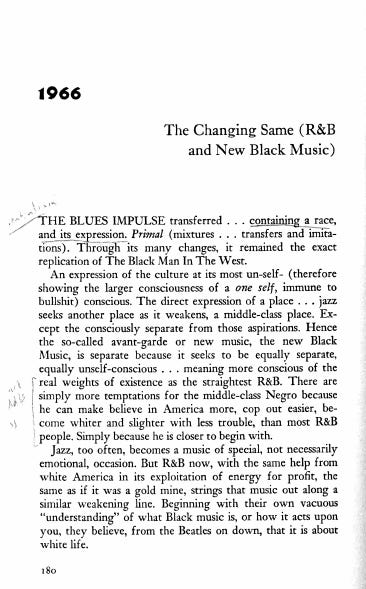
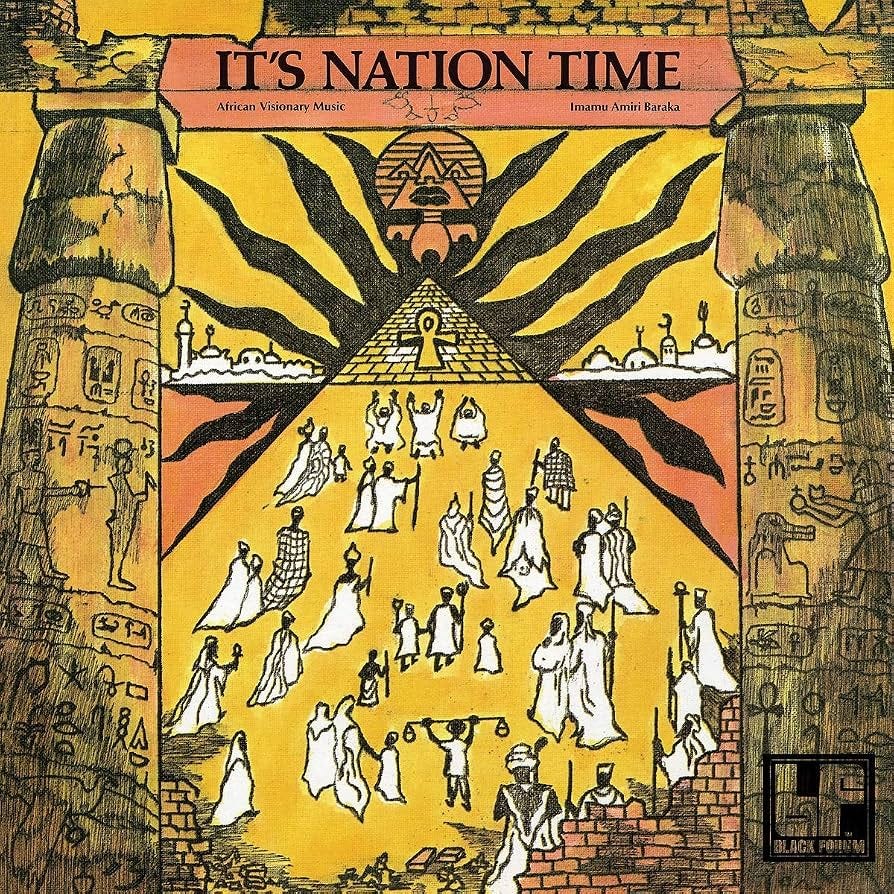
The chapter focuses on the relation of jazz to hip hop via Amiri Baraka’s notion of the “changing same”, and proceeds through some close readings of lyrics and jazz samples from “Golden Age” hip hop. Baraka’s 1966 essay caps off Black Music, that still-foundation survey-statement on the jazz of the decade’s first half, and the New Thing, the New Black Music, free jazz in particular. As Baraka started to conceptualise how the Black Arts might expand, political coalition-making had its artistic equivalent. Popular art, so a simplified version of the argument might go, had a social appeal that the New Music lacked; the New Music had a political content or focus that popular music lacked. Each could infuse the other: a coalition aimed at challenging the economic, aesthetic and political structures within which Black music and Black musicians were presented and exploited. Baraka himself put this into practice not only in his criticism but in his own artistic work, recording his own poetic-musical collaborations across doo wop—Black and Beautiful, Soul and Madness (1968)—free jazz—A Black Mass (1968), with the Sun Ra Arkestra, and ‘Black Art’ (1965), with Sunny Murray et al—and the combination of four separate groups, each within a different genre, on It’s Nation Time (1972).
Such work is, in turn, fairly regularly cited, along with that of Gil Scott-Heron, The Last Poets, and the Watts Prophets, as a key precursor to hip hop. So the story goes, a form of poetry-with-music that grew out of, and often had as its subject, the heritage of blues and jazz, evolved into what would ultimately become a multi-million dollar industry, shaping the global sound of popular music.
But there is, of course, some ambivalence here. In his later writing on music collected in books such as Digging, Amiri Baraka himself espoused the position, fairly standard among those of the Black Arts generation, that hip hop was of value when more politically outspoken, when continuing the specifically political frameworks associated with Black Art. The artists of value were Public Enemy or The Roots, with the latter of whom Baraka recorded that astonishing version of ‘Something in the Way of Things (In Town)’. Not party music, but Party music (“and when you asked what truths their party taught…”) As with the coalitional impulse of R&B, free jazz, blues, and oral poetics espoused in ‘The Changing Same’, it was the more niche forms of art—as jazz had become, as the New Music had generally remained—in which aesthetic and political values were enshrined, while popular music was too easily susceptible to capitalist capture, to the self-perpeutation of stereotype, and to a-political hedonism or nihilism. When not guided, it went off track—which was precisely when it became popular.
Baraka turned to Marxism-Leninism a few years after recording It’s Nation Time, and the Leninist strain to this argument is aesthetically prefigured in its Nationalist iteration in ‘The Changing Same’ era. The Advanced Workers, the Vanguard, emerging from within the masses, have to direct the masses away from the distractions of disco or gangsta rap and towards consciousness, towards revolution. At the same time, they must work within those forms to shape them, and the aesthetics of those forms rub off. Pleasure and its precise direction becomes hard to happen, libidinally wayward. Perhaps nowhere is this better illustrated than it Baraka’s attempt to make a disco record, the 45” recorded with the Advanced Workers and the Anti-Imperialist Singers in the later ’70s, in which he literally gives a speech in the middle of the record, while, over danceable beats, singers chant that their listeners should not be dancing at all, but “marching in the street”. It’s a dialectical move, and in itself, a clever twist on the way that Martha and the Vandella’s ‘Dancing in the Street’ was repurposed as an anthem of urban protest in the previous decade. But can the dialetic be guided this way? Is this how art works?
The rest of the essay is available to subscribers via Substack here.
In the past month, two articles of mine on two quite different poets
appeared in The Poetry Foundation and the newly founded Hythe Review.
This post goes into a bit more detail on the background to those pieces and
serves as an additional tribute to the late Nellie Wong, who passed away
earlier this year.
It’ll be followed in the next while by material relating relating to two further recent publications, on jazz poetics and on the relation between jazz and hip hop. More on those in due course.
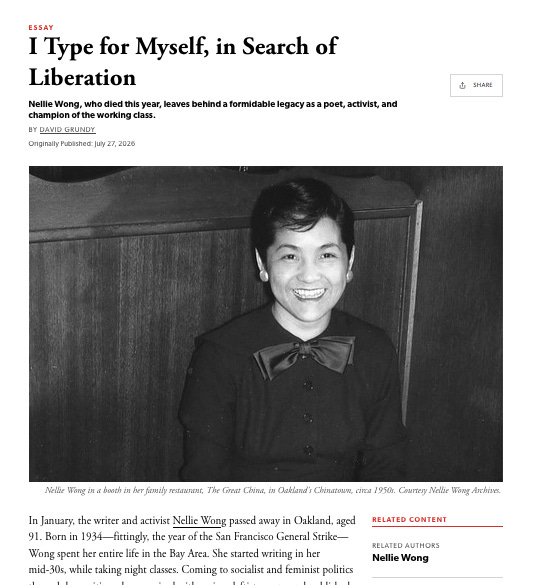
Nellie Wong: Typing Back
Based in San Francisco for many years, Nellie Wong features in a chapter of my 2024 book on Boston and Bay Area queer poetry, Never By Itself Alone, focused on her comradeship with fellow poets and activists Merle Woo and Karen Brodine. Wong wrote of labour, of class struggle, of family history. Her first book appeared in the late 1970s, when Kelsey Street Press published Dreams in Harrison Railroad Park; her final book will appear posthumously in this new century, now moving beyond its first quarter.
Employed as a secretary, typing others’ words, Wong used her own poetry and prose to write back, to write over the words of bosses. To write, Wong reminds is, is also to be involved in labour—physical labour, or labour that removes traditional, hierarchical distinctions between intellectual and manual labour, that attempts to deny the workings of the mind within the workings of the body and of the body within the mind. Poetry, activism, and education were a way out of those frames and into herself, into the fullness of her own life, but using precisely the means of that gendered labour—the typewriter, reproducing the words of others as a way of reproducing oneself for a wage, become now a weapon, a way into words and language and struggle.
To type back, Wong discovered, is to fight back, to discover and invent, to transmit. There is a friction here, and it is this friction that poetry operates like a lever. To type back is not the current invisibilising process of automation, of Large Language Models which anticipate and erase waged labour without any alternative recompense. Rather than the erasure of bodies, such writing attests to their presence within the system, insisting on their agency, their potential for sabotage, and their own inherent worth.
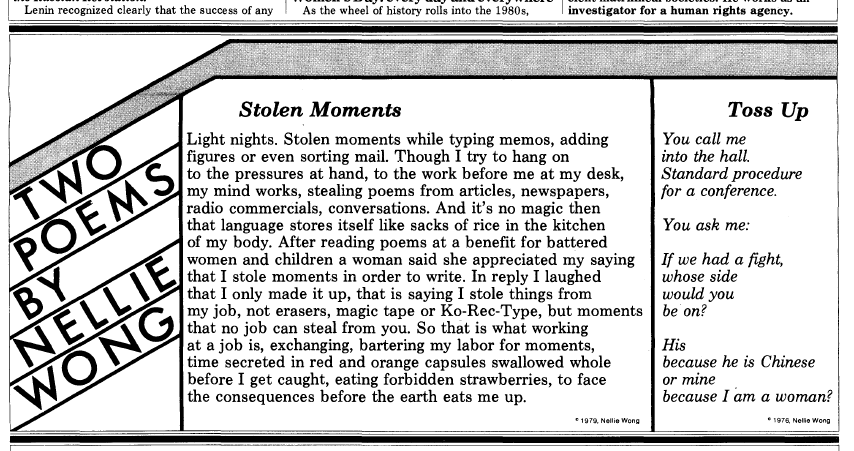
An early draft of Nellie Wong’s ‘Stolen Moments’, published in the Freedom Socialist newspaper in Spring 1980. A revised version forms the title poem to Wong’s 1997 pamphlet.
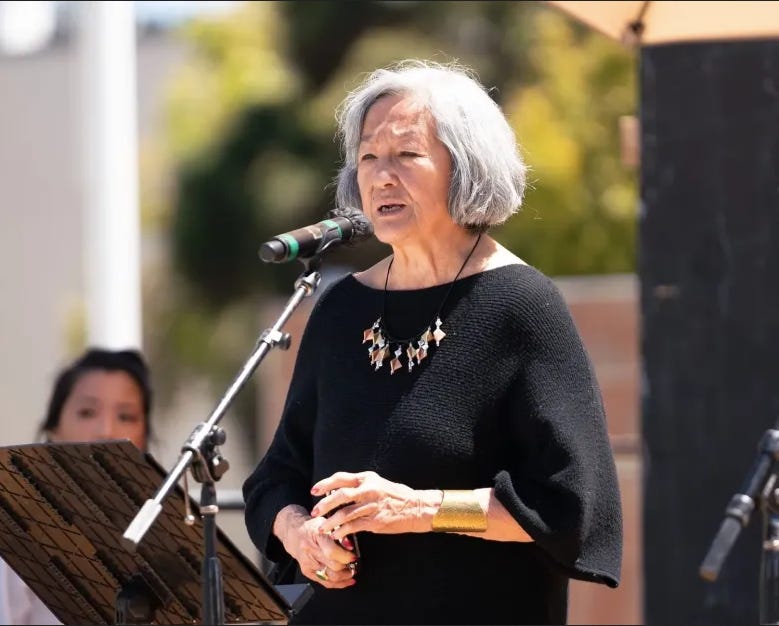
Last year I was privileged to attend an online discussion with the socialist feminist organisation Radical Women. Wong was involved with both RW and the affiliated Freedom Socialist Party until her passing, and was there herself on the Zoom call. I was deeply honoured by her presence, and struck by her modesty. Here’s the conclusion to the Poetry Foundation piece:
An individual writer’s work makes a contribution toward something whose contours will exceed those of their own life. “You will not survive the work that still needs to be done,” Wong wrote back in 1981. “You will be gone when the questions of the future arise like wildflowers on the plains of this earth.” To write is to live, but also to accept death. Wong’s late poems reconcile themselves to transience in the belief that human struggle might build a better world. As she wrote in “Under Our Own Wings” in 1979:
If you begin I begin If you sing I sing . . . In death our bodies regress to the innocence of bones. In love we work to live in America under our own wings.
Beyond the introductory work of that article, readers should head straight to the source. There are multiple rare recordings of Wong available at the invaluable Archive.org, among them:
—Allie Light’s 1981 film Mitsuye and Nellie: American Poets, featuring Wong and Mistuye Yamada, who is at the time of writing an astonishing 103 years old;
—reading her comrade Karen Brodine’s poems in Washington for Radical Women in 1991, as well as delivering a lecture on ‘Racism, Sexism, and War’;
—interviewed on the KMVT15 Community Media TV channel, in a programme entitled ‘A Banquet of Poems’;
—and speaking on family and creativity with her siblings Flo and William at the Headlands Center for the Arts in 1996.
Wong’s illuminating 2017 reading and conversation with Genny Lim at the San Francisco Poetry Center can also be accessed via the Poetry Center website. In July 20025, she read with the Laborfest Writers Group at Bird and Beckett Books: the full reading can be viewed on Youtube, as can the memorial reading held in January 2026. A lovingly-maintained website can also be found here. And the organisations with which Wong was involved—a part of her life just as important to her as her writing, and inseparable from it—can be found at their respective websites: Radical Women here and the Freedom Socialist Party here.
In these traces, in her work, in her impact on many lives, Nellie Wong lives on.
Harmony Holiday’s broken epic
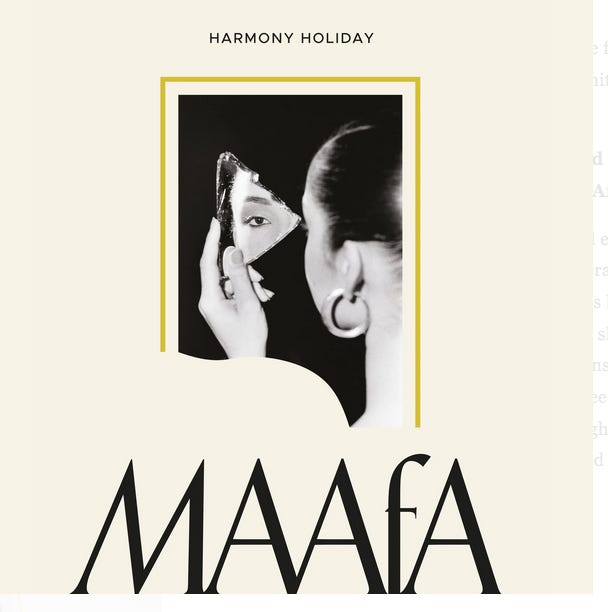
Also just published, a review of the expanded UK edition of Harmony Holiday’s epic poem Maafa, on The 87 Press’s new open-access journal The Hythe Review. For those who don’t know, Holiday’s Substack, Black Music and Black Muses has been running for several years and documents her ongoing writing on music. But music suffuses almost everything Holiday writes: her essays, her ongoing biography of Abbey Lincoln, her collections of poetry.
Maafa’s soundtrack would be Prince; it would be Pharoah Sanders; it would be the music of Holiday’s father, Jimmy Holiday, of Billie Holiday, to name some of Holiday’s touchstones, those named within its pages and the pages of her other books.
The rest of the post can be read by subscribers on Substack here.
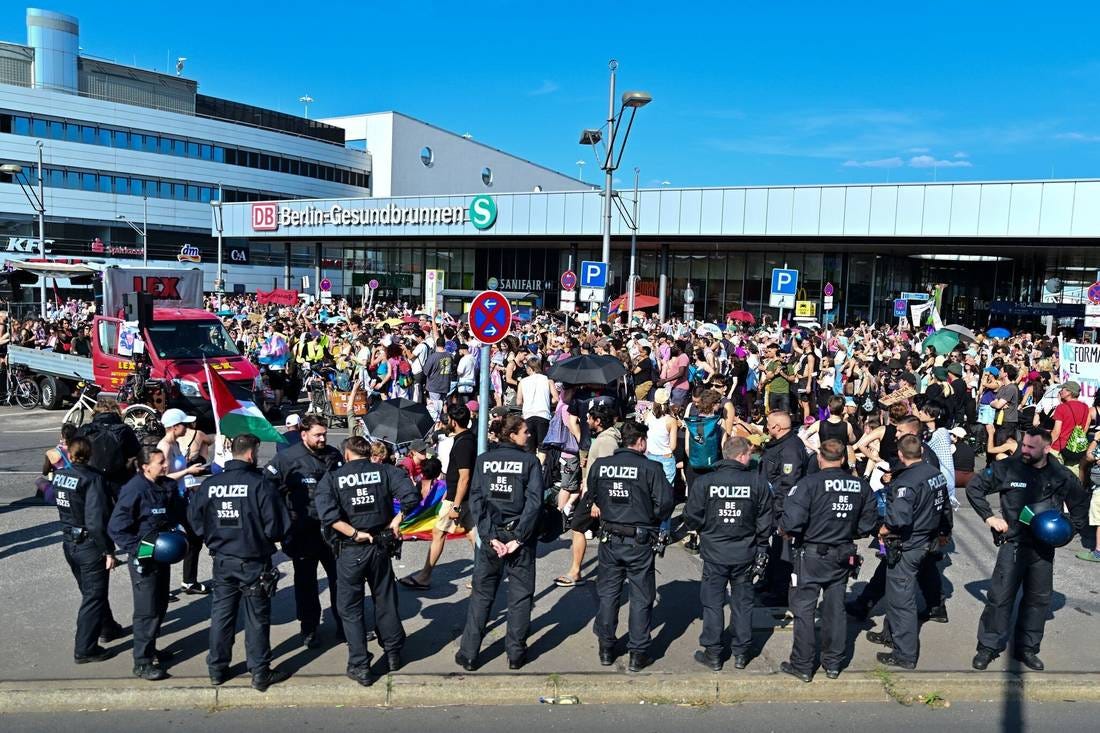
I was at a party on Saturday night when someone came in and said that a van had driven into the Berlin Christopher Street Day parade, killed one person, injuring more. I’ve never been to CSD; go, instead, to the Internationalist Queer Pride demo that, since 2021, has been organised in contradistinction to the corporatisation and pinkwashing of the main CSD demo, whose organisers had called the police to remove pro-Palestinian marchers. Since 2023, this has meant outspoken support for the victims of the genocide in Gaza, and all the attendant policing that involves. So to me Berlin Pride also means cops pepper-spraying and pain-gripping people on the street. Well, it’s in the tradition. In the sun, the heatwave having finally come back after the week’s rain and thunderstorms, finally setting off after several hours, marching past the newly-converted Rheinmetall weapons factory, formerly a builder of car parts, the first time arms manufacture has taken place in Berlin since the Second World War; Rheinmetall, sender of weapons to Israel, to Turkey, to Saudi Arabia, for use in Syria, in Gaza, in Yemen, part of the government’s shift towards increased weapons production since Olaf Scholz’s 2022 Zeitenwende speech and its 100 billion euro fund for war, the willed and ever-expanding horizon of war. The march monitored, not for our own safety, but for the safety of the city’s “white” citizens, by vanloads of armed cops with their machine guns pointing down to the ground; the same cops who let another van drive through or past the protective barriers in the Tiergarten to plough into a path of queers that evening. Not protecting us from the world, but protecting the world from us.
After the parade, in the evening, people start heading off to the parties. The killing happened around ten p.m. and I didn’t find out till around midnight. People had been arguing in the kitchen about the World Cup. Guatemalan funeral music by the San Lucas Band was playing, out of tune, slow. Then Ornette Coleman. The music soared. I felt the world drop out. I don’t quite know how to describe that simultaneity—of hearing that music, which I love and which to me is the sound of possibility and joy and collective potentiality, of what Coleman means by harmolodics, infinitely transposable in whatever register, whatever instrument, whatever key—you could call it queer if you wanted to do that—of hearing that music at the same time as that news. I don’t know what it means, I’m not writing to turn this into a metaphor or an allegory or to makes sense of it, I’m writing it because I have to, I’m writing it to register the loss. Mourning is about revision and return, repeating that initial moment of knowledge, replaying it. It’s a loop, yet it develops; it moves forward, yet it stays in the same place. I’m writing this two days later but I’m still in that kitchen, the world is still dropping out, Ornette is still playing, the San Lucas Band are still playing, and I’m still in that kitchen. I don’t know who they were, the person who was killed, I don’t know their name, and I mourn their absence, that gap. The driver of the van attacked people with a knife or a machete after ramming the van into people on the path and fled. And I don’t know who they were either. And I’m still in that kitchen and already I’m thinking, if it’s an Islamist attack, queers will be used as convenient propaganda—never more convenient than when dead—against whoever it is the state wants to kill, deport. Whoever it was who drove that van could equally well have been one of the white supremacist AfD supporters at the counter-protest staged earlier that day. And if it’s not an Islamist attack, we’re just dispensable: they’ll gloat, those other AfD supporters, CDU supporters, and all their unaffiliated supporters, privately, in their homes, or publicly, online: they’ll cheer the death; they’ll smirk at our loss.
So say what. Stay alert. Some platitude of the sort. Mourn, but don’t let them use us, use you.
I wrote those last lines the same night. The next day, the news comes out in more detail. Wanted posters on digital screens. Perpetrator, Islam, terror attack, plastered everywhere, all over the newspapers, all over the city, and the victim still not even named. The year before, the Chancellor had described raising a queer flag over the Bundestag as akin to treating it as a “circus tent”. Today, the national flag is lowered to half-mast in a gesture that passes as “solidarity”. But I don’t really know what’s worse. This half-mast show, as if there were some sort of unity between the national flag and a flag that should negate the idea of the nation, of this nation, entire. Already the videos coming out, this instrumentalised commentary that is the opposite of mourning, that is like spitting in the faces of the dead. Already the voices of the AfD and its cheerleaders in the right or the so-called “centre” raising themselves. A white blonde Woman on Welt says “Political Islam kills” and talks about Hamas and “irregular migration”, as if that had anything other than precisely fuck all to do with any of this. “Deport all dangerous individuals”, says someone else. (The attacker was born in Germany.)
So mourning is once again becoming a weapon against those it’s supposed to protect. But you still have to mourn. Where does that feeling go. Who becomes a part of the “we” imposed like an unwanted national flag, vampirically, over the bodies of the dead. The flag doesn’t absorb the blood that flows from the body, it doesn’t stanch the wound. Rather, it is the very thing that sucks the blood out: blood spread into its colours, blood the basis of its being.
It’s not my nation and it’s not my flag. But these are, I feel, my dead, not the dead of those nation and flag who opportunistically claim them; not directly, but still, my dead, and I mean that internationally— these dead, not dead to be recuperated by nations and borders but dead who belong beyond those borders; my dead, in whatever way one might take that to mean, without taking any ownership. The person who was murdered was visiting from Poland with her daughter; the killer was German. No nation owns that death.
These dead my dead, because, yes, whatever it was Donne said about diminishment and involvement and nothing in itself entire, yes, that, perhaps, but more specifically: this person is dead because they were queer or they were seen as queer or they were in a queer space, a space that was, for that moment, queered, and because those have been or are my spaces, too. And because of that, because when I heard the news the world dropped out, because this next day and the day after I still can’t get it out of my head—because of all this, I still have to mourn.
I tried to do that by writing a poem. This is hardly a poem. On the afternoon of the next day I pace around inside and it starts to rain and I stay inside and eventually I cycle over to the vigil by the Brandenburger Tor. It starts to rain again, then it stops, then it starts again. This is hardly a poem. Soon after I arrive they finish clearing away the barriers by the gate. A tourist takes a series of selfies in the vacated space, oblivious, smiling away. On the ground on the raised bit of pavement there are rainbow and trans flags, placards, candles. By now, early evening, some hours after the vigil began, swelling to ten thousand people, the crowd is small, but still present. People stand here, they linger, they don’t just pass by, the group becoming in its silence rather than its noise a crowd. “And when he had opened the seventh seal, there was silence in heaven about the space of half an hour” and the opening of the seal signalled the end of whatever world and you know all the noise that will follow. Here, it’s quiet, respectful. I realise I haven’t brought any flowers with me to lay so I leave nothing but my temporary presence. People look dazed. Some quietly crying. Older gays and younger queers, mainly but not exclusively white. Some Zionists holding up a sign saying “this is what happens when you globalise the intifada” are eventually persuaded to leave. Then I notice after a while that the rainbow flag carried by the woman sitting quietly near the centre has a Star of David in the middle. Next to me are some people with a keffiyeh and a keychain with Palestinian flags. Who do you think I felt safer standing next to.
And it’s not, not really, my safety that’s the issue. Or not the me, not the we, the state might take me to be.
I don’t think I’ll ever be able to think of Tiergarten now without thinking about the attack. About its political uses by the predictable barrage of right-wingers calling for “re-migration” and denouncing Islamist terror as proxy for their racist nationalism. About the Zionist flags I saw at the vigil. About the feeling of the ground opening up, the world dropping out, and at the party, when I heard the news, I didn’t know what to say or what to do so said my goodbyes without comment and I left, quietly, as if ashamed.
The driver of the van attacked people with a knife or a machete after ramming the van into people on the path and fled. Later, when he ran at them with the same weapon in an allotment in Spandau, the cops shot him. As if this was some sort of satisfactory conclusion. But likely, it’s only the beginning. They will talk about “protecting” us and there will more cops on the parade to police us and to police real or imagined threats, and white blonde women and straight men on Welt will say things like “political Islam kills” and talk about Hamas and “irregular migration”, and the head of the Alternativ für Deutschland will condemn the killing knowing full well that many of their supporters are delighted by it on all counts, the cops killing the Muslims killing the queers, two birds with one stone.
“And many men died of the waters, because they were made bitter.”
Recorded by ethnomusicologists, the music of the San Lucas Band was nominated for a Grammy Award and the musicians were displaced and probably killed in the Guatemalan Civil War, with its genocide of indigenous populations and activists. The Kaqchchikel musicians, survivors of the Mayan populations decimated by the conquistadors and their massacres and the diseases they brought, tried to bend the western instruments they’d been left and the funeral march melodies and dirges they were playing into the microtonal inflections their own traditions encompassed. It’s as if you can hear the music break under the strain, and yet it stays together.
The evening of the Monday after, the sirens seem to have not stopped sounding. Cops on my road. As if their music were any less sickening or inappropriate than whatever threat it is they are supposed to protect whatever “we” it is they think they are protecting us against.
I refuse it, I refute it, I am not that we.
The vigil was silent but after it I needed to hear something, and so, over these past days, I listened to ‘Atomic Peace’ and ‘Altruvista’ and ‘I Want to See You’ by Alice Coltrane, recorded after John Coltrane’s death, and to ‘Vigil’ by John Coltrane, recorded in watchfulness before his own, and I listened to John Corigliono’s AIDS Sympony, its first movement, titled Of Rage and Remembrance, and I listened again to the San Lucas Band, and they all finish playing. For now, Coltrane’s Meditations is the only purgation that will do, for each sound that comes out on the record sounds like it’s about to break in two. There is no mourning here that is not screaming. No screaming that is not mourning. Multiphonic. Flame. Flowers by a monument in the rain. Flowers by a grave.
And then again silence.
Not to let such a death be used, and not to let it be in vain.
Abdullah Ibrahim, pianist, now follows James Blood Ulmer, guitarist, who died a few weeks ago; Sonny Rollins, saxophonist, who passed a few weeks before Ulmer; Gunter Hampel, multi-instrumentalist, former husband of Jeanne Lee, who passed a few weeks before Rollins; David Henderson, poet, who wrote so much of the music, and who passed a few days before Hampel; Éliane Radigue, composer, who passed a few months prior to Henderson. From the music and back into it, the song they have all become.
I sometimes wonder, speculatively, if the reasons these artists are dying now, the way that they are, falling like dominoes, it seems, is not just because of the gradual loss of generation, the inevitable factor of ageing—that “natural” fact that is also never not socially experienced, socially produced—but because the world they spoke into and of has not come to pass, because we are letting the world as it exists now continue, because that world continues in “our” name. For those who create another world in their art still have to survive this one, even when they ride the relatively safe zones of shelter atop the rising waters around.
I wonder, that there is no space for their spirit in this new paradigm, even as a source for extraction, as the trillionaires openly talk what the economist William Nordhaus called the “euthanasia of the laboring classes”, the sacrifice of whole swathes of the global proletariat; as sanctioned genocides and ceasefires that are not ceasefires pummel themselves through misinformation and state enforcement and corporate profiteering; and yet vast swathes continue to believe, against their own interests, that it’s the weakest who are the greatest threat and who should be shouted down and cast out, repelled with ocean mines or border fences or burned out of their houses in the pogroms in all but name flaring across every continent on the planet.
I think of these litanies for artists I always seem to be writing, turning passage into a factor of continuance, the pathos they’re sold on, the retrospective backwards glance always preferred to the moment of live lithe late work, contradiction and difficulty: late work, even where that entails the repetition of a set repertoire, a set of stuttered stammered stumbling looping paths back to the source, like the story I was told about the bandleader who, fluid as ever in their playing, would nonetheless keep calling the same tune, over and tune, until reminded (by ear) to move on. I think of mourning, melancholia, nostalgia, the logic of defeat and loss: turning ever backward toward the city on the hill or the burning city or the city overwhelmed by flood, refusing to move on. Making garlands out of the wreckage, spreading magic carpets there. Dwelling excessively on the pathos of ending, addicted to cadence, to the closing chord, replayed. A heritage industry of embalmed corpses, a Lenin’s tomb of art.
I think of those litanies of artists and then I think of other lives, other names. Yves Sakila killed by security guards in Ireland. The four migrant workers burned alive in an attack on their car by gangmasters in Italy—not named. Those killed in Israeli airstrikes on Beirut, “ceasefire” or no ceasefire—not named. How, in writing, to do anything but juxtapose those lists; how to do anything but turn them into lists.
But music, it’s been said, is the last of the senses to leave: after language, on the edge of consciousness, life/death, waking/dream. Is limbo, the gate to pass through. So to remark on that moment at its ending is part of the work that music does, in trance erasing beginnings, endings, in cadence prolonging or truncating them.
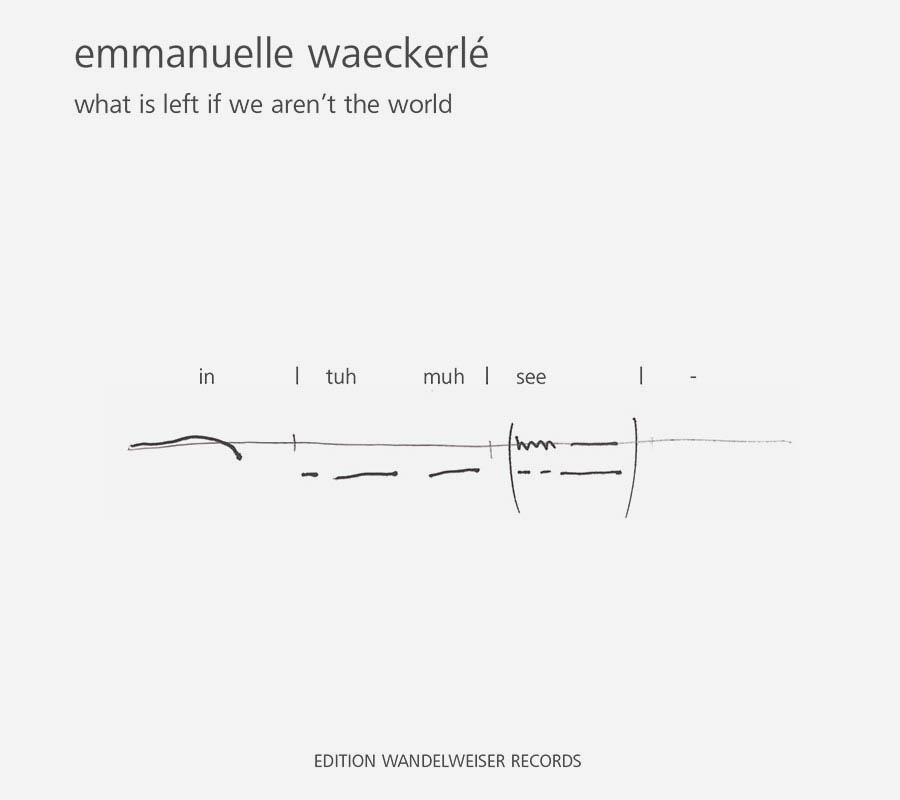
Reproducing here liner notes to a new CD released by Edition Wandelweiser Records containing realisations of Emmanuelle Waeckerlé’s score what is left if we aren’t the world: recordings from 2022—an early home recording, the premiere performance in Amsterdam—with one of the 2023 Klangraum performances, from earlier in the week, and a later performance in Thessaloniki, all with different ensembles.
Emmanuelle and I met around Eddie Prévost’s weekly workshops a few years ago and we discussed this score soon after it had been written. The following summer, I witnessed and took part in the closing realisation of this piece at the Wandelweiser gathering, Klangraum, in Düsseldorf, the weather humid, changeable and breaking outside. (I wrote a brief report on the festival for The Wire, but its impact on me goes beyond critical summary.) The format of the gathering involves pieces being performed—one might say ‘workshopped’—every day for an entire week. It takes quite something for a piece, however open the score, to sutain that amount of attention, but what is left if we aren’t the world more than does this.
Over the past few years, I’ve found the piece a way to think and feel about what it feels like now—it makes a cameo in a book of poems I’ve been working on for the past few years called On Musical Objects—and I was honoured to write the liner notes to this CD release (for which Ryan Dohoney also provides a typically astute take). As upcoming performances in the context, not of music, but of performance art, activism, and discursive practices, suggest, what is left continues to evolve, and I’m looking forward to seeing and hearing about future iterations.
Until we are done, until we feel or sound indistinguishable from what is there…
what is left if we aren’t the world?
Emmanuelle Waeckerlé’s piece is a placeholder, a holding place, holding space. A way to respond to the alarming and sudden cessation of social life during the pandemic—whether that was experienced as ending, as interlude, or as a kind of new beginning. The piece has its origin in a recording of Emmanuelle’s voice and the wind on a stormy night in lockdown: the voice alone, but not alone, the wind its own kind of breath, one that doesn’t need a body to breathe through, to keep going or to preserve. what is Left, the ensemble piece that emerged from this, is a way of collectivizing that aloneness. From I to We, always asking who “we” are; who is allowed to be “we”.
A year after the premiere in Amsterdam, the piece was performed five times at the Jazz-Schmiede, Düsseldorf, as part of the long-running Wandelweiser gathering, Klangraum. Lines were blurred between rehearsal, performance, and composition. Whatever their role in a particular piece, everyone is a listener, with listening a shared activity orienting us to each other and towards the world. The piece was workshopped: not as a precursor to something finished, but as part of an ongoing process, in which the discussions that surrounded the piece—how to perform it, what it means—are just as much a part of the piece as its score or a performance of that score.
what is left if begins with “pandemonium”, an explosion of sound which can be alternately joyous, explosive, or wracked, gradually fading out into a silence in which musicians and environment merge. Composed during Covid, it indexes that desolate time, but also the ways in which chaos continues to form the underlying, unstable ground of our equally uncertain present. This kind of collective catharsis is a space for grief as well as rage, and for the networked, swarm intelligence of collective sound-making occurring within the framework of a social relation of mutual attention and care. To go beyond ourselves whilst also digging deep into those parts of ourselves that we’ve forced ourselves to suppress, in order to go on: those huge griefs that, during the pandemic, we lived with and then had to force ourselves to forget; the ongoing griefs of the catastrophes we’re living through now, five years on.
I’m struck by the instruction in the score: “pandemonium [...], but not an apocalypse”. Because the idea that everything has ended is perhaps too easy, even as the possibility of planetary extinction becomes more and more palpable. How do we cope with an end that is not an end? How do we go on? The score opens at the moment when one doesn’t quite believe what’s happened, and continues into the moment where we try to hold onto the beliefs that sustained us up to this point, and to integrate—or to refuse to integrate—the new knowledge that trauma brings. “finding ourselves inside of something.”Finding something inside of ourselves. Keeping moving.
Within these sounds we hear the reflection of the horrors of where we are, all the things that block us truly being together—the anxieties, the cruelties, the hierarchies, the pettiness, the violence, the mistrust, the fear. But we also hear the possibility of what it would mean to be together, truly, glimpsed, briefly: a fraction of a second, a sliver of a sound.
Both the self and the tutti fall apart. And this is where we have to start. For after we figure out what’s left, the question is, as Emmanuelle says, “what to do?”
There’s a radio recording from the Half Note in 1966 (or perhaps 1963,
depending which discography you use): Rollins with McCoy Tyner, Walter
Booker, and Mickey Roker, moving in and out of tunes at will; melody
stacked free associatively on melody—rhapsody, in the sense of rhapsōidos,
“stitcher of songs”, as if Rollins might play every song he knew, that
act of association and recall a kind of survival force. Rollins was
always walking around the club while he was playing, walking off stage
while he was playing, playing within the form: having already begun as
he stepped out of the taxi and walked into the venue, or deciding to take a trip up the stairs and out of the club
to serenade Alice and John Coltrane in their home, followed by the
remnants of the faithful. Sound bouncing off buildings, the walls, sound
that would not be contained.
Walking while playing evokes
the barwalkers, the entertainers of R&B, movement that refuses
fixity; it’s a way of thinking, an exercise of freedom, a desite to get
away, an impatience with the limitations of the form or the stage. This
movement doesn’t translate to recordings; registers, instead, as a kind
of sudden absence. In his unaccompanied cadenza on the Half Note
recording, there are huge pauses as he moves around the room, testing
the space: interruption, tension, void. All the more so given that these
performances were broadcast on the radio, where they become dead air.
But, rising again, resurrecting across the silence, Rollins comes back,
the melody comes back, the force of remembrance, re-membered: a body put
back together, gathering the limbs of Osiris. One tune becomes another,
‘Oleo’ to ‘Poinciana’ to ‘Happy Birthday’ to a newly abstract or
abstruse motif: all those moments where what’s quoted and what is the
thicket in which quotation occurs constantly blur and stretch, the
earworm always within reach.
A subscriber post on Substack, on the great bassoonist Karen Borca.
Outside the by-now better-known names of free jazz, Borca’s work
offers few external hooks or ways into the music: no Sun Ra
theatricality, no Cecil Taylor ritual, no Archie Shepp radical
traditionalism. It is a music that speaks for itself, and that demands a
commitment of understanding on the part of the listener that moves
beyond the merely illustrative. The music does not illustrate something:
it is that thing itself. It asks the listener to dig as deep as the
musicians dig, to stay with it, to sharpen their faculties on its
sharpening invention. But to do so, to stick with it, is one of the
richest rewards this music offers.
Borca’s music is work,
in all its sense: playing as labor and as invention, the work of
intense involvement with the material of sound and its transformation,
dancing on the edge, dancing in your head;
the work required by the listener to join the dance and be spun up too
in it; work as in a product, a body of work, meaningful evidence offered
up to the world as to the impact and beauty and grace and power of a
person’s art, their contribution to the world. And as work, it seems to
sing of the negation of work as exploitation and the emergence of some
other form of situation, of invention, the rearrangement of the self in
the multiple networks of the social, following the line, worrying it,
seeing where it might lead. Work. Good news. And yes, the blues.
We can study this, we can listen to it, we can thrill to it, we can learn from it.
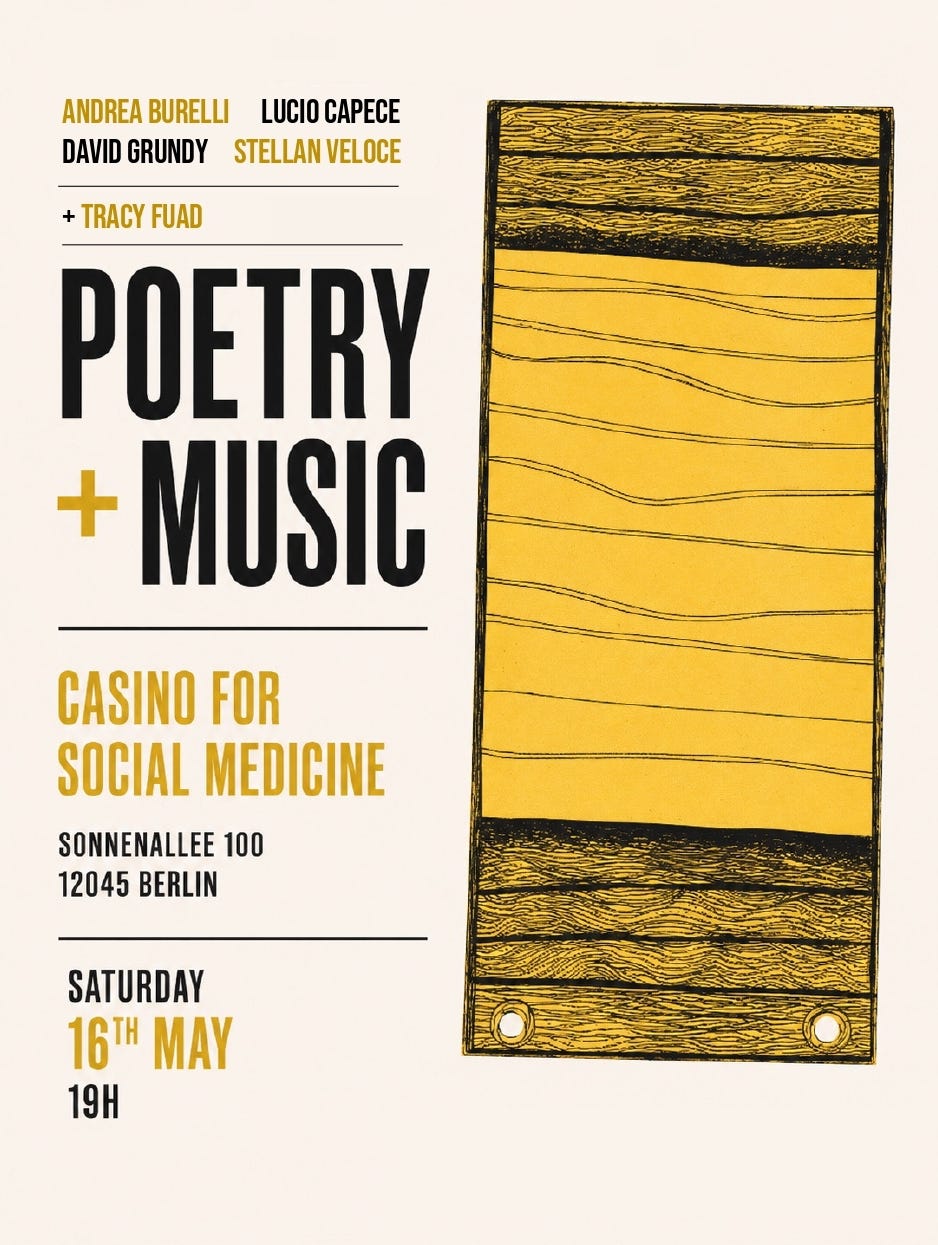
A relatively spontaneous announcement of a relatively spontaneous gig: this for a new quartet combining poetry and music, with myself (poetry), Andrea Burelli (voice, poetry, perhaps violin), Lucio Capece (bass clarinet), and Stellan Veloce (cello). It will happen at the Casino for Social Medicine at Sonnenallee 100, Berlin, on this coming Saturday, 16th May, at 19h.
As a trio, Stellan, Lucio and I worked together twice last year, and
that was beautiful. (Their duo at a performance a few months before the
first of those occasions, after which I approached them to work
together, was even more beautiful). As a quartet with Andrea, we’ve done
one rehearsal so far, and I think it’s entering a whole new dimension,
which I’m very excited about.
Also reading will be Tracy Fuad. And I’m excited about that, too.
Reposting here a piece which just appeared on the excellent online journal Little Mirror alongside Luke Roberts’ collection of Prynne memories. Many thanks to the editors. A longer and more detailed piece on J.H. Prynne will follow elsewhere in due course.
The poet J.H. Prynne died last Wednesday morning.
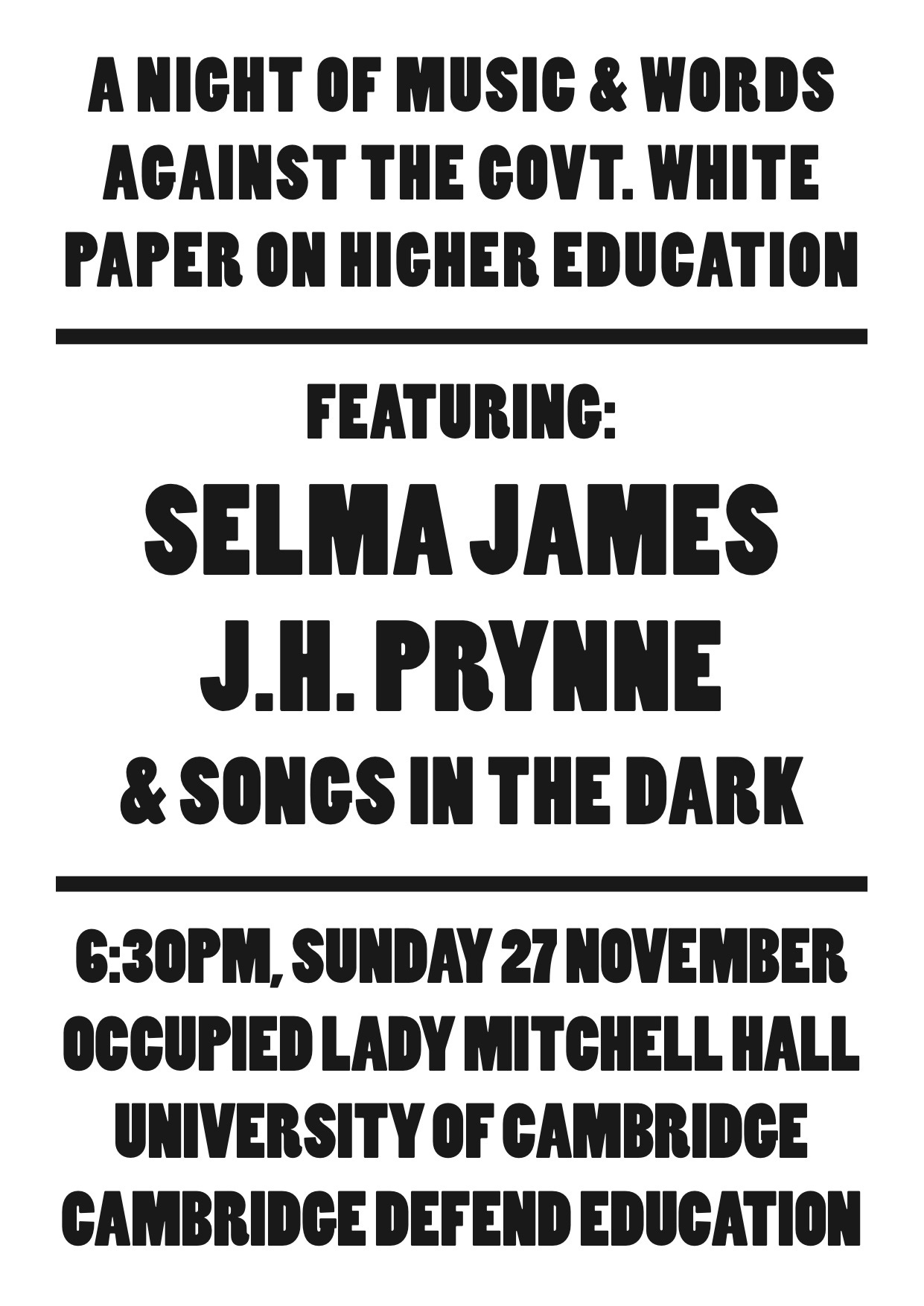
Jeremy was important to a whole host of us down the generations, for a whole host of reasons: politically, personally, and above all, poetically. For his avant-gardism; for his careful, critical, ethical attention to the specifities of poetic language; for his unorthodox Maoism, however that was understood; for his personal kindness and encouragement; for the kinds of permission his work opened up. Of the poems written during the period I knew him, the most important to me remains the life-work summary of Kazoo Dreamboats, written during the era of the financial crisis through the lens of Piers Plowman’s societal vision, via modern scientific textbooks, ancient funeral rites, and Maoist dialectics. A particularly treasured memory is Jeremy’s reading of a substantial portion of this poem to the student occupation of Lady Mitchell Hall, Cambridge in November 2011, alongside the veteran feminist campaigner and author Selma James. Insisting on making this a poem which could speak to the occasion and the political struggle, without compromising the fierce difficulty of the work itself, the reading was forceful and moving. When he read out the line “Rule One: people with top pay are rubbish”, the room was electrically charged, a charge that seemed to come both from the poem and to enter into the poem from outside. What I learned from this moment was that the poem itself does not change its context, nor does the context change the poem: but that their dialectical relation adds something to both.
Poster for the event hosted by Cambridge Defend Education at which J.H. Prynne read from Kazoo Dreamboats, 27 November 2011
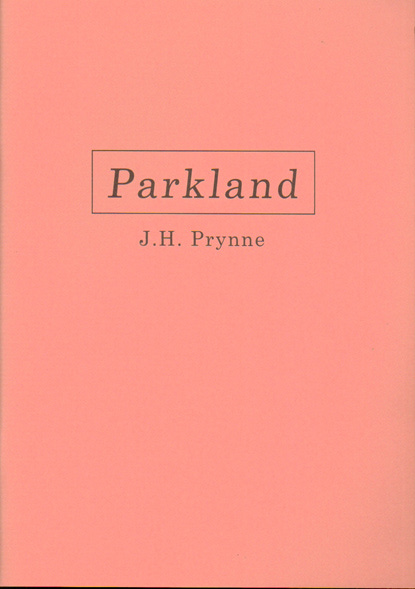
Other works from these years that I treasure: the “bruised compassionate dismay” of Of . the . Abyss, a pamphlet I had the honour of publishing, which overlays Victorian child cruelty and the present migrant crisis; and the enquiry into the entanglement of British imperialism with poetic song in Parkland: a complex, insistent and direct enquiry into how the poet can sing when empire starves those other “fair field full of folk” elsewhere; a poem which movingly and deeply wants to believe in the possibility of poetry as lyric joy, but is totally lacking illusion about poetry as salvation; a poem that ask how the poet can go on singing their song when that song gets conscripted as the national anthem; that treats poetry with a near-devotional cast, yet radically questions whether poetry is morally complicit with corrupt orderings, if not actively harmful, then at least insufficiently attentive to or able to frame harm; a poem concerned with a national verse tradition, that ruthlessly interrogates the bases behind that tradition in the interests of a fervent, anti-imperialist internationalism; a poem rigorously dialectical, as dialectic is a practice of dialogue and question in origin, but as it is also the ruthless criticism of all that exists, and the very conditions for that questioning.
Cover to J.H. Prynne, Parkland (Critical Documents, March 2020)
Language is no innocent playground, yet the ludic is important to Jeremy’s late work (much of it published by Ian Heames’s Face Press), with its insistence that contemplation, play, and purposive activity be not separated. I love, too, the playful and unsettling rhyming poems of Snooty Tipoffs, the dense compaction of Al Dente, the fables and orchards and tales and streams of language that are the river all those late books swim. But maybe most of all I love the text ‘No Universal Plan for a Good Life’, a didactic summary in clear prose of the ethical position Jeremy believes poetry to hold, written for the context of people’s struggle in Nepal. I treasure both the text itself and the act of imaginative extension and solidarity it performs. And this is what I want to hold onto, about J as a person and about his work, this act of imaginative solidarity, this absolute belief in the power of poetry, this ethical rigour, this thinking through of the question of spirit and matter, this permission and this belief that poetry matters. I think I’ll carry that with me throughout my life. I hope I do so.
At play and at work there in language, into which he has now gone—at play and at work and now and then at rest—a life.
A subscriber post on Substack: three fragments from Daybook, on Mal Waldron/Jeanne Lee (with excursions through Shepp, Coltrane, and Gilroy), Jacques Derrida/Ornette Coleman, and Anti-Fascist Noise.
For Jeanne Lee, words and music were themselves always in
dialogue, communication traversing the endless path of the semantic and
non-semantic, the spoke and the unspoken. Talking drums, speaking
tongues, healing water healing earth hurling air and fire.
Lee’s first husband was the sound poet David Hazelton: in the mid-60s,
they lived in Berkeley, Lee acting as editorial consultant on Hazelton’s
magazine Synapse and performing in sound poetry
events. After the couple’s split, and Hazelton’s suicide in 1968, poetry
continued to be an integral part of work as she stretched away from the
form of the standard or the song, improvising off lines of poetry—her
own, those of Hazelton or Jackson MacLow or juggler, clown, poet Robert Lax—or, more frequently, going beyond words altogether. (“no words, only a feeling”, begins her record Conspiracy,
working off a text by Hazelton.) “The thing about lyrics is that I
stopped singing them because they no longer represented a reality I
could relate to”, she remarks in an interview with Roger Riggins for Coda
magazine. “the word becomes incidental to the sound […] But now I’ve
come back to them in a totally different way, from the inside out.” For
Lee, words and music mutually unsettled and mutually transformed each
other. One of Lee’s former students remarks
on her emphasis in teaching on “the musicality of words, the dancing
and the movement of words, the unity of words, music and dance.” To
Riggins, she speaks about “singing in a way so as not to be conscious of
“singing” but just becoming a white light”.
I
began to understand that this was another dimension. I began to write
poetry again and to understand that the poem could be another reality.
Very pleased to announce the publication of Abstractive, a new collaboration between myself and Candace Hill Montgomery, begun in Sag Harbor in 2024 and just published by Further Other Book Works. It’s been an honour to collaborate and many thanks are due also to publishers CJ Martin and Julia Drescher. Please see the publisher’s announcement below for more details.
Candace Hill Montgomery & David Grundy
Abstractive
ISBN: 9780998460703 142 pages Full Color Paperback $34.95 April 2026
“For Russell Atkins, the ‘psychovisualist’ composes structured relationships that can be viscerally felt by the mind’s eye. In Abstractive, readers learn to lean on the way those structures snare hidden connections: between visual and language arts, music and emotion, and everyone out there searching for the ancient heavenly connection. We are on the cusp.”—Craig Dworkin, author of Radium of the Word: A Poetics of Materiality
“Here is vivacious visual and textual collaboration where melodic lines act as a counterpoint of philosophic riffing so that signification is expansively flung open delivering vantage points galore, tantalizing consciousness. ‘Form sets off everywhere’. We are treated to a cacophony in words accompanied by intense, colorful images. Candace Hill Montgomery and David Grundy conjure the living legacy of Russell Atkins and the results are exquisite!”—Brenda Iijima, author of Presence
“Candace Hill Montgomery and David Grundy set off a collaborative sensory sweep via these polyphonic and polyrhythmic poems, ‘ensorcellating’ an expansive tonality playing within and around image and word. These poems seek a mental music that ‘avoids fitting into the chord,’ ‘innuendoewing’ around the breakage of each eroding word. We are borne through the revelation of a doubled ‘mind in flight’: poetry as ongoing, unceasing dialogic process. Following Candance Hill Montgomery’s incredible long poem, Short Leash Kept On (Materials 2022), this is a thrilling and essential work.”—Geoffrey Olsen, author of Nerves Between Song
About the Authors:
The work of Candace Hill Montgomery spans painting, photography, installation, assemblage, textiles and writing. Making and exhibiting since the 1970s, Hill Montgomery was born in 1945 in Queens, New York, and now lives and works in Bridgehampton, New York. In 2024, she presented a solo exhibition, Pretty Birds Peer Speak Sow Peculiar, at Blank Forms, New York. Recent group exhibitions include From the Studio: Fifty-Eight Years of Artists in Residence, Studio Museum in Harlem (New York, 2025); Here Is a Gale Warning: Art, Crisis & Survival, Kettle’s Yard (Cambridge, 2025) and Reluctant Gravities, Hollybush Gardens (London, 2024). Her latest publications include the collection Muss Sill (Distance No Object, 2020) and Short Leash Kept On (Materials, 2022), a long poem inspired by detective fiction and the writing of Lloyd Addison and Russell Atkins. In 2023, a major essay on her work, “Candace Hill-Montgomery, Against Containment” by Amy Tobin, was published in Art History, Volume 46. She is represented by Hollybush Gardens in London and will present her first solo exhibition with the gallery in June 2026.
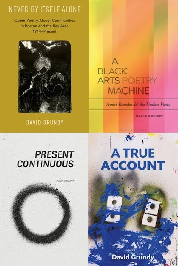
David Grundy is a poet and scholar. He is the author of the critical books A Black Arts Poetry Machine: Amiri Baraka and the Umbra Poets (Bloomsbury, 2019) and Never by Itself Alone: Queer Poetry in Boston and San Francisco, 1944–Present (Oxford University Press, 2024); A True Account (The 87 Press, 2023), a book of poetry; and Present Continuous (Pamenar Press, 2022), a book of lyric essays; and co-editor, with Lauri Scheyer, of Selected Poems of Calvin C. Hernton (Wesleyan University Press, 2023). He runs the small press Materials.
In 2003, mass anti-war protests against the choreographed build-up to the illegal invasion of Iraq. The protests politicised a whole generation of us.
Twenty-three years later, the US and Israel launch another illegal war off the bat, with no pretence at UN presentations, consultations, weapons inspections, by a president at once pursuing a Nobel peace prize and illegally invading multiple other countries with the only justification being that this is what he wants to do. Just because he can. A “pre-emptive strike” when there is no sign of any impending attack is not a pre-emptive strike at all. The phantom idea of Iranian nuclear weapons which don’t exist, from a nation that seems intent to blow up the entire nation, the entire region, the entire world. But isn’t that what this entity, this holding corporation we call America has always done, Democrat or Republican alike? The Democrats just use a bit more window-dressing, a bit more “due process”: vacillate, qualify their condemnation, tacitly agree.
The term “regime” is used exclusively in western media to describe that of the late Khamenei, killed in a strike, but perhaps people might reflect, it should be used on the world’s richest nation, the world’s most feral, venal, viral empire, one of the most internally unequal countries in the world, a country that illegally invades others, just because it can.
Their justifications shift day by day. Pre-empted by Israel, to pre-empt Israel, to destroy nuclear capability, to enact regime change, to destroy the army and the navy, to liberate the people, to protect American interests: just because they can. Military commanders declare a crusade, the US President “anointed by God” to bring about Armageddon. I’m not making this up. The Secretary of Defense and his Crusader tattoos.
And so what it comes down to is this: At least one hundred children die in a bombing of a girl’s school in Minab. To linger with the horror of it. The numbers rise each day and they are replaced in the newspapers by columns on the deaths of three US soldiers and disruption to the flight paths of western travellers. As if one life were worth a hundred. As if anything could ever justify this.
We’ve seen it all happen before. This has been daily life in Gaza for three years now, and we’ve seen it all happen before. We were there on the streets or in front of our screens during the Iraq War in 2003 and we watched the bombs fall on TV like fireworks, we sat and we watched it all and sometimes we spoke and we shouted and wrote poems or essays and the carnage went on, and we’ve seen it all happen before.
As if this attack will save lives, as if it will not kill many, many more to add to the thousands already killed on the streets in Iran in protest for the last three months, the millions killed by the US and its proxies across the world for the last three centuries. As if one can declare war on an entire country just to boost one’s approval ratings before the mid-terms. As if one has the right to dictate the way the world works, and we’ve seen it all happen before.
As if the trail of carnage, destroyed lands, destroyed lives that is our present reality will prove anything different.
And that is the way the world works, they will say, because they make it.
And we’ve seen it all happen before.
On the video the smoke rising in Tehran and the birds fly in front of the camera away. Where they go to, where they’re flying: some place, perhaps, where people might hide or fly or flee, some dream of that; that flight, that movement, from bombs in the sky to border regimes and death in the ocean, that incessant movement, that structures this world, its blocs of power, its people in the cracks, the possibility for people’s war diminishing as the people are massacred, by whoever, regimes internal or external; to have to believe in the movement of the people nonetheless, whatever that might mean; to believe, at the very least, that people wish to survive and that there are others in the world who wish them to survive too, who don’t wish death on their heads, bombs in the sky, extraction and crusade and a customary sadism, experienced in “outraged futility” as we protest or we scream, or experienced in customary banality and swiped away from onscreen—the tremulous, held-in banality of this evil that burns the world in its wake.
And now we are politicized, and then we were politicized, and now we know it all, or some of it, and then we could see it coming, and now we are bamboozled, and we are taken by surprise, and in 2003 that movement of hundreds of thousands of the street stopped nothing, whatever our will, and yet to keep trying, to owe the dead at least that, and for the living, too, to owe them that, though here as the first spring flowers poke from the earth and the birds outside begin in profuse strains their song, death from the skies is the only skylark’s flight poetry can see.
“When weapons come from the US, do they strike us more gently than when they come from the regime’s killing machines?”