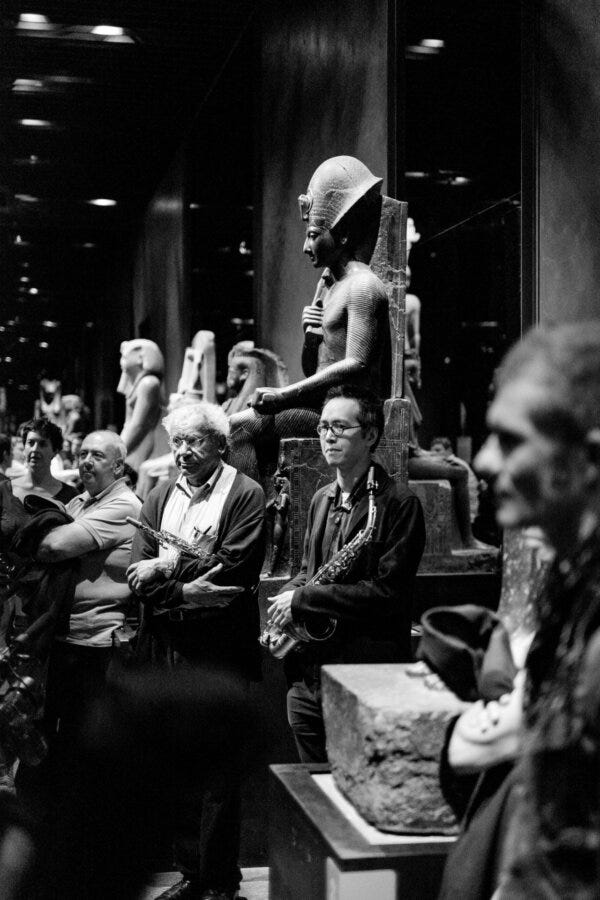
Anthony Braxton holds the air as if the sound were a physical object you could shape like kneaded bread.
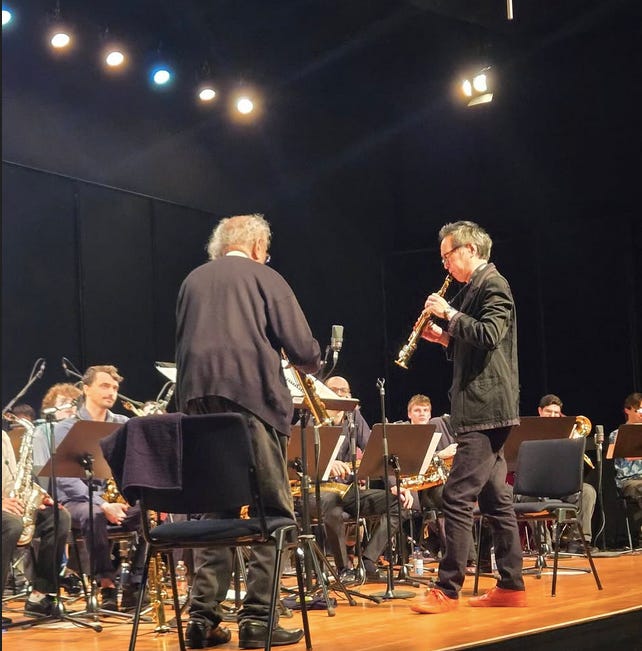
We’re at the Jazz Institute Berlin, where the 81-year-old Braxton is conducting an orchestra of students in a work written back in the early ’90s. The night before, he played the main stage of the Jazzfest. Tonight is a free concert, and there’s such demand that people have to be turned away.
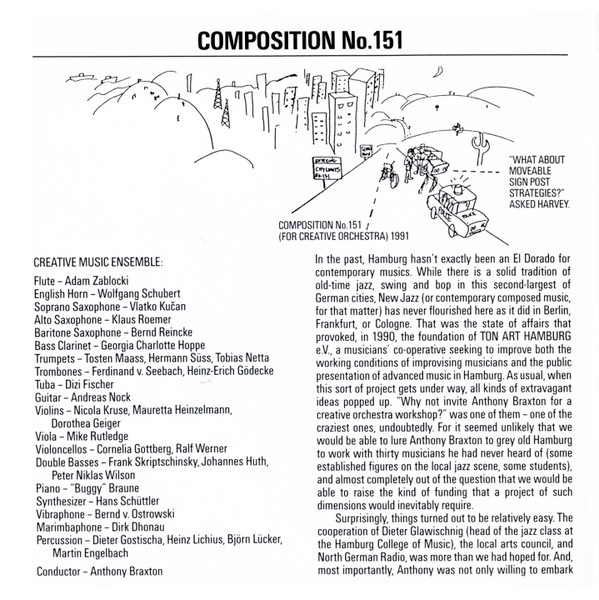
Like much of his music, Composition 151 is a piece about systems and how to negotiate them. Braxton’s liner notes for the original recording of the piece are a kind of short story involving a traffic stop by cops who explain the work’s “system dynamics”, comparing it to Fort Worth airport and the Chicago transport network. The story’s heroes then speed away from the cops and set out to navigate the composition on their own.
Though the music is largely composed, it’s realised with the liveness of improvisation. At any point, the conductor can interpolate another piece from Braxton’s gigantic catalogue. Mid-way through “51”, a hundred compositions back, flashes up on an ipad as the players frantically shuffle through piles of sheet music.
Braxton and his former student, James Fei, take turns conducting. At one point, they duet on soprano and sopranino saxophones, holding notes or circular-breathed, circulating rhythmic figures. At another, they’re both conducting at once, each directing a separate half of the orchestra in rising shards of sound.
For this performance, two vocalists are embedded into the ensemble. They sing, at times, wordless syllables, at others, fragments of sentences describing the setting up of a new highway and traffic light system. Even in utopia, traffic management is necessary. But as Braxton’s liner note suggests, this isn’t quite utopia. Cops still perform stops and searches, even if they read more like the tough-benevolent heroes of TV cop shows than the real-life armed thugs of the state. Management speak fuses into and out of dense musical theory.
The music is long, thick with event, often quite austere in its workings. It’s all in one movement, but with multiple smaller sections within it. There are quick rhythms reminiscent of distorted march music, multiple simultaneous lines, cued unison melodies. Individual instruments merge and emerge, not so much soloing as throwing a word or two into the collective pot. The music comes to rest on a solo trumpet, as if straining for breath, quietly singing. But there’s a real joy to it, too: a levity, despite the dense, multiple layers. At one point, the two vocalists hit a high note together with perfecting comic timing. I almost laugh out loud.
Dialectic is like that perhaps, in its workings, I write down. Neither positivity nor negativity, but their transformation, as a process, not only of struggle, but of joy, cheerfulness, or—to use one of Braxton’s preferred words, “fun”.
Maybe one of the things the piece is about the difficulties of realising utopia, the thin line between its imaginational vector and its practical realisation. Near the beginning, the vocalists sing something about early modernism, its promise and cessation, that I don’t quite catch. One of them mentions MacDonald’s. At another, one of them proclaims: “I saw 27 cloud formations on this day. The clouds here have a certain radiance”, then speaks of “a history of neighbourly involvement and commitment”.
In Braxton’s music, those cloud formations are not a given, and they are not all radiant. You don’t get them without working for them, together.
He holds up his hands and kneads the sounds. They crunch and merge and collapse, lift themselves up again, billow into piles of cumulus, wisps of cirrus, then disappear into the blue of held and hovering tone. The music goes on for a long time, packed with event. It’s too much for some. Towards the end, members of the audience begin to leave, surreptitious and scurrying.
People walk out on utopia, walk out on the work it involves. They always do.




No comments:
Post a Comment