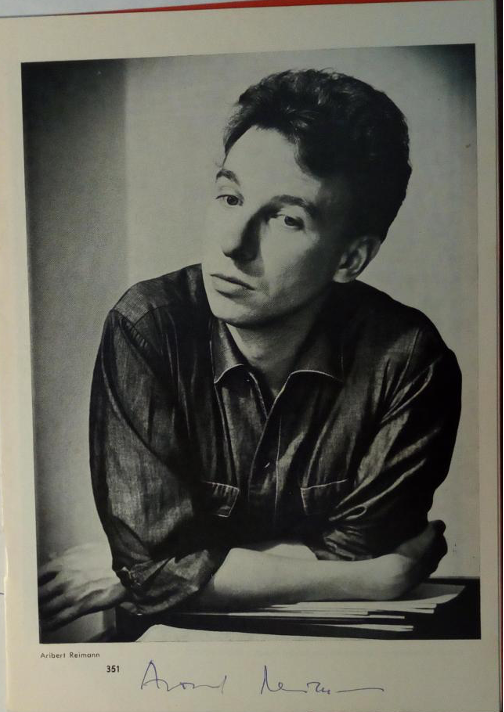
Reimann’s is “music that admonishes”, wrote the critic Stefan Amzol of the composer’s settings of Paul Celan, who had requested him in the 1950s to set his work. “Forces are suddenly released you never even knew existed”, Reimann remarked of his experience of wartime bombardment as a six-year old child. Last night in a bar, I overheard someone declare himself a “Nazi” to awkward silence. It was, it seemed, an act of provocation, a kind of empty gesture, but one backed up with real consequences: the man also declared his intention to vote for the AfD at the weekend’s elections.
The Nazi-era violence that was a kind of primal scene of Reimann’s creativity is, too, the legacy of the years of Fascism as they raise their head once more today. Such violence, and everything that led to and from it, is not necessarily the overt “subject” of Lear, but, perhaps, Reimann’s opera still has something to tell us about it: a warning, a haunting. For if there’s one thing we’ve learned of late, it’s to say, with Shakespeare’s Edgar: “the worst is not / So long as we can say ‘this is the worst’”.