Sunday, 25 January 2026

Don't let it happen here: Mingus / Minneapolis

Charles Mingus recorded this version of Martin Niemöller’s anti-fascist warning in 1965.

And today, sixty years later in Minneapolis when people intervene to help their neighbours, to come to the aid of those in their community, to attempt to ensure due legal process, they are pushed to the ground by the agents of Immigrations and Customs Enforcement and shot ten times, shot four times, shot in the body on the ground, shot in the head, when pulling away in a car. Alex Pretti. Renée Good. A nurse, a poet. The observer is the new target. To be a witness a fatal act.

The Associated Press detailed that Pretti had embraced a person who had just been shoved by an agent. An agent then shoved Pretti, and the two fell back, still embracing.

They shoot down good and they shoot people embracing.

Sharing footage of death has been a necessary way of contending with the lies the administration tells in public. Evidence, reproduction, to show that this happened, even as the state doctors the photos and footage it itself releases. The image, when our eyes can’t be trusted, and the word: the lies told about the image. “I didn’t say that”. “He didn’t say that”. The image and the word. The reproduction of the image becomes a weapon, and, as a weapon, its consequences are fatal: loops of death. The line between witnessing and horrified voyeurism that for the past years of live-streamed genocide has become a part of the texture of observation. What does this do to solidarity and how we conceive of it.

Beyond these ethical questions, questions of representation, questions that matter for our conscience and our consciousness as artists, yet in ways that we find sometimes impossible to track, what matters is what you do. In Minneapolis, protests, marches, a general strike. The resistance of communities to the violence perpetrated on them, in their name.

Mingus’ recitation plays over footage from a demonstration shot for Thomas Reichman’s 1968 film Mingus. His biographer, Gene Santoro, writes:

Mingus figured you had to stand for something. The powers that be would come for you anyway. He was busted a few times with other marchers and spent time in the Tombs, New York’s downtown holding tank.

Mingus also shows Mingus facing eviction from his loft at 5, Great Jones Street, where he’d hoped to set up a music school, in 1966, and from which he was evicted after a crooked landlord set him up for a fall. The film’s last scene shows the press and cops crowding round as his instruments, his scores, his life are taken out of the building, and he’s taken to the police station after they find needles and a rifle in his belongings. He was released: no shots were fired; he planned music for a ballet called ‘My Arrest’.

The following year:

Charles Mingus, a well-known jazz musician, was arrested with two other persons late last night in a demonstration by a group of 200 hippies outside the Charles Street police station in Greenwich Village. Mr. Mingus, who was accused of scuffling with a civilian and two policemen who attempted to intervene, was charged with three counts of felonious assault. The demonstration began with a march by the hippies from Washington Square Park to the Charles Street station. It was touched off by rumors that an itinerant musician had been arrested earlier. These were later said to be unfounded. At the station the hippies sat down and began singing. The police moved the group half a block to the corner of Greenwich Avenue, where, they said, Mr. Mingus engaged in a scuffle with a motorist who had objected to hippies sitting on his car.

Mingus recorded ‘Don’t Let it Happen Here’ in March 1965, introduced by Ralph Ellison for a TV performance, and again in December, in the version released on Music Written For Monterey 1965. Not Heard... Played In Its Entirety At UCLA Vols. 1 & 2. That same year, sixty years ago, the assassinations of James Meredith, Malcolm X. Mingus fires his rifle into the ceiling and notes that it’s the same kind of gun that killed JFK. The right wing and liberal state alike claim a monopoly on violence, at home and abroad, and the vigilante forces that operate outside it, but with its tacit approval. In March 1965, FBI informant Gary Thomas Rowe murdered the Civil Rights volunteer Viola Liuzzo, shooting at her car as she ferried from the march on Selma. It was rumoured he’d assembled bombs for the bombing of the 16th Street Baptist Church bombing in Birmingham, Alabama. Liuzzo grew up in one-room shacks with running water: her activism was the result of experience, of solidarity, the opposite of the KKK’s violence, as today, citizens turn up for their neighbours while others cheer on the forces of hatred. Gary Thomas Rowe received immunity.

The state assassinates people in private, and its agents murder people in public, on the highways and on the streets, whether they are activists or not. Fred Hampton. Sandra Bland. The state becomes and remains fascist because it assassinates and decimates the opposition. But this process of becoming is not some sudden leap of the cliff, though it can feel that way. The state becomes and remains fascist because the potentials for fascism are already there. In his book Late Fascism, Alberto Toscano looks at the analyses of police violence against populations of colour in the writing of Angela Davis and George Jackson to argue that fascism is a differentially-distributed experience. For some, the experience of the state is that it is already fascist. And then it spreads. The tree rotten from the inside will eventually collapse and take down everyone who’s placed their trust in it.

In Reichman’s film, Mingus delivers a sardonic monologue, tinged with furious irony and ironic fury.

I pledge allegiance to your flag—not that I want to, but for the hell of it, I pledge allegiance. I pledge allegiance to the flag of the United States of America, the white flag, with no stripes, no stars. It is a prestige badge worn by a profitable minority.

“If they take you in the morning, they will be coming for us that night”, James Baldwin wrote to Angela Davis a few years later.

The movement of the people in the streets can be clamped down on, it can be diverted, dispersed, thousands dead, arrested. The empire hovers over the regime, at home and abroad. The empires, plural, their vassals, their dregs. In Venezuela, in Iran. Invasion, kidnapping or ‘deals’ in exchange for extraction, of oil, of wealth: gangster capitalism, the continuation of decades of imperialism by all and any means, already dividing up the land piled up with rubble and with the dead. Fifty per cent of profits from new mineral and oil projects in Ukraine will go to the US; under the aegis of the US-led “board of peace”, the UAE plans a collaborative open-air prison marketed as a ‘safe zone’ in Gaza; the British government denies its complicity in the genocide in Sudan. But the movement doesn’t stop.

Mingus’ delivery in the TV performance is halting, as he fumbles the number of people genocided—death exceeding the weight of statistics—and over the collective noun to use—the politics of solidarity—speaking out against “those who killed…the other people with me.” And in that very awkwardness lies its clarity, its power. “And I say the only way we can avoid this is to look and speak out now. And don’t…let…it happen here”. From an opening lament spread between the brass instruments in the band as he recites Niemöller’s text, Mingus strikes up a propulsive piano figure and the band blares into collective improvisation. On the march, on the move. Fluency in fracture and the stammered statement of fact. The movement doesn’t stop. And though they may breathe in breaths strained, asphyxiated, observed, occupied, a breath that comes in gasps, a breath in combat, the people—continue to breathe.

Friday, 23 January 2026

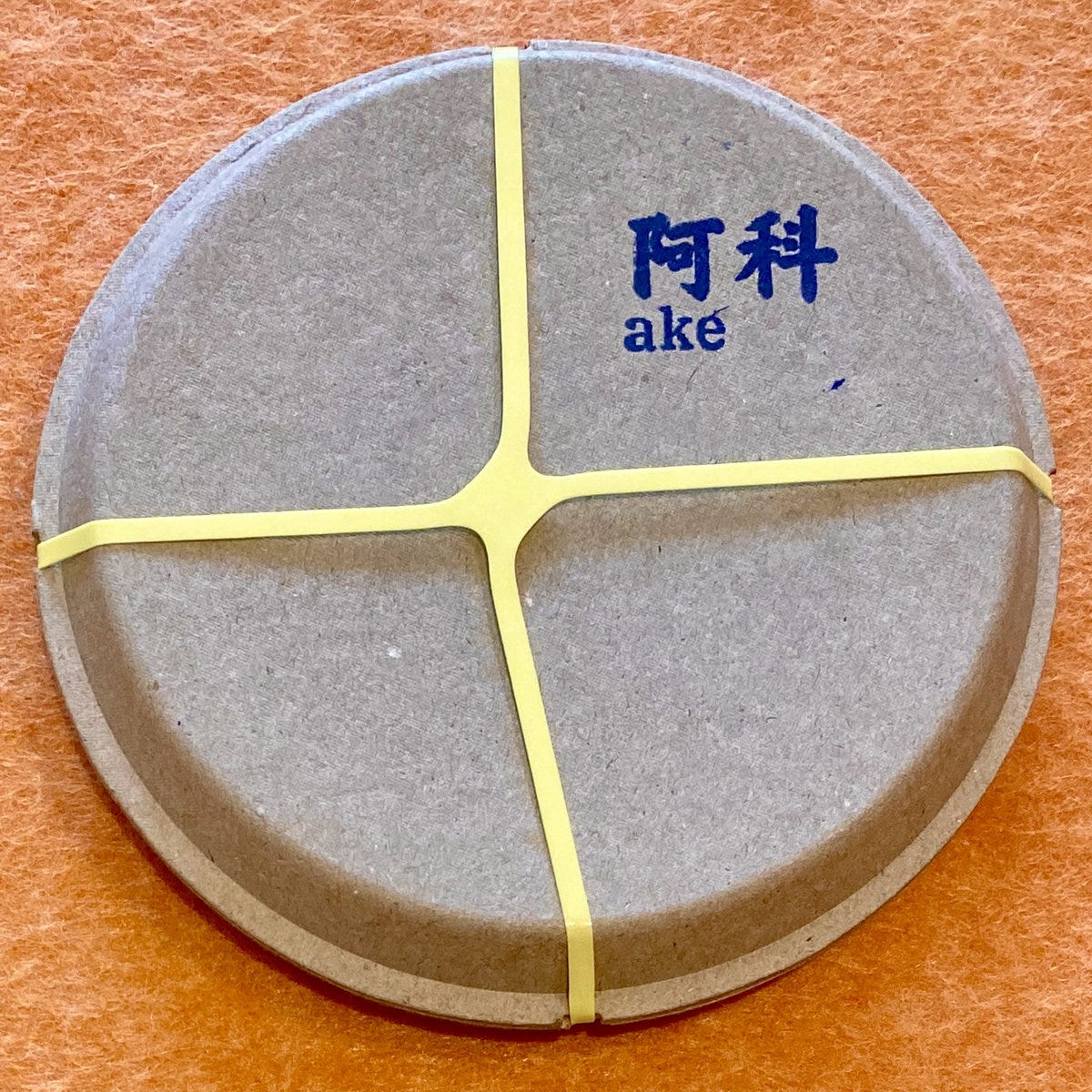
“do something”: The work of sound artist ake (Preview)


A subscriber post on Substack about Chinese sound artist ake.

ake’s biography describes her as “a surrogate weeper, currently working and living in Beijing, conducting site and context specific sound experiments, events, behaviors and installations, also writing poetry, being a musician, organizer and waiter”. Among other activities, ake “accidentally initiated the nomadic space A2 space”, and appears as part of collaborative projects on Zhu Wenbo’s Beijing-based cassette label Zoomin’ Night, as well as Yan Jun’s sub jam cassette box Silence is Shit, but ake (阿科), released in January 2025 as Sub jam 020, is her first solo album.

Working with the material to hand, ake’s work gives a new, subversive meaning to the well-worn term “site-specific”. The eight tracks fit together awkwardly, like a kind of broken jigsaw. They refuse to build up to a unity, but remain fragments, though, as fragments, they are in themselves whole: broken wholes, wholly broken. A majority of the tracks are field recordings, though this is no pastoral. If it has a ‘field’, it is the field of the (urban) social: social action and social inaction as experienced in the corners of everyday life, the boredoms and discontents and acts of quiet rebellion by which one might negotiate one’s way through the world and its systems, what is given to us, what is taken away from us. These are recordings of environments, or recordings that make environments, that intervene in them, that frame and re-frame them, that question or that spark questions. Workers destroying a wall in a Shenzen hotel are heard from a bed, the hammer blows a kind of impromptu drum set, accompanied by scattered fragments of conversation [...] How do we listen to this album? A field recording is supposed to put emphasis on the environment, but these recordings often feel ‘inwards’ as much ‘outward’. It sometimes feels as if the listening is being done as much by the performer as the listener, eavesdropping, confused.


Sunday, 4 January 2026

New Year / Blue Notes / Robin Kenyatta

No New Year’s list of projects like last year for 2026, but in the New Year, I’ll be endeavouring to write up my notes for reviews that didn’t manage to find a home elsewhere, potentially to include all or some of the following...

—Jessie Cox’s Sounds of Black Switzerland

—Jack Spicer’s Collected Letters and some new Spicerian titles from Wry Press

—Records by the Urs Graf Concert / Gabriel Bristow and Steve Noble

—ake’s debut on Sub Jam

—Bassoonist Karen Borca’s Good News Blues

—Poetry by Ariel Yelen

—N.H. Pritchard’s The Mundus

—Archival releases from Horace Tapscott


In the meantime, as the sub-zero temperatures descend and the new year begins with the latest bout of criminal invasion, the latest oil-grab and imperialist intervention, the latest blatant violation of international law, some astonishing footage of the Blue Notes at Ronnie Scott’s Old Place on the Ogun Records youtube channel. Ian Hutchinson’s original film The Real McGregor, shot in 1967 and restored by Paul D.J. Moody in 2025, is prefaced with some brief excerpts of newly-shot contemporary interviews—including Hazel Miller, Evan Parker and the late Louis Moholo-Moholo—filmed as a part of an in-progress documentary on the Blue Notes. The (colour) footage itself follows. Chris McGregor on piano, Dudu Pukwana, alto, Mongezi Feza, pocket trumpet, Ronnie Beer, tenor, Johnny Dyanu, bass, and Moholo on drums, playing in the small original venue of Ronnie Scott’s Jazz Club, maintained by John Jack after Ronnie Scott’s itself moved on to a bigger premises, music every night of the week.

The only previously-available footage of the group I’d seen catches them in an earlier iteration, shortly after initially moving to Europe. Though the footage only offers truncated glimpses of a full performance, they’re still more recognisably within the bop-oriented mode with which they’d began than the free music to which they soon gravitated within the experimental laboratory of the London music scene. In terms of records, the music featured here is most reminiscent of the 1968 album Very Urgent, released under McGregor’s name, perhaps the group’s closest engagement with free jazz, and in itself marking a transitional stage to the emergence of the Brotherhood of Breath big band, documented in a chapter of Bill Shoemaker’s excellent Jazz in the Seventies.

For these exiles, uprooted from their homeland by apartheid, The Old Place became a kind of home, a lab, as well as a stage. Shoemaker notes that “without a piano in his flat, McGregor spent all-nighter after all-nighter composing in the damp, cold basement venue, often falling asleep at the piano”. Informed by material difficulty, in which the group often struggled for gigs and to make ends meet, the music has as its backround too loss, sorrow, and turmoil: The Blue Notes’ original tenor player Nik Moyake, returned to South Africa soon after the group’s original departure, dying of a brain tumour in 1965, while Moholo and Dyani would be stranded for months in Argentina, where they’d gone on tour with Steve Lacy, after the 1966 anti-commnist military coup (watched with approval by the USA). But this is not music of existential negativity, formalist exploration, or anarchic destruction, tendencies perhaps more pronounced in the European versions of free music in which it participated, so much as the persistent and insistent declaration of liberation, as a process always in motion. Key to the Blue Notes was the influence of kwela, a Zulu word meaning “get up”. In 1967, Pukwana, Beer and McGregor appeared on Gwigwi Mwrebi’s album Kwela. McGregor hung out with Albert Ayler for several days, talking and playing. Dancing, and other forms of ascension, rising. Free music was not a movement away from dance but into other ways of moving and using the body.

In this footage, we see the Blue Notes a few years into their exile from apartheid, playing as if their lives depended on it, or with a new lease of life, the formal opening up of the music to create that unique and beautiful synthesis of free playing and endless melodic capacity, song as collective repository. Within the basement club’s cramped conditions, it’s all the camera can do to keep the musicians in the frame: an intimacy and an expansion, as if the collective and individual force this group represented couldn’t be contained by the media in which it was captured. Recordings after all, as we know from Baraka’s comment on Albert Ayler, are but rumours of the original, in-person blaze of sound. Rumours, ruins. But here they are through the restored lo-fi haze, dispelling time’s mists and basement cold in blazing heat: Mongezi Feza’s foot lurching out as if kicking a football or stabilizing himself during his solos, as if otherwise his playing might cause him to levitate: Moholo stopping playing for a moment, looking exhausted but not spent, preparing himself to re-enter a music which it sometimes seems can never stop; a Dyani bass solo which cuts away to images of painting, a laughing baby, the life that surrounds the music that compresses it into the space of a bandstand and the time of a gig; the furious, raucuous, joyous collective soloing by Feza, Pukwana, Ronnie Beer. (Perhaps the least-remembered of The Blue Notes today, Beer later left music to build boats in Ibiza but was a key part of the South African jazz scenes from which they emerged: this film offers a fine opportunity to see him at work). McGregor’s piano, meanwhile, launches speedy runs that blur into the sustain pedal then come out again into staccatoed clarity, moving in surges or waves, and the music as a whole is constant movement, towards the end of apartheid, yes, but also that constant search that moves beyond any end point. Restored from another era, the music sounds out of a past but also with the promise of a future not yet arrived. The music’s quality, Evan Parker notes in his interview, is “certainty”. As the year turns, reading the news, going out on the street, facing the upending of orders or their continuance in more brazen form, the spread once more of something that moves towards a fascist consensus, all gives rise to of doubt, despair, a series of shocks. That certainty is something vital. It’s how The Blue Notes survived—and—maybe—it’s how we might get out of this.

*** 

Available to subscribers on Substack, an essay on the varied career of the neglected saxophonist Robin Kenyatta. This might be the first substantial piece on him in decades—at least, according to my initial attempts at researching Kenyatta: a player who’s been on the edge of my listening consciousness for a while now, since hearing his solos on records by Bill Dixon and Andrew Hill, but whose full career had so far eluded me. There’s still much that’s unclear, but for now, consider this something like a listening guide. Here’s a sample.

Something of the dual character of Kenyatta’s work is suggested by the fact that he was spotted by Bill Dixon—one of the most committed of the avant-gardists—while playing with Pucho and his Latin Soul Brothers. Replacing Giuseppi Logan in Dixon’s groups, Kenyatta takes a searing solo four minutes into ‘Metamorphosis 1962-1966’ from Dixon’s 1967 Intents and Purposes: a ballad feature full of yearning, somewhere between fulfilled desire and its anxious absence that always reminded me of Charlie Mariano on Mingus’s The Black Saint and the Sinner Lady—or for that matter, Mingus’s more usual alto player, John Handy, a mentor of Kenyatta’s. The same year, Kenyatta appeared—alongside a rare recorded appearance from Logan—on Roswell Rudd’s Everwhere, returning the favour the following year with Rudd’s appearance on his own debut, Until. The wide-open, folk-tinged quality that Rudd brought to Shepp’s group and his own projects suits Kenyatta perfectly: there’s a declarative, melodically-focused joy to everything he plays. Technically extremely proficient, he plays flute, alto and soprano saxophones with equal felicity, and in the late ’60s had a phase of playing exclusively on tenor. Until opens, unusually, with a ballad—the title track, written by pianist Barry Miles (not to be confused with the British writer of the same name, Miles featured Kenyatta on the Third Stream-ish album Presents his New Syncretic Compositions in 1966). As previously evidenced on his appearance on Intents and Purposes, ballads were Kenyatta’s strength. One senses he knew this. Interviewed by Robert Palmer in 1974, he noted that he attempted to convey meaning and feeling through tone rather than prolixity of notes: why play ten notes where one will do?


Blog Posts in 2025

New Year (January 2025) (Update Post)

Reprints from Materials (February 2025) (Update Post)

Recent Poems Read (March 2025)

"I Say 'I'": Alice Notley (1945-2025) (May 2025)


Recent writing elsewhere (September 2025) (Update Post)

First Nettles, Earliest Persons (Preview) (October 2025) 
Triumph of the Outcasts, Coming! (Preview) (October 2025) 
 
November Updates (November 2025) (Update Post) 
The Sound of Wadada Leo Smith (Preview) (November 2025)  
Pat Thomas, Architecture, Abstraction (Preview) (November 2025)
 
Bill Dixon and "the form of the song" (Preview) (December 2025)