Monday, 24 November 2025

Romance and Revolution, Feeling and Form (Preview)

Angelika Niescier with Tomeka Reid and Eliza Salem, October 30, 2025, JazzFest Berlin. Photo (c) Berliner Festspiele / Camille Blake

(The third of three subscriber posts on Subtack on this year’s Jazz Fest Berlin. The first two are longer essays on particular sets by Wadada Leo Smith and Vijay Iyer and by Pat Thomas, the third a more general overview of the festival.)

Angelika Niescier—Marta Sánchez—Tim Berne—David Murray—Elder Ones—London Jazz Composers Orchestra—Amalie Dahl—Fire! Orchestra—Mary Halvorson—Marc Ribot—Mopcut and MC Dälek—Sakinda Abdou—The Handover—Moabit Imaginarium—James Brandon Lewis—Cadences—Where we’re going.

Something like a festival, shapeed as it is by the organisational demands of a one-off occasion, by acts that it’s felt will draw an audience, by the circuit of prizes and names, and names, offers a cross-section of whatever is felt to be happening at a particular moment on time. It’s partly through festivals, which tend to be recorded and documented far more and far more officially than regular gigs, that we construct our history. (The archive of Jazzfest Berlin / the Berlin Jazztage is a particularly rich resource, as the documentation made available at last year’s festival revealed.) But what really happens is what happens on the ground, day to day: that which continues, in New York or Chicago or London or Berlin and beyond. What’s beyond the headline, what continues after the applause has ended. What we heard in Leo Smith or Pat Thomas, in the massed voices of larger and smaller groups around them, also sounds out round the margins of the big events, events that, in the current environment, are themselves no doubt in the margins, under threat of some kind. The sound must come from every angle.

The full post can be read here.

Pat Thomas, Architecture, Abstraction (Preview)


Pat Thomas, JazzFest Berlin, November 2, 2025 © Berliner Festspiele, Camille Blake

(The second of three subscriber posts on Substack on this year’s Jazz Fest Berlin. The first two are longer essays on particular sets by Wadada Leo Smith and Vijay Iyer and by Pat Thomas, the third a more general overview of the festival.)

Thomas manifests absolute presence on stage: gregarious off it, on stage he is all business, sitting down and playing without the need of announcements or framing beyond the music itself. In an improvised solo set in the vein of the recent records The Solar Model of Ibn-Shatir and The Bliss of Bliss back to Nur in 1994, Thomas played what were essentially a series of short pieces: not quite miniatures, but relatively brief, each a study in a particular technique or texture. (One might call them études, perhaps.) Two were studies in rhythm and the harmonics that ring off a scraped or plucked piano strong, particular down the lower end of the instrument; the others focused on thick, splashy clusters and hand-over-hand runs dispensing with tonality as old news.

The full post can be read here.

The Sound of Wadada Leo Smith (Preview)


Wadada Leo Smith, JazzFest Berlin, October 30, 2025. Photo © Berliner Festspiele / Camille Blake.

The first of three subscriber posts on Substack on this year’s JazzFest Berlin. The first two are longer essays on particular sets by Wadada Leo Smith and Vijay Iyer and by Pat Thomas, the third a more general overview of the festival.

How to describe Smith’s sound? You could say: “Smith plays a Yamaha custom Xeno II 1993 silver trumpet with a Monette mouthpiece. He also has a Flugelhorn and mouthpiece, built by Erhurt Todt in 1981, in what was then East Germany.” You could use words like “regal” (Jonathan Finlayson) or “majestic” (Roy Hargrove). And, since at least Notes (8 Pieces) Source a New World Music: Creative Music (1973), Smith has been a longstanding and capacious theorist of his own music and the notational and philosophical system which expresses it, Ankhrasmation. But neither technical breakdown nor metaphorics, still, will get at this thing, Smith’s sound, which is so palpably material, cuts so keenly through air and ear, and yet so evades the mechanics of language, of description scientific or poetic.

The full post can be read here.

Wednesday, 19 November 2025

November Updates

In the past few weeks, I’ve been working quite intensively on a long essay on Cecil Taylor’s poetry for what looks to be an expansive collection on Taylor’s work edited by Peter Valente. Having long thought a book like this should happen, I’m delighted it finally is! Taylor’s work has meant a lot to me for what seems like forever—certainly, since writing, or trying to write an MA thesis on his poetry back in 2011: a somewhat wobbly first step, or what Taylor himself would call an ‘Excursion on a Wobbly Rail.’

This latest iteration is part of what I think of as a suite of writing on Taylor’s work, particularly his poetry: a memorial post in 2018, a piece for Chicago Review in 2019, and an essay on Taylor and vodou for Point of Departure in 2020. It updates all that with some new reseearch—the conference on Taylor’s work at CUNY in 2019, Phil Freeman’s recent biography of Taylor, In the Brewing Luminous, a valuable chronological synthesis of existing materials and new interviews, and—not least—seeing a copy of Taylor’s unpublished poetry manuscript, Mysteries, of which the first page is above.

Besides that essay, I’m planning for other writing on Taylor, its final form yet to be determined, to find its place in two current manuscripts on music, Survival Music and Ensembles. Taylor’s work continues to mean a huge amount to me. An all-consuming music, an all-consuming vision. Here’s a bit of the work in progress:

In the film Imagine the Sound, Taylor speaks of making “the commitment to poetry”. But what did poetry mean for Cecil Taylor? Poetry was, I argue in this essay, where he theorized his artistic conception. It was poetry he credited with saving his life, and in turn, it became part of the way he understood the nature of life, his own life, and that of life in general; of how to live one’s life, of how to approach art with charm, with ferocious grace, and with the unstinting courage of conviction.

Lots to catch up on in the meanwhile....In the not too distant future, I’m hoping to post here some writing on Wadada Leo Smith and a report on the Berlin Jazz Festival. Some other things are in the works as well. For now, news and some capsule reviews, notices of new work...

—‘Dream in a Hailstorm of Riots’, a long piece on the new collected poems of Jayne Cortez, is up at the Poetry Foundation.

From the mid 1960s through the early aughts, Cortez wrote about the political crises of her times: Attica, Allende, Palestine, Rwanda. But like fellow African-American Surrealists Ted Joans and Bob Kaufman, she was as interested in transforming reality as in documenting it. She bursts generalities and stereotypes in startling catalogues of surreal images that build around repeated phrases like the riffs of an improvising soloist. In her work, observations of everyday life and political events turn into dream visions, apocalyptic landscapes, meditations, and exhortations that crackle with energy, rage, and love. Above all, she is perhaps the poet of what her generation referred to as “The Music,” the various traditions of jazz, the blues, and R&B that soundtracked the freedom dreams of the Black liberation struggle. Cortez wrote poems in tribute to musicians and led her own band, the Firespitters, for decades. Hers is a voice—both on and off the page—that speaks with authority, curiosity, and an unshakeable faith in the power of poetry to change consciousness and change lives.

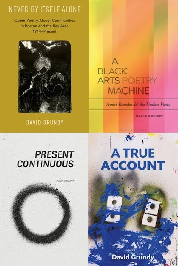
—Honoured to receive this attentive review by Eric Keenaghan of Never By Itself Alone at Resources for American Literary Study. Eric’s own work on queer coalitions, and with the writing of Muriel Rukeyser is, are necessary projects of historical reclamation and reminders of traditions of principle, resistance, and the complex negotiations of struggle for committed writers in times of crisis—needless to say, perhaps more relevant than ever.

—An essay on John Wieners from almost ten years(!) ago, now in print in Utter Vulnerability: Essays on the Poetry of John Wieners, edited by Michael Kindellan and Alex/Rose Cocker, published by Presses Universitaires de la Méditerranée. This was the first thing I wrote after handing in my Ph.D thesis and it feels like a signficant part of the work I did since then flowed out of this way of thinking. It’s about love and poetry and fire and Wieners’s relationship to his first love, Dana Durkee.

This chapter addresses what John Wieners claimed was the most important romantic attachment of his life—that with his partner of six years, Dana Durkee—and the eventual ending of that relationship. As I’ll show, this loss can be said, in part, to have prompted Wieners’ fully-fledged entry into the world of poetry, prompting the composition of his breakthrough volume The Hotel Wentley Poems (1958), and it seeps into the minute fabric of his language itself, whether through conscious acts of address, revision and removal, or sublimated elements of textual echo which at once memorialise and disavow the object of loss. By introducing this element of biographical resonance, I do not wish to reduce Wieners’ poetry to a pained lyric exceptionalism, the poet as an exemplary figure of suffering removed from the social conditions that produce that suffering. Rather, such information serves as a means of heightening the way loss and despair intersect with socially produced domination, and the problems of community and desire in the face of persecution and its constant threat. As Denise Levertov astutely noted in 1965, in Wieners’ work, “Confessional” subjects such as mental breakdowns and the pain and loneliness of queer love are “not autobiographically written about, they are conditions out of which it happens that songs arise”.

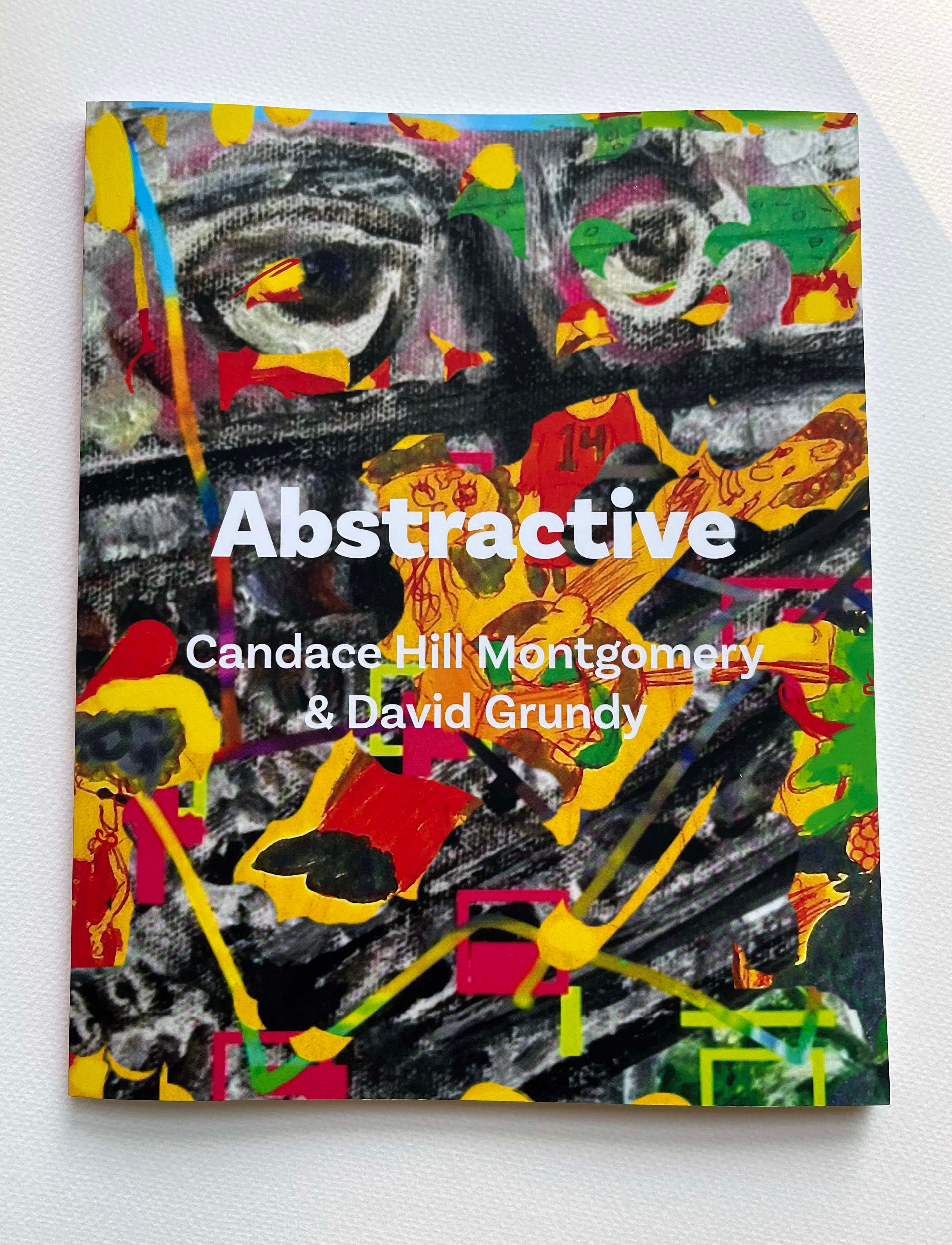
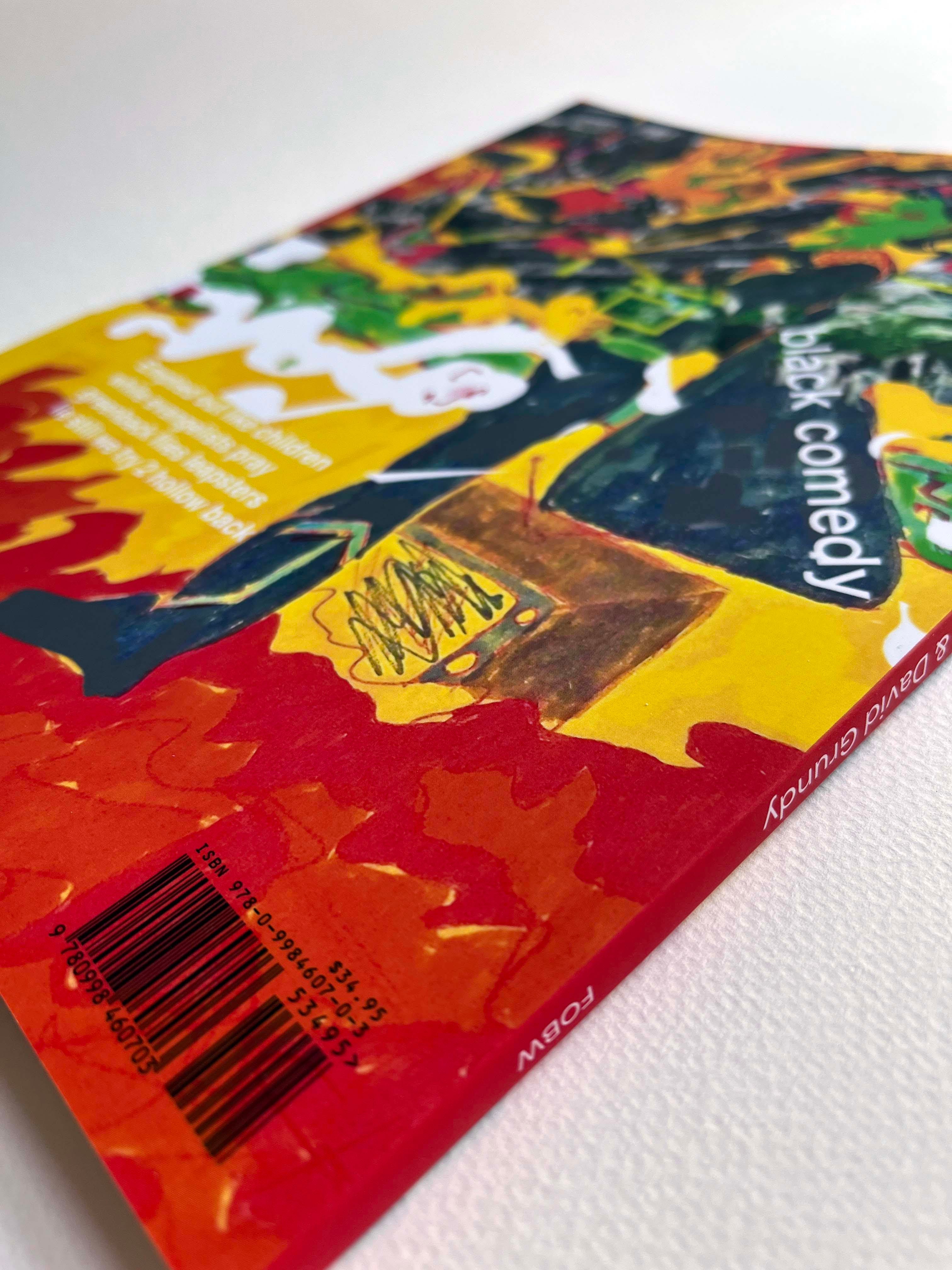
—And last but not least, I’m very pleased that CJ Martin and Julia Drescher’s Further Other Book Works have taken on Abstractive, the book of poems and visual art works I wrote with the great Candace Hill Montgomery last year (with some final tweaks this past month). More details will be forthcoming. For now, as a sneak preview, here’s a page of the manuscript….

Monday, 13 October 2025

Triumph of the outcasts, coming! (Preview)


As a subscriber post on Substack, this piece on a track from Adegoke Steve Colson’s and Iqua Colson’s album Triumph!, along with thoughts on survival, the outcast and, once more, the work of John Wieners.

Often, the poems that give consolation to others don’t always give consolation to the poet themselves, or the time of release is different. The renewal they offer wavers in its power. It saves some and not others, and sometimes it seems like it can save no one or do precisely nothing, but what matters is that it’s still there, if nothing else as testimony and record, as the poems of the martyrs in Gaza, as the poems of the shining martyrs Wieners saw in the queer poets of Boston, as in all the poems being written now, all the poems that have been written and that will be written, triumph of the outcasts, coming!

Tuesday, 7 October 2025

First Nettles, Earliest Persons (Preview)

On the Substack version of this site, a review of Dom Hale’s First Nettles and Jennifer Soong’s My Earliest Person, both published by the Last Books. As it’s a long post (6,000 words or so) it’s only available in full behind the Substack paywall. But some excerpts below:

“How did the earlier poets hold it together[?]” asks Hale in the wracked ode ‘Castor and Pollux’, which I first read in a draft from 2021, just this side of the pandemic. “what defence does a poet have?” Not so much a defence of poetry or poetry as defence, but poetry as defencelessness. (“a poets lot is morbid frailty”...) The poem’s epigraph is from Stephen Jonas’s own resplendent ode ‘Love, The Poem, The Sea’—“I shall / with doubt / bloom in my season”. Jonas himself died young, that doubt overwhelming him—the earlier poets, too often, unable to hold it together—but Hale takes the message of loving survival in Jonas’ poem seriously. For, for all their faults, what are we writing poetry for if we can’t learn something from the poems that have gone before us? 

 “I found a pied wagtail and it spokes to me”, writes Hale in a parenthetical aside shot through with a deep Romanticism, as Romanticism emerged during the privatisation of the commons and the beginning of the Capitalocene. A poem takes or borrows its material from the world, but the way it does this is the opposite of the extractivist logic that governs that world system. A refusal to extract, is what a poem is, or could be.

And:

In Soong’s poems, violence, forgiveness, love, exist beyond the theological register that still haunts the way we speak of them: “I say: what to do / with such forgiveness / of the unforeseeable?” Language betrays us: or we exceed it, it exceeds us. “we / leave behind what / we say we can’t”. “what is equal to more / than can be said”. To be equal to, to balance up, to come up with an equation that would solve things, would be one way: the well-made poem, rhyme as resolution, metre as an ordering of the normal disorder of speech. But poetry is not that. It overflows it, unbalances it: seeks instead, dialectically, to acknowledge imbalance and transformation. The poems move in the instability of that line break, that cut, as much as they move in the smoothing, soothing shell of enjambment, sound-pattern, echo. When our speech is choked off, we speak with stumbling fluency through that prohibition: it births our speech. We perform and refuse to move on and our desire is shared with others and others are internalised into us, this ensemble that is the poem. For

we get to where
we can't, having been
taught by the things in
each other.

Poems like Dom Hale’s and Jenn Soong’s sift through the grift, let it stick: not the fine details, but the jagged edges of feeling, which are a thousand small ridges, cuts, wounds, incisions on the break of a line, the placement of a comma, the absence of an apostrophe. Care in the scattering. [...] In our poems, our posts, our criticism: trying to find a form for these things we perhaps cannot even properly say to each other in conversation when we speak, these things we try to put our finger on, while the map moves beneath our pointing digits.

Sunday, 21 September 2025

Recent writing elsewhere

Some recent writing elsewhere...


Pleased to have poems alongside good company in Michael Klausman's and Patrick Tillery's magazine Luigi Ten Co: a sequence called 'Axis and Orbit' and a prose poem from something in-progress...


Thanks to Florence Uniacke for producing this beautiful pamphlet, Two for Notley, for the Cafe Oto summer fair, with proceeds going to the new trans health centre at House of Annetta.


One of the two texts in the pamphlet is an extended version of a text that first appeared on this blog. And a different version of that text is also up at Little Mirror--thanks to Hunter, Jen and Allie.


Also out, a piece on Steven Belletto's extremely well-researched new biography of the great Ted Joans, Black Surrealist, over at The Poetry Foundation: "Nothing to Fear From the Poet but the Truth".


Finally, I've introduced a paid option for my Substack, same name as this blog, over at this link. A paid subscription gets you access to any posts over 1,000 words, which go behind a paywall. The Substack-ification of writing (and the way it negotiates the sphere of paid writing, traditional media, precaritisation of readers and writers alike) is perhaps something to be ambivalent about, but it is, at least, a platform...